


.png) Jacob Peenikaparambil
Jacob Peenikaparambil
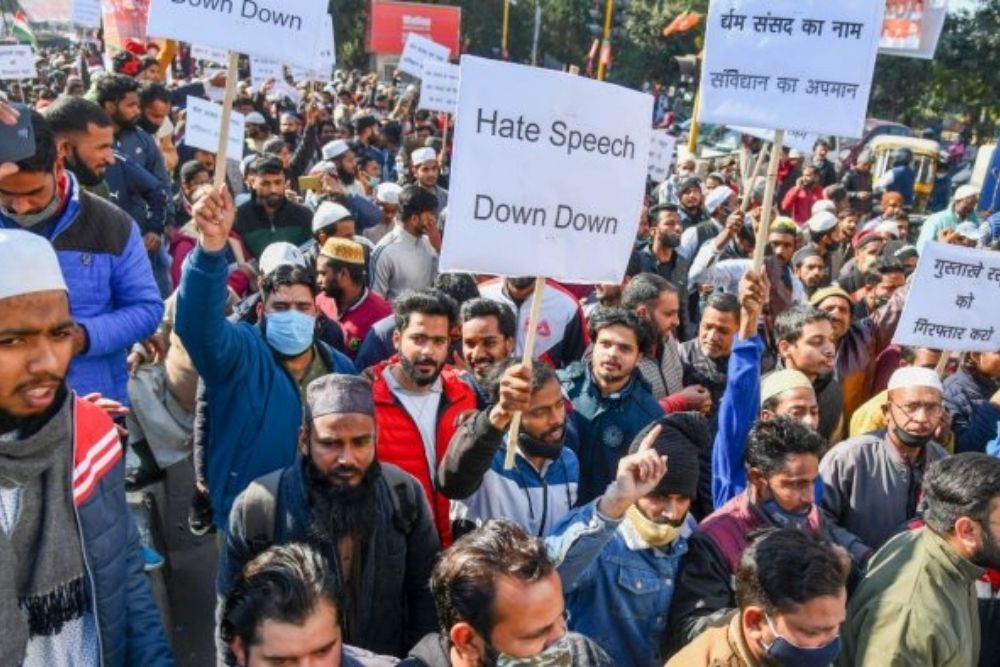
More than two centuries ago, Karl Marx remarked that religion is an opium or a drug that sedates people. During Marx's era, power-hungry individuals and groups misused religion to make people passive and inactive, preventing them from questioning misdeeds, manipulations, and exploitation. When religion becomes a drug, it stifles critical thinking and scientific temper. The Indian Constitution highlights "cultivating scientific temper" as one of the fundamental duties of its citizens.
How does religion, expected to contribute to the highest form of human well-being, become toxic or poisonous? Several factors contribute to this dangerous transformation. Among them, the politicisation of religion is particularly alarming. When religion is wielded as a tool to divide people, pit groups against one another, or incite conflict, it becomes a poison.
Promoting one religion over others by political parties, especially ruling ones, constitutes an abuse of religion. When governments allocate massive funds to construct worship centres or erect colossal statues of a particular faith for political gain, it fosters societal divisions and conflicts.
The RSS-BJP Combine in India has mastered the art of exploiting religion to capture and retain power.
Numerous examples illustrate how the BJP uses religion to polarise the majority community, portraying Muslims and Christians as threats to Hindus. False narratives such as claims of Muslim population dominance, Muslims as terrorists, and Christians engaging in forced religious conversions are propagated. Draconian anti-conversion laws in BJP-ruled states have even criminalised simple acts like family prayers within Christian communities as supposed conversion activities.
Power struggles within religions also fall under the politicisation of religion. Individuals or groups often exploit religious issues such as rituals, customs, and traditions to gain dominance within their communities. Fundamentalists across religions position themselves as custodians of certain practices to amass power.
For instance, the ongoing conflict within the Syro-Malabar Church over the Mass's orientation reveals a power struggle. How could such a trivial matter—facing or not facing the congregation during Mass—escalate into a three-year conflict, culminating in police intervention? This situation contradicts the teachings of Jesus, who challenged life-denying laws and customs. His assertion that "Sabbath is for human beings, not humans for Sabbath" underscores the importance of prioritising human well-being over rigid rituals.
Pope Francis has consistently criticised careerism and clericalism in the Catholic Church, as they distort the very nature of the Church. According to Pope Francis, careerism in the Catholic Church is when people in the Church are more concerned with their own advancement than with the Church's mission. He has described careerism as a "plague" that affects priests, bishops, and cardinals. Clericalism arises from an elitist and exclusivist vision of vocation that interprets the ministry received as a power to be exercised rather than as a free and generous service to be given. The conflicts and divisions within the Syro Malabar Church indicate the overriding influence of clericalism and careerism in that Church.
The commercialisation of religion is another significant cause for the distortion of religions. Jesus's cleansing of the temple (Matthew 21:12-17) sends a clear message against exploiting religion for financial gain. Yet, in today's world, religious practices are often monetised. For example, during the Kumbh Mela, a significant portion of the event area was allocated to hoteliers offering luxury accommodations at exorbitant rates. As reported by The Telegraph on January 13, luxury tents and cottages were rented for as much as ?1.1 lakh per night. When financial interests drive religious practices, religions degenerate, losing their spiritual foundation.
Fundamentalism makes religion toxic in two key ways. Firstly, it rigidly adheres to outdated traditions, literal interpretations of scriptures, and practices that deny fundamental human rights, especially to women. In Taliban-ruled Afghanistan, women face severe restrictions, including denial of education, employment, and even public appearance. Secondly, fundamentalists assert that their religion is the sole truth, demanding universal acceptance. History is replete with instances of rulers forcing conversions at gunpoint. Fundamentalists' arrogance and aggressiveness further alienate communities and fuel conflict.
Religion becomes toxic when it induces excessive guilt. Some fanatical preachers attribute personal tragedies to divine punishment, urging followers to undertake penance for both their sins and those of their ancestors. Such interpretations distort the essence of spirituality and burden people with unwarranted guilt.
Measures to Detoxify Religion
To counter the toxification of religion, we must adopt a multi-pronged approach:
1. Cultivate Critical Thinking or Scientific Temper
Scientific temper is a way of life that involves questioning, hypothesising, analysing, and communicating based on evidence. Without scientific temper, people fall prey to blind faith and harmful ideologies. For instance, Nazi propaganda under Adolf Hitler brainwashed an entire nation, culminating in the genocide of six million Jews. Promoting rational inquiry and critical thinking is crucial to prevent similar tragedies.
2. Prioritise Spirituality Over Religiosity
Spirituality focuses on practising core values like love, compassion, and justice, while religiosity often centres on rituals and ceremonies. While religious practices aim to foster spirituality, they frequently devolve into routines that fail to inspire spiritual growth. Religiosity divides people; spirituality unites them. For example, the divisions within the Syro-Malabar Church, rooted in ritualistic differences, highlight how excessive emphasis on rituals can breed conflict. Humanity must take precedence over rigid practices, as illustrated in the parables of the Good Samaritan, Lazarus and the Rich Man, and the Last Judgment. Humanity is the highest form of religion.
3. Embrace Pluralism as a Core Principle
Pluralism involves not just tolerating diversity but appreciating and celebrating it. India's tradition of "unity in diversity" embodies this principle. As the Upanishads state, "ekam sat vipra bahudha vadanti" ("Truth is one; the wise express it in different ways"). Respecting all religions as distinct paths to the divine while remaining committed to one's faith prevents religious toxicity. Jesus exemplified pluralism by selecting diverse disciples and praising the faith of outsiders like the Samaritan and the centurion.
4. Promote Indian Constitutional Values
The values enshrined in the Indian Constitution—secularism, justice, liberty, equality, fraternity, and dignity—can prevent religion from becoming poisonous. Indian secularism respects all religions equally, ensuring the state remains free from religious bias. Article 25 guarantees all citizens the right to profess, practice, and propagate their faith. Instilling these constitutional values in citizens, especially students, is essential to counter religion-based conflicts and the rise of majoritarian politics.
5. Form Interfaith Communities
Interfaith communities where individuals from diverse faiths live, work, and learn together foster harmony and mutual respect. The Universal Solidarity Movement (USM) in Indore is an excellent example. Inspired by the Taizé community in France, USM brings people of different faiths together to promote peace and nurture moral values. Such initiatives create an environment of brotherhood and equality, countering prejudice and hatred.
6. Adopt Practical Methods for Religious Harmony
Practical steps to foster inter-religious harmony include:
1. Celebrating major festivals of other faiths to highlight their spiritual messages.
2. Organising interfaith prayers in public institutions with common hymns and readings from various scriptures emphasising universal values like love, justice, and respect for human dignity.
3. Displaying quotes from different scriptures on public institution walls.
4. Establishing common prayer rooms in public spaces with symbols and texts from all religions for silent reflection.
5. Including interfaith education in schools and colleges to help students appreciate other religions while strengthening their own faith.
The world today faces escalating conflicts and wars, often fuelled by religion. Instead of resolving disputes through dialogue and non-violence, many leaders resort to aggression. Religion plays a significant role in national and international conflicts, making it imperative to promote understanding and harmony among faiths. Preventing religion from becoming toxic requires collective efforts to foster critical thinking, prioritise spirituality, embrace pluralism, uphold constitutional values, and create interfaith solidarity. By doing so, humanity can reclaim the true purpose of religion: promoting peace, compassion, and unity.
.jpg)
 A. J. Philip
.png) Cedric Prakash
Cedric Prakash
.jpg)
 P. A. Chacko
.jpg)
.jpg)
.jpg) Thomas Menamparampil
Thomas Menamparampil
.png)
.png)
.png) Robert Clements
Robert Clements
.jpg)
.png)
.png) Chhotebhai
Chhotebhai