

How best we learn has been a hot topic of discussion for decades and will continue to be so. When the students I tutor asked what their valedictory function would encompass, I reflected on a few essential and crucial aspects of education.
"Education is not preparation for life; Education is life itself". These prophetic words of John Dewey resonate with me. 'Holistic Education' – a term bandied around frequently, necessitates a paradigm shift in understanding that education today is not meant to advise but to enlighten, not meant to push problems aside because they are not related to our syllabi, but to work towards a solution, and to realise that every naughty child is a story untold.
The field of education is being swept by a new wave of awakening in the teaching/learning process. The onus is now on the learner, and the teacher is considered a 'facilitator'. Our classrooms are increasingly becoming learning laboratories and educators are called to move beyond traditional roles and become what I would term as social scientists, or maybe even researchers. "Our progress as a nation can be no swifter than our progress in education," opined John F Kennedy.
In this age of high-end technology and student-friendly education, the most critical factor in any classroom continues to be the teacher. This truth assumes greater proportions in a world where young lives vacillate between conflicting values. The education imparted to generation Alpha must reflect a power inherent in them- a power not gifted through nepotism, but one which arises from other centred, consistent ideologies, allowing them to grow up with a no-nonsense attitude, combined with a warm, affectionate heart. "Educating the heart without educating the mind is no education at all". This claim Aristotle made approximately 2407 years ago is more relevant today than ever, wouldn't you agree?
"Children learn more from what you are than what you teach," claimed the author of The Souls of Black Folk, WEB Bois. The great psychologist and contemporary of Freud, Alfred Adler, reiterated that the teacher was the second chance for almost every student. New neuroscientific research strongly underlines the teacher's critically important role. Briefly, 'Mirror Neurons' in our brains are not activated only when we perform some action like singing but are also enabled when we watch someone else do something. Fancy that! Hence, when a child in a classroom sees the smiling face of the teacher, the child also responds with a feeling of comfort.
Thus, it is the privilege of the teacher to smoothen and refine the rough, ragged edges of children and adolescents, correct insecure attachments, help to develop positive attitudes, and maybe even overcome nearly all the mistakes in child rearing that parents make. A tough ask but attainable for motivated educators willing to go way beyond the class environs. Truly, the teaching vocation allows one to play a healing and lifesaving role!!!
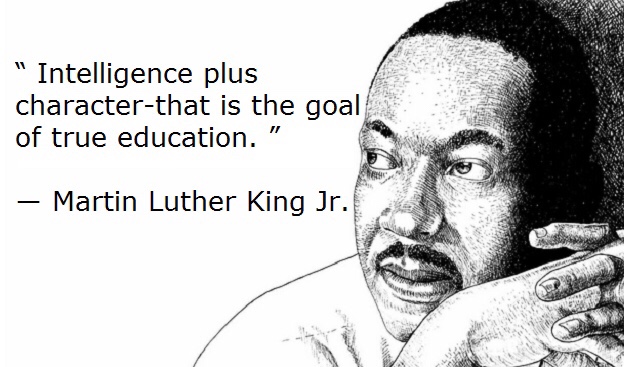
As educators of the citizens of a bright present and an even brighter future (by which I am not referring to 6 figure salaries and condos), we need to ensure that our children combine dignity with courage, are empowered to face the worst of crises in their personal lives, endure a lot from outside and come out stronger. Then and only then will we be able to align ourselves with these sublime words of Martin Luther King Jr. "Intelligence plus Character – That is the goal of true Education".
.jpg)
.png) Cedric Prakash
Cedric Prakash

.jpg) Elsa Lycias Joel
Elsa Lycias Joel
.jpg)
 A. J. Philip
.png) Jacob Peenikaparambil
Jacob Peenikaparambil
.jpg)
.png) John Dayal
John Dayal
.jpg)
.jpg)
.png) Joseph Maliakan
Joseph Maliakan
.png)
.png) Robert Clements
Robert Clements
.jpg) Cedric Prakash
Cedric Prakash
 ICPA
ICPA