

 A. J. Philip
In the tapestry of life's diverse threads, stories often emerge of communal harmony that once defined the choices of names and identities. These stories, rooted in different corners of India, not only shed light on the past but also provide a lens through which to view the changing dynamics of society and politics. In Kerala, a father's commitment to inclusivity resonated in his distinct approach to naming his three sons. An atheist himself, he chose to embrace the diversity of religions by assigning each son a name from a different faith. His intentions were pure, and his hope was to cultivate an atmosphere of acceptance and unity.
However, fate took an unexpected turn as the son bearing the Muslim name found himself embarking on a journalism career. His journey led him from the MP Chronicle in Bhopal to the Saudi Gazette in Riyadh, where he climbed the ranks to become a senior editor with responsibilities that spanned countries. The whispers of his "Muslim connection" potentially aiding his professional growth serve as a reminder of the complexities that intertwine identity and opportunity.
Contrastingly, at St. Stephen's College in Delhi, another unique tale of nomenclature unfolds. A father's affiliation with Communism led him to choose an extraordinary name for his daughter: Marlena, derived from the amalgamation of Marx and Lenin. This distinctive choice of name was an ex
The daughter, Atishi, carried the weight of history and the aspirations of her parents as she navigated life's path. Her journey took her from the classroom to the political arena as a candidate of the Aam Aadmi Party. Her identity was manipulated during the campaign, claiming that she was a Christian. This forced her to shed the name Marlena and embrace the more traditional Atishi Singh. Today, she is a minister in Delhi holding the largest number of portfolios.
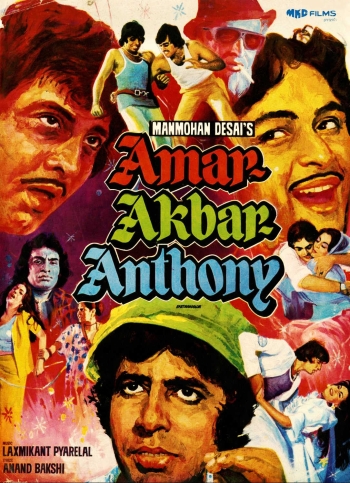
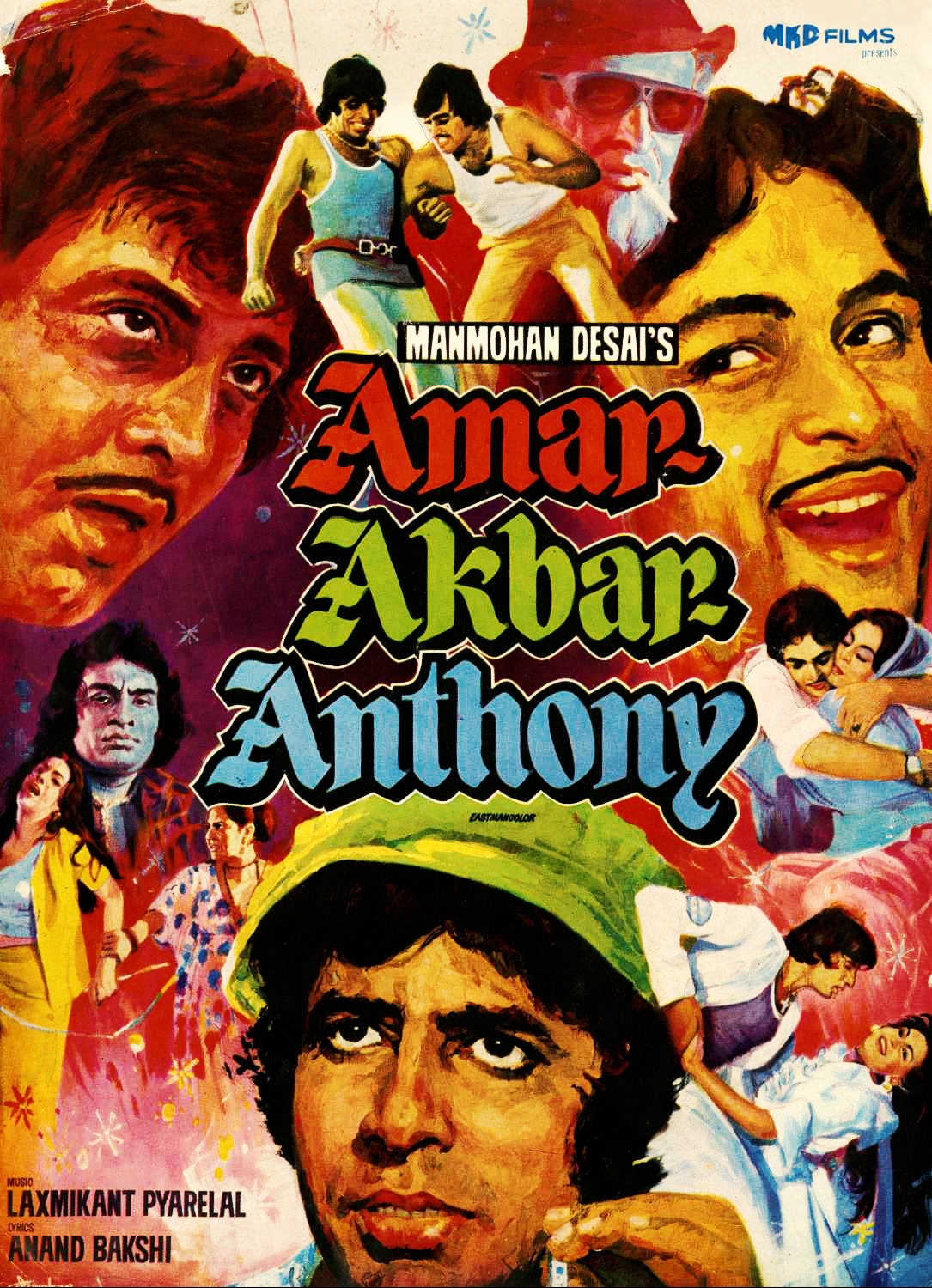
This transformation reflects the blurred lines between personal identity and public perception in the ever-evolving political landscape. Intriguingly, these stories echo the sentiments embodied in the Bollywood film "Amar, Akbar, Anthony." Released in the early eighties, the movie captured the essence of communal harmony through its narrative. The titular characters, each representing a different religious background, showcased the power of unity transcending divisions. The film's popularity underscored a time when such ideals resonated deeply with the masses.
These tales, while unique, intertwine to reveal a common thread: the desire for unity amidst diversity. They remind us that names can carry significance beyond their literal meanings, acting as markers of identity, history, and values. While the past held a space for names to express communal harmony, the present reality often navigates a more complex and polarised landscape. Nonetheless, these stories also serve as a beacon of hope, signifying that the spirit of unity can persist even as society evolves.
In a world where names continue to be chosen with intent and purpose, these narratives inspire us to embrace the past's lessons and weave a future that harmoniously embraces diversity. However, the recent turn of events reflects a distressing decline in communal harmony and inter-religious cooperation, eroding the ideals that were once at the forefront.
As the nation approaches Teachers’ Day, a time to honour educators, it's a somber reminder of the values that need to be upheld. In India, this day coincides with the birth anniversary of Dr. S. Radhakrishnan, a distinguished philosopher and teacher, who believed that educators should regard their students as their own children.
This sentiment underscores the responsibility of teachers to nurture and guide young minds without bias. However, a disheartening incident at a private school at Muzaffarnagar in Uttar Pradesh, has raised concerns about the adherence to such principles. Tripta Tyagi, a teacher, exhibited a shocking lapse in judgment when she targeted a seven-year-old student for not knowing multiplication. Her response, laden with religious undertones, took a disturbing turn as she incited Hindu boys to physically assault the young student.
This incident was recorded on his mobile by a relative of the victim who happened to be present, and the video was swiftly shared on social media, rapidly gaining widespread attention. The virility of the clip served as a stark wake-up call, leaving many stunned that such an egregious incident could happen within an educational institution.
It has underscored the urgent need to address the issue of communal bias, especially within schools that should ideally be sanctuaries of unbiased learning. Compounding the gravity of the situation is the fact that corporal punishment is unequivocally banned in India. The teacher's reasoning, that her physical handicap led her to employ Hindu children as proxies for her actions, is not only unjustifiable but also exacerbates the already unacceptable nature of her behaviour.
In the wake of this incident, swift and resolute action should have been taken. Such behaviour tarnishes the reputation of educators, undermines the foundation of education, and perpetuates communal discord. Upholding the principles of Dr. Radhakrishnan, educators must be held accountable for their actions, particularly when they violate the fundamental values of respect, equality, and impartiality.
UP Chief Minister Yogi Adityanath has garnered attention for his approach to delivering swift justice, occasionally employing bulldozers to demolish the residences of individuals engaged in criminal activities, particularly those with a name beginning with 'M'. However, this incident in Muzaffarnagar deviated from this pattern of rapid justice.
In this particular case, a one-month notice was extended to allow for an explanation. The police have initiated a case with relatively minor charges. Meanwhile, Mohammed Zubair, co-founder of Alt News, finds himself facing a significant criminal charge. This stems from his alleged disclosure of the child's identity.
To clarify, Alt News didn't directly reveal the information. Instead, it conducted an interview with his father, who inadvertently disclosed his son's name. Notably, the police may not recognise that the father possesses the right to disclose his own minor son's name, as this action isn't constrained by any legal provisions. It's essential to acknowledge that the father's foremost concern is the well-being of his child. Interestingly, the National Commission for Protection of Child Rights swung into action against Alt News but not against the teacher. It also issued an advisory that children celebrating Raksha Bandhan should not be punished as if they are being punished. It is all a part of agenda-setting!
As a result of the unfortunate situation, the young boy and his elder brother found themselves unable to pursue their education within the confines of the same school. This compelled the parents to make a difficult decision, necessitating the relocation of both siblings to a different school. However, amidst this challenging situation, a glimmer of hope emerged.
In a heartening turn of events, John Brittas, a cherished friend, who is a Member of Parliament in the Rajya Sabha, extended his benevolent hand. Accompanied by Subhashini Ali, another prominent figure in the CPM, he paid a visit to the parents of these children. Their visit was not just a mere formality, but a sincere display of compassion and solidarity. Brittas and Ali not only offered words of reassurance but also made a resolute commitment. They assured the parents of their unwavering support in ensuring that the education of these two children continues without interruption.
This assurance undoubtedly came as a ray of light for the family, alleviating the concerns that had clouded their path. In a world often marked by challenges and uncertainties, this gesture stands as a testament to the power of empathy and community support. It is a reminder that even in the face of adversity, there are individuals and leaders who are willing to go the extra mile to make a positive difference in the lives of those in need. The story of the poor boy and his brother, now transcending the boundaries of their previous school, becomes one not just of change but also of compassion, camaraderie, and the resilience of the human spirit.
Even the nation's capital remains susceptible to such incidents as evidenced by a recent occurrence. In East Delhi's Gandhi Nagar, a teacher has been charged with making derogatory comments about the Muslim community within the confines of the classroom. This incident came to light just last week. A senior police official confirmed that a complaint had been received, prompting the initiation of legal proceedings against the teacher. This event serves as a reminder that even prominent locations like Delhi are not immune to the occurrence of such regrettable incidents, emphasising the need for vigilance and prompt action in upholding respect and inclusivity within educational settings.
The recurring incidents suggest a discernible pattern rather than isolated occurrences. A distressing trend of growing intolerance towards minority communities has emerged. This is evident in the replacement of names associated with Muslims, eroding their identity. Discrimination extends to political positions, as Muslims and Christians find themselves excluded from gubernatorial and constitutional roles, fostering a perception of minority distrust among the masses.
Reflecting on ISRO's recent accomplishment, its success represents a collective national achievement. Originating within a Catholic Church in Thumba, the organisation's early days involved figures like APJ Abdul Kalam and ISRO chairman Dr. Vikram Sarabhai collaborating with the bishop of Thiruvananthapuram to secure the church premises for ISRO. Similarly, the Cochin Shipyard owes its existence to land donated by the Catholic Church.
Notably, Prime Minister Narendra Modi's swift recognition of ISRO contrasts with his absence in addressing the persecution of Christian Kukis in Manipur. While he prioritises ISRO, his choice to name the point of Chandrayaan-3's lunar contact "Shiv Shakti" raises questions about its appropriateness. The decision diverges from India's secular foundation and invokes a Hindu deity, whose abode Kailash is in China. The naming overlooks alternatives like Aryabhatta or Sarabhai, raising concerns. In short, a discernible trend of intolerance exists, while ISRO's accomplishment and the naming of its achievements spark discussions about inclusivity and appropriateness.
Meanwhile, ISRO chief S. Somanath has embarked on a series of temple visits. This intriguing practice suggests a personal belief in the power of divine intervention in the remarkable journey of the lunar probe. His approach to space exploration seems intertwined with his spiritual convictions, as if his faith played a pivotal role in propelling the spacecraft beyond Earth's confines. He should remember that there were 1,000 engineers and technicians involved in the project and they belonged to faiths as diverse as Jain, Sikh, Muslim and Christian.
Somanath's previous assertion that the entirety of world wisdom is encapsulated within the Vedas, and that European appropriation had occurred, raises questions about his outlook. It's worth pondering why, if this assertion held true, he pursued engineering education in a college founded by an illiterate Muslim visionary. This visionary's foresight was instrumental in establishing an engineering institution in Kollam, which would subsequently contribute significantly to the nation's progress.
The tendency to lay blame solely on educators while overlooking the actions of political figures like Union Home Minister Amit Shah reveals a larger pattern of selective accountability. Shah's derogatory reference to Bangladeshi individuals as "termites" raises questions about his intentions behind employing such dehumanising language. The use of this terminology could be a calculated move to devalue their identity and evoke a lack of empathy when they face prejudice or violence. Drawing a parallel to the reaction toward termite extermination, the narrative surrounding targeted individuals becomes skewed, potentially leading to reduced public sympathy. Shah's choice of words not only shapes perceptions but also impacts how society reacts to issues faced by this group.
Similarly, the insensitivity displayed by Prime Minister Narendra Modi in response to the tragic Gujarat anti-Muslim pogrom raises concerns about the underlying attitudes held by those in positions of power. The comparison of victims to "puppies" by Modi further underscores the problematic attitude prevalent among certain political leaders. This narrative-setting behaviour by individuals at the highest echelons of authority can have profound effects on national sentiment.
By juxtaposing these instances with the blame assigned to teachers like Tripta Tyagi, who represent a microcosm of society, the larger issue of influential figures shaping the collective mindset comes into focus. In essence, the tendency to target teachers while absolving those who wield significant influence over the national narrative highlights a wider societal challenge – the power dynamics between public figures and the public's perception, which in turn impacts social attitudes and responses. As the saying goes, Yatha Raja Thatha Praja (As is the King, so are the subjects)!
.jpg) A. J. Philip
A. J. Philip
.png) Cedric Prakash
Cedric Prakash
.jpg)
 P. A. Chacko
.jpg)
.jpg)
.jpg) Thomas Menamparampil
Thomas Menamparampil
.png)
.png)
.png) Robert Clements
Robert Clements
.jpg)
.png)
.png) Chhotebhai
Chhotebhai