

.png) Joseph Jerald SJ
Joseph Jerald SJ

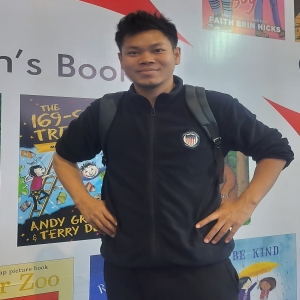
Andrew Heanngam Pamei, a 27-year-old, belongs to the Rongmei Naga tribe and is a native of Ramtan village, Churachandpur district, Manipur. Andrew is closely connected to Vidyajyoti Theologate, Delhi. He secured a distinction in theology at the Distance Education Programme in Theology (DEPTh). He was a civil service aspirant. Later, he dedicated his time and energy to translating the Bible into the Rongmei language, widely spoken in Manipur and other North-Eastern States. While sharing a meal with Andrew at Vidyajyoti, I learned of his passion for God's word. He shares what motivated him to take up translation work in this interview.
Q: How did you get inspired to translate the Bible into your language? Who were the key figures who helped you pursue this venture?
A: I was preparing for the UPSC Civil Services Exam in Delhi in 2018. One evening, my parents called me for a family prayer via video call. During the family prayer, my dad read a passage from the book of Sirach. It was in English. It was missing when my mother tried to find the same passage in her Rongmei Bible! I realised we have been using the Rongmei Bible, translated by the Baptists. I felt a burning desire to translate the Deuterocanonical books of the Old Testament into the Rongmei language for the family prayer.
Moving on, in 2020, during the COVID-19 pandemic, a diocesan priest, Fr. Ningmei Thomas, requested that I translate the Deuterocanonical books of the Old Testament. It came as a surprise, and I gladly accepted it. Due to my profound interest in Eschatology, I also showed much interest in translating the Book of Revelation into the Rongmei language.
The Archbishop of Imphal, Most Rev. Dominic Lumon, authorised the 'Rongmei Catholic Bible Translation Committee'. The translation committee includes like-minded Catholic intellectuals such as Dr. C. Mathew as President and Mr. John Dangmei as General Secretary. I am one among many who are into the translation work. The proofreading of the translated text is done simultaneously by the committee. The Rongmei Catholic Bible will be released this year by the grace of God.
Q: What critical challenges do you encounter in translating the Bible, and how do you overcome them?
A: I often encounter a lot of difficulty in finding equivalent words in the Rongmei language. Synonymous words don't necessarily mean equivalent words. I search for words that convey a meaning closest or similar to the fourfold sense, namely Literal, Allegory, Tropology, and Anagogy. When translating, we select Rongmei words that can encompass these four biblical senses of the Scripture. I utilise St. Jerome's translation method known as "Dynamic Equivalence" (a translation method that prefers words similar in meaning), which aims to render "sense for sense."
Whenever I don't find suitable equivalent words, I begin to create new compound words in Rongmei that align with the fourfold sense of the Scripture. However, in passages with a Typological sense of Scripture, I employ a different translation method called "Formal Equivalence," which translates "word for word."
One big challenge I encountered while working as a Bible Translator was dealing with tons of distractions along the way. Being young, I'm surrounded by lots of tempting stuff like movies, gatherings and hanging out with friends. But I had to say 'No' to all of that because there's something more important deep down inside me. It's a commitment to fulfil the task God has entrusted me. I would like to say 'Yes' to God all the time.
Q: In what way would your contribution help the Christians to grow in faith?
A: The source language of my translation is the NRSV Bible. When any Rongmei Christian reads my translated text, regardless of their denomination, they will find it familiar and easy to understand. Moreover, during the translation process, I use only common Rongmei vocabulary. This ensures that even the youngest or least literate individuals can read and grasp the biblical text. Such an approach enhances comprehension for readers, enabling them to derive the most entire meaning from the biblical passages.
Q: Based on your experience, what do you recommend to the priests, pastors, and lay ministers who are involved in the mission of proclamation?
A: For laypeople, I want to stress three fundamental principles that I see as essential for any ministry: personal prayer, humility, and self-discipline. Despite our many distractions, it's crucial not to overlook personal prayer during ministry. Personal prayer is the source and foundation of grace, strength, and comfort. The virtue of humility is key to maintaining the right relationship with both God and His people. Humility keeps us grounded and nurtures authentic connections in our ministry efforts. Self-discipline is crucial for propelling the ministry forward. It helps us stay focused, diligent, and effective in our service.
I want to express my utmost respect and honour for priests, deacons, brothers, and nuns. I'd like to share an excerpt from a homily delivered by Fr. Raniero Cantalamessa, a preacher at the Papal household, in the presence of the Pope and Cardinals. He said, "Apostolic succession doesn't guarantee Apostolic success."
Q: In the context of ecumenism, how can we bring about unity in the Church through the works that you are engaged in?
A: In a ministry like Bible translation, establishing common ground with other Christian denominations or religions is made easier through our engagement with culture and tradition. As we explore the etymology of the target language we're translating into, we uncover the subtle nuances of every word, each enriched with traditional and cultural significance that cannot be ignored. In adapting these words, we initiate a dialogue with the culture and tradition of other denominations or religions. Through translation and literary works like this, we discover it's easier to find common ground with other faiths and engage in meaningful dialogue, thus promoting unity.
Q: What do you think is the need of the hour among theology students who are preparing to be priests who proclaim the gospel through words and deeds?
A: Engaging in theological studies or any intellectual pursuit may naturally lead to a certain level of intellectual pride. However, it's crucial not to overlook the fact that it is the Lord who grants wisdom. This perspective is not exclusive to me; rather, among laypeople, there's a shared understanding that while there may be many theological experts and intellectuals among priests and theology students preparing for the priesthood, true wisdom, in a strictly biblical sense, is a rare gift.
Wisdom is undeniably a gift from the Lord. Hence, students of theology training for the priesthood should humbly pray for this grace. It is through God-given wisdom that a priest can serve their parishioners effectively. Laypeople frequently discover that they gain more from a priest's wisdom than their intellectual abilities, especially during homilies or interactions within the parish community.
Q: What are your future plans or vision for your Christian community?
A: As a follow-up to the Bible translation project, I am preparing myself to translate the Catechism of the Catholic Church under the auspices of the Rongmei Catholic Bible Translation Committee. I also plan to collaborate with the Kohima Jesuits and Vidyajyoti College of Theology, Delhi, to write a series of twenty Biblical commentary books. This series will provide a "Verse by Verse" exegesis of all the twenty-seven New Testament books in Rongmei language. As a result, I need to learn professionally all that would help me to be competent in accomplishing the above.
Moreover, after completing the commentary series, I intend to write four additional books on Systematic Theology in the Rongmei dialect. These books will cover the doctrines of the Holy Trinity, the Blessed Virgin Mary, the Holy Spirit, and the Resurrection of Jesus Christ. The synopses of all these books have been prepared and are ready to be presented to the Archbishop of Imphal for Ecclesiastical permission. I pray that God may bless all our work. May the Word of God reach the unreached!
.png) Cedric Prakash
Cedric Prakash
.JPG)
 A. J. Philip
.png) Jacob Peenikaparambil
Jacob Peenikaparambil
.jpg)
.png) John Dayal
John Dayal
.jpg)
 Pachu Menon
.png)
.png)
.png) Robert Clements
Robert Clements