

.png) Anju Grover
Anju Grover
The Delhi Police’s supplementary charge-sheet in the February riots case, naming CPI(M) general secretary Sitaram Yechuri, Swaraj Abhiyan leader Yogendra Yadav besides several activists and academicians, has evoked strong reactions from the political leaders and activists. The charge-sheet has named them for allegedly “provoking and mobilizing” anti-CAA protesters. The riots have been linked to the protests against the Citizenship (Amendment) Act.
Mr Yechuri criticised the Delhi Police for taking "illegitimate, illegal" actions under the command of the "BJP's top leadership". Mr Yadav too came down on the Delhi police for not being impartial and fair in their investigations.
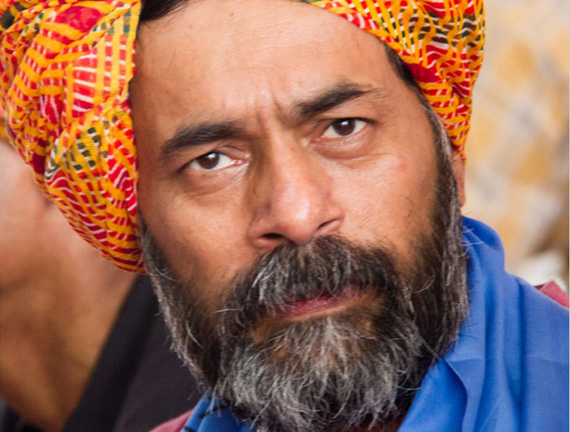
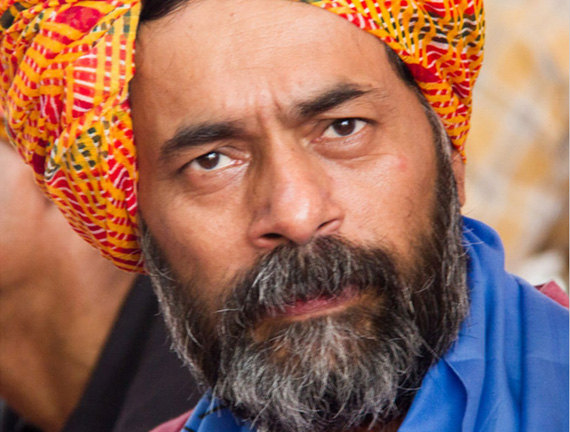
Mr. Yadav is an activist, psephologist and politician. He has been a Senior Fellow at the Centre for Study of Developing Societies (CSDS), Delhi since 2004. He is a former member of University Grants Commission (UGC) and National Advisory Council on Right to Education Act (NAC-RTE) constituted by the Ministry of Human Resources and Development in 2010. He was a member of the National Executive of the Aam Aadmi Party till 2015. He is a founding member of Swaraj Abhiyan and Jai Kisan Andolan.
The following are excerpts from Yogendra Yadav’s interview with Indian Current’s Anju Grover:
Q: Delhi police named you in the supplementary charge-sheet but it does not mention you as a co-conspirator. It clarified that it is only on the existence of sufficient corroborative evidence that further legal action will be taken. The matter is currently in court. What do you have to say?
Yogendra Yadav : As of now, it amounts to nothing. That's actually correct. This is only part of a disclosure statement. And as anyone who has done crime reporting would know, these disclosure statements are actually fabricated by the police. As you have mentioned, Devangana and Natasha (activists of Pinjra Tod, a collective of women students, who have been arrested) have refused to even sign that statement (of disclosure). So, it has no legal sanctity.
The larger question is criminalization of a protest movement. There are some people like me who believe that CAA is against the Constitution of India. It is against the very foundations of this country. We opposed it and went all over the country. What was the slogan, tune into any speech (in Hindi...ek haath mein tiranga, doosre mein samvidhaan, man mein ahimsa, jan gan man ka gaan'). I used to say that this should be our weapons in this movement.
Now if this movement is criminalized, to say, you were part of this therefore you must be presumed to be part of violence, what will they do to our democracy? That is a larger question we need to ask. That is what should worry every citizen of this country. But these larger questions are things which every citizen will have to think about, because if we allow that, then may be, no one would stand up and speak against this government.
The Delhi Police claim that one arrested woman student took your name along with other leaders. Your response.
I don't know whether to laugh or cry about these things. You don't have to take a confessional statement of someone in police custody to find out what Sitaram or Yogendra Yadav say in their public speeches. Delhi Police has videos of every single speech. Why don't they access that? In case they have any problem, I can help them. All my speeches are on the Facebook. On February 24th, when there was extreme tension, several of us went to Jaffrabad (in North-East Delhi) to plead with those women (protesters) to vacate the road ....and told them we are with you in the cause. When they did not agree...we gave a speech there, which is available on Facebook even now...saying that we do not approve of it. So, what is Delhi police searching.
Delhi police allege that you asked anti-CAA protesters to go to any extreme and called "CAA/NRC anti-Muslim".
To say that CAA is an Act of discrimination against Muslims is a simple fact of the case. Thousands of people including Jurists, retired SC judges have said this. Yes, I have said that it was discriminatory against the Muslims. I will say this tomorrow. It is against the Constitution of India.
What about Kapil Mishra and Anurag Thakur's rallies where objectionable slogans were raised?
Of course, there is a question of Anurag Thakur and Kapil Mishra. Also, there is a question of those Delhi police people caught on camera, killing someone, throwing stones and destroying CCTV cameras. For six months, police force cannot identify its own men. How do you trust that force?
What are your comments on Delhi police's role in carrying out investigation in February riots case?
These are some simple questions. As everyone knows, from 2018 onwards, Umar Khalid is under police protection. A police constable is with him all the time. And I presume, also under electronic surveillance. Does the Delhi Police want me to believe that while being under police protection, under their nose, he hatched this great conspiracy which the Delhi police did not know about or did not do anything to stop? Do you find it credible?
On Tahir Hussain, in the charge-sheet, Delhi Police claims that they met on January 8 and hatched a conspiracy about Donald Trump's visit. It so happens that even the government of India did not know that Trump was coming to India on January 8. Unless Umar Khalid has a special line to Trump, this must be a ridiculous theory. If Delhi Police does such things, then how do you believe them. Delhi Police must stand by victims. It must stand against the criminals no matter to which religion they belong.
Prashant Bhushan has criticised Delhi Police for framing innocents in a criminal conspiracy. He stated that the head of the police asked his men not to question Hindus because they are furious about the interrogation....
Yes, he is right.
What will you do if you are called by the Delhi Police for questioning in this case?
Yes, I will certainly go.
(Published on 21 st September 2020, Volume XXXII, Issue 39)
.jpg)
.png) Cedric Prakash
Cedric Prakash
 ICPA
ICPA
 ICPA
ICPA
 ICPA
ICPA
 ICPA
ICPA
 ICPA
ICPA
 ICPA
ICPA
.jpg)
 A. J. Philip
.jpg)
.png) Jacob Peenikaparambil
Jacob Peenikaparambil
.jpg)
.png) John Dayal
John Dayal