

.png) Aarti
Aarti
.jpeg)
The mysterious circumstances in which 18-year-old Swapnadeep Kundu, a just admitted student of Jadavpur University (JU), lost his life this August 10 is horrendous. He left home on August 8 to join JU but unfortunately two days later his lifeless body reached his parents.
Swapnadeep, who had scored 78 percent in the higher secondary examinations, failed to get a seat in his dream course that is computer science at the under graduate level. He opted to study his second choice – Bengali (because of his flair for writing) -- and enrolled in the Bengali Department of Sri Krishna College but was unhappy as he wanted to study at a prestigious institution. His joy knew no bounds when his name appeared on the merit list of JU, one of the premier institutions in West Bengal.
It is said that the deceased teenager while speaking to his mother on August 9 had informed her that he was unwell and desired to return home. His excitement of joining JU was replaced by fear. His father and his uncle were planning to visit JU on August 10 to discuss the matter with the authorities but before that everything was over. According to a Times of India report, Swapnadeep was stripped naked, made to walk along the corridor and lie face-down at the boys’ main hostel on the evening of August 9. He was tortured this way for at least half an hour.
Twelve persons allegedly responsible for his death have since been arrested. Besides the police probe, the outcome of the internal investigation committee of JU which is examining the matter is expected to unravel as to what exactly happened to Swapnadeep.
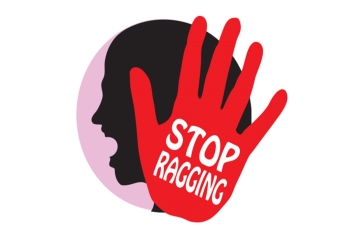
The public outrage arising over the untimely death of Swapnadeep has triggered a debate on ragging on campuses and in hostels. That administrative failure appears implicit in the Jadavpur varsity case is disturbing because despite the existence of the West Bengal Prohibition of Ragging in Educational Institutions Act, 2000, failure and negligence to prohibit ragging has cost the life of a student.
The cause for concern is that ragging, which is meant to usually break the ice between juniors and seniors, is also seen as an opportunity for senior students to have some fun at the expense of freshers. Usually, juniors are asked to dance, enact humorous scenes, etc. for thrills. Also, because some seniors feel the need to show their superiority, they force freshers at times to do small errands including their assignments.
Ragging, more prevalent in professional colleges, especially in such institutions with hostels located far away from city limits, have in the recent past, simply assumed sadistic proportions. Beyond verbal and physical abuse, instances galore where juniors have been forced to consume alcohol besides being paraded naked and the entire episode recorded in cell phones. There have been reported instances where freshers seldom register complaints fearing more abuse while institutions play it down on grounds of its adverse impact on their reputation. It is worrying that ragging, which started as teasing has slowly escalated to acts leading to permanent damage to physical and mental states of the victim. Unable to withstand the trauma of ragging, there have been several cases of freshers ending their lives by committing suicide.
Remember the cruel manner in which 19-year-old Aman Satya Kachroo, a fresher of Dr Rajendra Prasad Medical College at Kangra in Himachal Pradesh, was allegedly ragged to death in 2009 by a bunch of merciless seniors? Aman’s case is outrageous because he had complained many times to the college authorities that he was being ragged violently – like getting slapped many times, punched, kicked/hit on head and chest besides his head shaved off. But no action had been taken against such seniors.
The junior students were reportedly threatened by the Registrar that their careers would be ruined should they dare complain. Thanks to public outcry, a case of “murder” under section 302 of the Indian Penal Code was finally slapped on four seniors. After serving a four-year jail term they were released. The principal, who looked the other way, was compulsorily retired while the hostel warden, two guards and the manager were immediately sacked.
Besides West Bengal, Assam, Himachal Pradesh, Maharashtra, Tamil Nadu, Andhra Pradesh, Telangana, Uttar Pradesh, Kerala, Goa and Chhattisgarh have enacted anti- ragging laws. Nonetheless, two orders passed by the Supreme Court in 2001 and 2007 are quite exhaustive. “Ragging” according to the Apex court, is defined as “any disorderly conduct whether by words spoken or written or by an act which has the effect of teasing, treating or handling with rudeness any other student, indulging in rowdy or undisciplined activities which causes or is likely to cause annoyance, hardship or psychological harm or to raise fear or apprehension thereof in a fresher or a junior student or asking the students to do any act or perform something which such student will not in the ordinary course and which has the effect of causing or generating a sense of shame or embarrassment so as to adversely affect the physique or psyche of a fresher or a junior student”.
Also, a committee constituted under the chairmanship of the former CBI Director, Dr R.K. Raghavan, which examined the issue of ragging has suggested several measures to deal with the menace. Most of the recommendations have been approved by the Supreme Court for implementation by educational institutions including the imposition of exemplary and harsh punishment to act as a deterrent against recurrence of such incidents. Among others, it is mandatory for filing a first information report (FIR) with the local police and failure on the part of the institutional authority or negligence or deliberate delay in lodging the FIR would be construed to be an act of culpable negligence on the part of the institution.
Every educational institution is required to clearly stipulate in its prospectus that in case the applicant for admission is found to have indulged in ragging in the past or if it is noticed later that he/she has indulged in ragging, admission may be refused or he/she shall be expelled from the institution concerned. Anti-ragging committees and squads are to be constituted in every educational institution to ensure that the Committee’s recommendations are observed without exception. Educational institutions found protecting the perpetrators responsible for ragging stand to lose grants as well as recognition.
It needs to be realised that the JU incident is not just another case of ragging but a heinous crime and the motivated perpetrators deserve no leniency. To meet with the ends of justice to Swapnadeep, there is an imperative need to put the case on fast track. Not long ago, a ragging case was decided in 65 days in Kerala. Punishment ought to be exemplary and harsh so as to act as a deterrent against recurrence of such incidents. Ragging sometimes also has positive effects like in the case of a daughter of a family friend who said she was tasked with writing the assignments of her seniors after class hours during her stay in the hostel. Every time she completed writing an assignment the senior would tear it off saying the handwriting was shabby. Over a period of time, her handwriting improved and she was much appreciated by her seniors.
.jpg)
.png) Cedric Prakash
Cedric Prakash
.jpg) Elsa Lycias Joel
Elsa Lycias Joel
.jpg)
 A. J. Philip
.png) Jacob Peenikaparambil
Jacob Peenikaparambil
.jpg)
.png) John Dayal
John Dayal
.jpg)
.jpg)
.png) Joseph Maliakan
Joseph Maliakan
.png)
.png) Robert Clements
Robert Clements
.jpg) Cedric Prakash
Cedric Prakash
 ICPA
ICPA