

.jpg) Dr. M. D. Thomas
Dr. M. D. Thomas
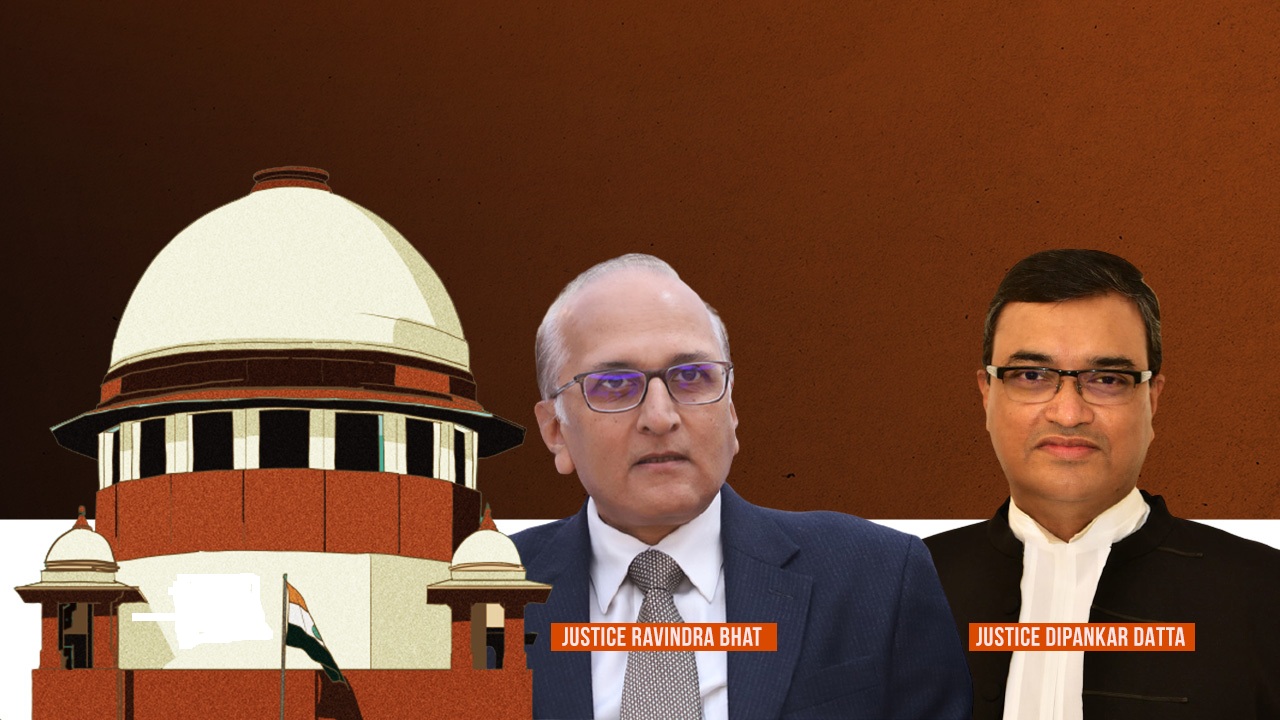
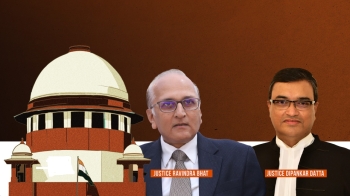
The Supreme Court of India has come out with a landmark verdict in the following words: “Un-satiated greed for wealth has facilitated corruption to develop, like cancer, and the constitutional courts owe a duty to the people of the country to show zero tolerance to corruption and come down heavily against the perpetrators of the crime.”
The ruling was given on March 3, 2023 by a bench of Justices S. Ravindra Bhat and Dipankar Datta, who set aside an order of the Chhattisgarh High Court, which had quashed the FIR registered against the former principal secretary of the state, Aman Singh, along with his wife, for allegedly amassing disproportionate assets.
In spite of the fact that the Constitution in its preamble promises social justice and equitable distribution of wealth to the people of India, it is yet a far-fetched dream, like a colourful balloon up in the air. The malaise of corruption pervades in all walks of life, including governance, as ‘a way of life’ and it is a serious hurdle on the way of achieving progress as well as social justice, regrettably so.
The Bench further observed that ‘if the corrupt succeed in duping the law enforcers, their success would eat into the fear of getting caught. They would tend to lie around cocksure that rules and regulations are not for them, but for the humbler mortals.’ The investigations that follow have become more distressing than the scams themselves. ‘Tracking down corrupt public servants and punishing them appropriately is the mandate of the Prevention of Corruption Act,’ the court stated emphatically and dutifully.
It is a matter of shame for the country that a steady decline is in row in pursuing the lofty ideals of the Constitution, especially in public persons. The fact that the degradation of ethical values in day-to-day life is heavily and rapidly on the rise is a major anomaly as against the luxurious engagement of religious piety and devotions. The gravity of the contradiction multiplies when Hinduism characteristically considers ‘greed’ as a cardinal sin, ironically so.
A considerable per cent of persons in responsible positions have been found bending so low in their behaviour, defying the high standards of behaviour demanded by the ethos and values of the Constitution. As a result, the sublime ideal of ‘public service’ is defiled by ‘private interests’, at the cost of the people and the country. The razor-sharp question of the supreme bench is highly pertinent ‘however, should this state of affairs be allowed to continue’?
It is the duty of the Constitutional Courts to show zero tolerance to corruption and come down heavily against the perpetrators of the crime, while saving innocent public servants, who get entangled by men of dubious conduct, ulterior motives and vested interests. The apex court deserves to be complimented for affirming its duty of playing the role of the whistle-blower, that too, of the supreme order, in view of treating effectively the cancer of corruption.
Greed is ‘an intense and selfish desire for something, wealth, power, food’, etc. ‘More than required’ is its essential character. It is inordinately selfish and has hardly any thought left for others. It is a sentiment that can never get satiated. ‘More the merrier’ is its principle. It is an uncontrollable drive and is pathological to its core. All the lofty ideals of the world are bound to collapse, when greed is at the helm of affairs. Obviously, greed is geared towards crossing all the courtesy limits of life.
Greed for wealth ends up in corruption. ‘Corruption’ is a dishonest, unethical, immoral and unprincipled behaviour’. It is a ‘criminal offense’, by way of an abuse of power for one’s illicit personal fiscal gain, which is appropriated by an individual or organization. Corruption includes diverse forms, like bribery, lobbying, extortion, cronyism, nepotism, parochialism, patronage, influence peddling, graft, and misappropriation. It is a state of affairs that ultimately lands up the party concerned in an endless doom.
Corruption, preceded by an insatiable greed, is the most compelling concern of our country. It eats up into the entire fabric of human life, both individual and social. The intellectual, emotional, spiritual and cultural assets of the humans are rendered fruitless. It raises a question mark on the evolutional accomplishments of the ‘homo sapiens’, like digital precision, artificial intelligence and higher consciousness.
Religion is traditionally considered a great motivator for righteous action, under the auspices of God. It should have been all the more so, given the battalion of major and minor traditions of faith present in India. Being so would have justified the common notion of India, both inside and across the borders, as a ‘religious country’, too. In that case, the world would have found in India a species of people that are ethically sound and spiritually elevated, as well.
But, as a matter of fact, religions in India are very much a heap of superstitions, empty theological abstractions and fruitless rituals. They are seats of and tools for the foul game of money and power, very much as an ally of the political and the corporate sectors. They fail hugely to produce the moral fruits that can make good, humane and upright human beings. The un-satiable greed and the resultant corruption is a proof positive for the prickly pickle in question.
Besides, it is more than true that our country is making a ‘hop, step and jump’ in the various arenas of ‘development’. The technological gadgets, along with varieties of amenities of life, have made human lives on the whole highly convenient as well as advanced, which could not even have been imagined a few decades ago. But, ‘the insatiable greed’, along with ‘corruption’, as the top court rightly noted, creates an unfathomable vacuum of principles and ideals, which makes all the merits of development null and void, tragically so.
As far as ‘greed’ and ‘corruption’ are concerned, ‘sifting the grain from the chaff’, no doubt, is an onerous task, no wonder, for that reason, if it sounds even utopian. The state of affairs has reached Himalayan proportions, in the wake of the modern day demands, complexities and problems of life, along with the naive and plan-less increase of population, especially in the lower strata of the society.
At any rate, the effort has to keep going, incessantly so, in view of better times, not only for maintaining ethical standards but also for the wellbeing of the people and of the larger society. Robert Frost, the twentieth century English poet, reminds, “But, I have promises to keep, And miles to go before I sleep”. Well, the Indian society in general and the public persons in special have miles and miles to go before they sleep, in line with their promises to the ‘vision and mission’ of ‘We the people’ of the Constitution of India!
(The author is Director of Institute of Harmony and Peace Studies, New Delhi. E-mail: mdthomas53@gmail.com)
.jpg)
.png) Cedric Prakash
Cedric Prakash
 ICPA
ICPA
 ICPA
ICPA
 ICPA
ICPA
 ICPA
ICPA
 ICPA
ICPA
 ICPA
ICPA
.jpg)
 A. J. Philip
.jpg)
.png) Jacob Peenikaparambil
Jacob Peenikaparambil
.jpg)
.png) John Dayal
John Dayal