

.jpg) F. M. Britto
F. M. Britto

"Where is Nancy? Is she not here?"
It took some time for her to come out of her hiding.
As she sat far away from me, she was not looking at me as she used to. Looking depressed, her face was downcast.
"How was the result?"
"I didn't write," quietly she said.
Everyone knew that she was lying. After studying in a coaching centre for nearly nine months and spending so much of her father's hard-earned money, how can this studious village girl not appear for the NEET exam?
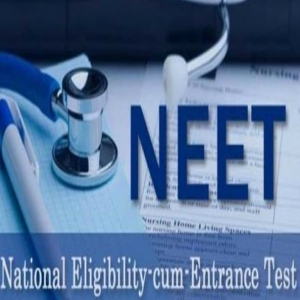
Nancy was one of the 23,33,297 students who appeared for the National Eligibility cum Entrance Test (NEET) exam of 2024. She was among the hundreds who didn't qualify for a government college.
Her disappointed wood-cutter father said he had to spend nearly two lakh rupees on her hostel and education fees, as well as on her travel and pocket money. Bhuvan Singh owns only three acres of land and has leased some four acres, in addition to which he cuts wood to earn some supplementary income.
"What are you going to do next year?" I asked Nancy.
"Going to do first year B. Sc."
"You don't want to become a doctor?"
"No."
For the last two years, as she was doing her higher secondary class, I used to ask her what she wanted to become. Her reply was always, "Doctor."
I reasoned to this Hindi-medium student that to become a doctor, one has to have intelligent brains and plenty of money. But she stood her ground.
This rural girl put in a lot of effort to score high marks in her 12th exam. She used to tell me that during exams, she goes to sleep after midnight and gets up at 4 am to study. Though I used to advise her not to do it, she wanted to achieve her goal. Through hard labour, she earned 82 per cent marks.
"Let me fulfil her desire," said the father of two daughters. "I shall try to support her wish. We don't have any doctor in our family or village."
Today, both are disappointed. They also blame the government's corruption, as do innumerable students and their parents.
After staying in the neighbouring Bilaspur city, this simple, rural girl has become a city girl. "She is very much changed after going to Bilaspur," says her friend Sangeeta.
However, in the neighbouring Balauda village, since their son Deepak didn't pass the NEET exams after attending the coaching centre for the last three years, his parents are preparing to send him to the private medical college in Raipur.
"His parents can afford to do it since both of them are getting government salary," says Bhuvan. While the father, Mr Santosh, is a higher secondary school teacher, his wife is a nurse in the government hospital, and they have only one son.
Hearing the fate of these coaching students, Mr Pradhan pulled his son out of the coaching centre. The government primary school teacher plans to send his son to the local college.
That is NEET.
.jpg) Stanislaus Alla
Stanislaus Alla
.jpg)
.png) Cedric Prakash
Cedric Prakash
.jpg) Elsa Lycias Joel
Elsa Lycias Joel
.jpg)
 A. J. Philip
.png) Jacob Peenikaparambil
Jacob Peenikaparambil
.jpg)
.png) John Dayal
John Dayal
.jpg)
.jpg)
.png) Joseph Maliakan
Joseph Maliakan
.png)
.png) Robert Clements
Robert Clements
.jpg) Cedric Prakash
Cedric Prakash