


.png) M L Satyan
M L Satyan
The Indian Parliament is facing suspension of opposition MPs almost every day. The number has touched 143. It equates to smothering the voices of the people they represent inside the temple of democracy. Political analysts and social activists are continuously debating the sudden and unexpected suspensions.
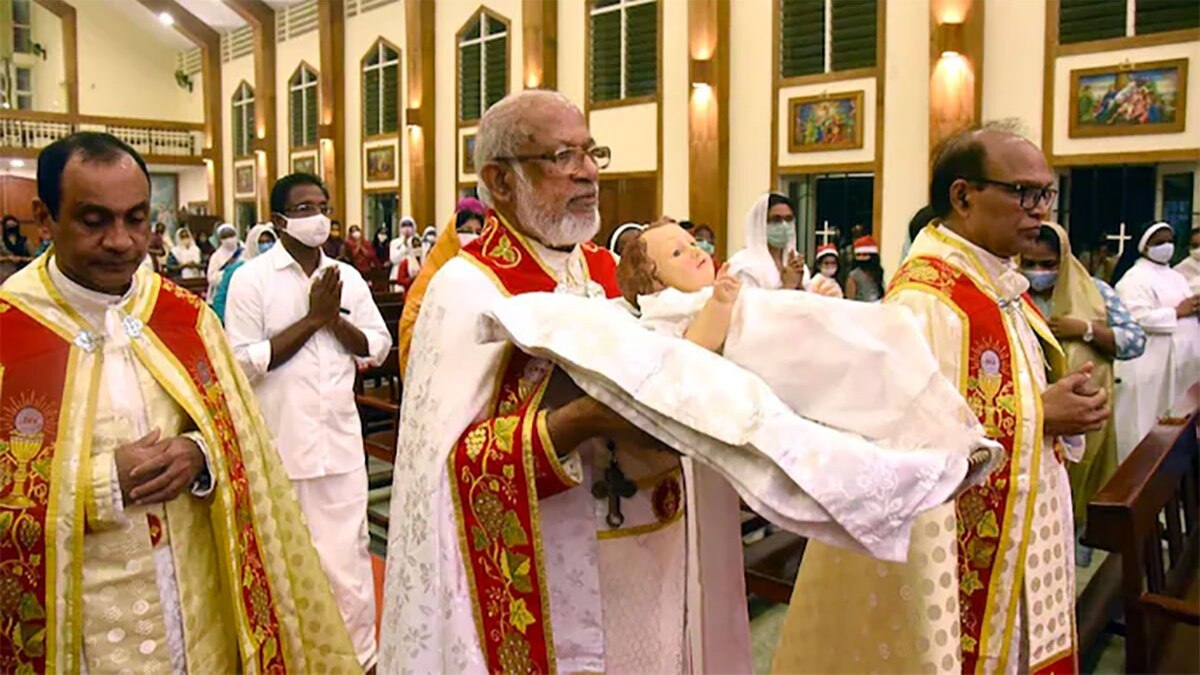
Similarly, anyone who questions the corruption and clerical sexual abuses present in the Catholic Church is ex-communicated from the Church. A classic example is the Syro-Malabar Church in Kerala. The Pope has openly threatened the laity and the clergy of ex-communication if they continue to insist on celebrating Mass facing the people.
Christmas is fast approaching. What does the birth of Jesus convey to us? We read in the letter of St. Paul to Philippians, “Although he was in the form of God and equal with God, he did not take advantage of this equality. Instead, he emptied himself by taking on the form of a servant, by becoming like other humans, by having a human appearance. He humbled himself by becoming obedient to the point of death, death on a cross.” (Phil.2:6-8).
To understand it better, I wish to narrate an eagle’s story. Once upon a time, a man found a baby bird as he was walking through the forest. He took it home and put it together with the chicken on his poultry farm. The eagle soon learned to eat chicken feed and behave like a chicken.
One day, a Naturalist passing by the farm noticed a young eagle inside. He asked the owner why the eagle, the king of the birds, was confined to a poultry farm with chickens. The Poultry Farm owner said, “I initially thought it was a chicken. Since I have given it chicken feed and it lives inside the farm, it has never learnt to fly. The Naturalist said, “Still, this bird has the heart of an eagle, and it can surely learn to fly.” They discussed this matter and agreed to find out whether this was possible.
Standing near the poultry farm, the Naturalist gently lifted the eagle and said, “You belong to the sky, not the earth. Stretch forth your wings and fly.” The bird was confused. It did not know what to do. It jumped down to be with the other chickens.
The next day, the Naturalist took the eagle to the terrace of the poultry farm and urged the bird, “You are an eagle. Stretch forth your wings and fly.” The eagle was afraid and did not know about its unknown self. The confused bird jumped down again, joined the chickens and started eating the chicken feed.
On the third day, the Naturalist rose early in the morning when it was still dark. He took the eagle and climbed on the nearby mountain. It was almost sunrise. He held the eagle to face the sun directly and encouraged it by saying, “You are an eagle. You belong to the sky. Stretch forth your wings and fly. The eagle looked around for some time and started to tremble with fear. The Naturalist roared, “You are an eagle. You are the king of the bird. You stretch forth your wings and fly.” Suddenly, with a big cry, the eagle flew away into the sky.
The eagle may still remember the poultry farm, the chickens, and the chicken feed. But the eagle never returned to the Poultry Farm to live there.
The hero of this story is the Naturalist. We find the following leadership qualities in him:
He was a good communicator. He communicated his message to the eagle.
He was open, honest and fair in his efforts
He had dialogues with the poultry farm owner
He acted consistently
He gave the information needed for the eagle to do its task of flying
He kept focused through proper follow-ups
He worked hard to complete his task
He made sacrifices to achieve his goal
He created a conducive atmosphere for the eagle to fly
He gave continuous encouragement to the eagle
He displayed tolerance and flexibility
He demonstrated assertiveness
He was open to accept his mistakes and correct them
He made himself available and accessible
He took up risks and challenges
He imparted training to the eagle effectively
He did continuous research and tried to be creative
He was a lover of nature
He had love and compassion for the confined eagle
He respected the uniqueness/individuality of the eagle and chickens
He had a clear vision and dream
He had self-confidence and confidence in the eagle
He set a high goal for the eagle and emphasised it with optimism
Let us put the ordinary people, especially the marginalised communities, in the place of the eagle. In Tamil, the lyrics of a film song say, “If you confine a Cuckoo to a cage and insist that it must sing, how will it sing? If you break the legs of a Peacock and tell it to dance, how will it dance?” Similarly, millions of marginalised communities are excluded from the mainstream society. They are confined to places like poultry farms without even knowing their worth, potential and capabilities. Moreover, they have been deprived of their holistic growth for ages. In such a scenario, Jesus came into this world and exhibited leadership qualities like the Naturalist.
Do we find the same qualities in today’s leaders? Sadly no. During this Christmas, let us not stop with just “festivities”. Let all those who are in the position of a leader - cardinals, arch/bishops, priests, religious brothers, nuns, directors, principals, managers and heads of institutions, etc. – do a sincere introspection and find out as to what extent they lack true leadership qualities. Thinking, speaking and living with the marginalised is the meaning of incarnational leadership.
.jpg)
.png) Cedric Prakash
Cedric Prakash
 ICPA
ICPA
 ICPA
ICPA
 ICPA
ICPA
 ICPA
ICPA
 ICPA
ICPA
 ICPA
ICPA
.jpg)
 A. J. Philip
.jpg)
.png) Jacob Peenikaparambil
Jacob Peenikaparambil
.jpg)
.png) John Dayal
John Dayal