

 A. J. Philip
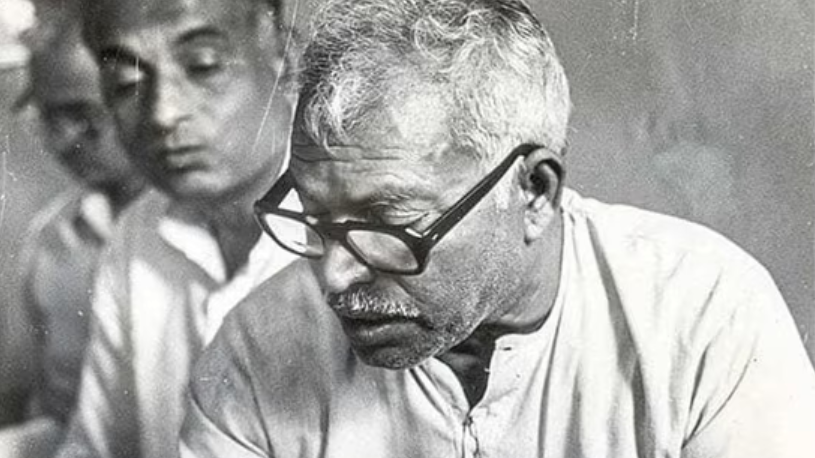
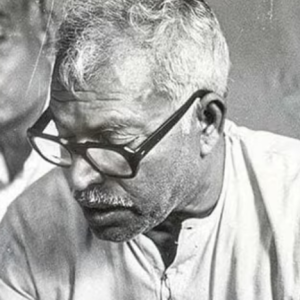
Like countless people, I was very happy when President Droupadi Murmu announced the name of Karpoori Thakur as the posthumous recipient of the highest civilian honour of Bharat Ratna this year. She made the announcement on January 23, a day before his 100th birth anniversary. I personally felt that the government was honouring itself and enhancing the prestige of the award by conferring it on Jan Nayak, as he was popularly known.
I had no idea at that time that a few days later, Prime Minister Narendra Modi would himself announce the name of Lal Krishna Advani as another recipient of the same award. It was the first time two names for Bharat Ratna were announced in the same year.
It was curious that Modi made the announcement about Advani when Murmu was the right person to do so. What better can be expected when the Union government calls itself Modi Sarkar when, constitutionally, India follows a Cabinet system where the prime minister is the first among equals?
If Thakur's name has brought lustre to Bharat Ratna, Advani's name has cast a shadow on the same medal. It is because of his questionable role in spearheading the Ayodhya movement that resulted in the demolition of the Babri Masjid and the trail of riots that he left behind as he travelled in a makeshift Rath from Somnath to Ayodhya until his arrest upon entering Samastipur district in Bihar.
At that time, Advani said that December 6, 1992, was "the saddest day in my life". Many Vishwa Hindu Parishad leaders like Ashok Singhal openly rebuked him for saying so. What did Advani gain? He was not even appropriately invited when the temple was "consecrated" at Ayodhya.
When Modi became Prime Minister in 2014, he was included in what he called Margdarshak Mandal, an advisory board that consisted of another party veteran, Murli Manohar Joshi. It is a different matter that the Mandal never met, and Modi never sought the duo's advice. By then, Advani had been rendered a non-entity in the party.
The hardcore cadres remember Advani not for his political daredevilry but for describing Pakistan founder Muhammed Ali Jinnah as a secular leader. Having read Advani's autobiography and having translated the biography of Swami Rangnathananda by D. Vijayamohan, I know the context in which Advani made that statement.
As ill luck would have it, he was condemned forever by the BJP cadres for that innocuous statement on Jinnah. I can only say that God has His way of dealing with persons and situations. Modi waited 10 years to confer the award on him when he knew that posterity would remember him, not Advani, for constructing the temple.
How did Karpoori Thakur come into Modi's scheme of things? While speaking in Parliament early this week, he ridiculed the Congress for opposing Thakur when he became chief minister in Bihar. Poor Modi does not know that Thakur came into politics as a Congressman by participating in the Quit India movement. He had to court arrest, unlike Modi, who managed to remain in the US throughout the Emergency period and never went to jail.
He left Congress long ago and became the right-hand man of Ram Manohar Lohia. He could have become the chief minister as early as 1967, but the upper caste lobby ensured that Mahamaya Prasad Sinha became the first-ever non-Congress chief minister.
Thakur had to see Satish Prasad Singh, BP Mandal, and Bhola Paswan Shastri become chief ministers before he could become one. He had two terms as chief minister, but the total period was less than three years. Congress was the main rival in Bihar, and how could it have supported him? It is like Modi blaming the Congress for opposing him.
It was on January 24, 2024, that the centenary celebrations of Thakur ended. Apart from conferring Bharat Ratna on him, has the Modi government done anything to perpetuate his memory? He was not just an individual. He represented an ideology that was totally opposed to Hindutva.
When Lohia sent him to Europe to attend a conference, he did not have proper woollen garments. Instead of buying one, he borrowed one. This would be unthinkable for Modi, whom nobody has seen wearing a dress the second time. It is politics of a different kind that prompted Modi to honour Thakur.
For all his confidence in the BJP winning 370 seats in the next election, he knows that without the support of Nitish Kumar, he cannot win a majority of the seats in Bihar. Nitish Kumar is a Kurmi by caste, though he claims that he is the one who identified the most backwards among the backwards. Thakur belonged to the Barber community, one of the most backward.
It was with the votes of the most backwards in mind that Thakur was remembered in the election year. He never considered himself a caste leader, but he believed in what Lohia used to say, "Class is mobile caste. Caste is immobile class." He knew that many who speak against caste hierarchy are casteists when it comes to sharing food or having social intercourse.
He believed it pointless to ignore caste while advocating equity in all walks of life. He believed in competence, so much so that when a contest occurred for the party's leadership, he roundly defeated Satyendra Narain Sinha, a Rajput. He also knew that in the name of competence, many were not even considered for specific posts. A person born in a lower caste lost the right to do certain jobs while nobody from the upper castes competed for a janitor's or a scavenger's post.
It was this politics that Thakur opposed tooth and nail. He will forever be remembered for what has come to be known as the Karpoori Thakur formula. The formula was forgotten when BP Mandal, a Yadav from Madhepura, a former chief minister, submitted his report to the Centre. It remained in cold storage until VP Singh, as Prime Minister, took it out and implemented it.
Mandal had recommended 27 per cent reservation in jobs and admissions for what is popularly known as the other backward classes (OBCs) but constitutionally known as the educationally and socially backward classes. Thakur knew much better than others that when it came to competition, the OBCs like Yadavs and Kurmis would corner all the benefits to the disadvantage of the most backwards among the OBCs.
Under the Karpoori formula, a reservation of 12 per cent was given to the OBCs, 8 per cent to the most backward, 3 per cent to women, and 3 per cent to the poor among the upper castes. If anything, it showed how concerned he was to solve a problem and not take political advantage of it. Many decades later, reservations for the poor among the upper castes have become a reality.
Modi has accused the Congress of being opposed to reservation. He found a sentence or two from Jawaharlal Nehru's speeches or written texts to claim that he was against it. The fact of the matter is that the Jan Sangh and its successor, the BJP, were never in favour of reservation. If Modi reads the Organiser, which is the mouthpiece of the RSS, he will come across several editorials and articles denouncing reservation. A few years back, the present RSS chief spoke against reservation. Of course, he had to make amends for his statement as the BJP cannot afford to antagonise the beneficiaries of reservation.
What is happening now is that the government has not been filling vacancies in government. As a result, there are thousands of posts reserved for OBCs, Scheduled Castes, and Scheduled Tribes which are vacant. The government manages by giving extensions to retired employees or allowing lateral entry.
In universities and colleges, part-time lecturers have become the order of the day. They need to be paid only a fraction of the salary they would have received had they been appointed regularly. This is how the government has been cleverly sabotaging reservations. True, the Congress was also not a votary of reservation, but its leaders were far more restrained than the Jan Sangh leaders when they questioned Thakur on his reservation formula.
Thakur was known for simple living and high thinking. He was a true socialist who believed social justice could not be ensured when the disparity between the rich and the poor grew. He believed in social ownership of the means of production, as opposed to private ownership. Small wonder that he led an agitation in Telco in Jamshedpur, then part of Bihar.
True, both Lalu Yadav and Nitish Kumar claim to subscribe to Thakur's political philosophy. The truth is that both of them use caste for political purposes. They do not have any faith in socialism. True, Lalu Yadav never compromised with the BJP's brand of communalism. In Kumar's case, he will be ready to dump his present ally, the BJP, if he believes Modi is unlikely to return in the coming elections. He changes his political colour quicker than a chameleon would do.
Thakur never compromised with either communalism or casteism. There is no leader in independent India who comes anywhere near him when it comes to probity. He never misused power. Nor did he use it to promote his or his family's welfare. In his electoral career that began in 1952, he lost only one election in 1984. Yet, he did not leave a fat bank balance or property for his children, grandchildren, and great-grandchildren to enjoy.
His birth centenary has been celebrated chiefly on social media for the last year. The Central government, which suddenly found merit in him to confer Bharat Ratna, has not done anything to perpetuate his memory or to promote his political philosophy.
In fact, if Thakur were alive today, he would have questioned the crass manner in which Modi has been exploiting the people's religious sentiments for his own political purpose. He would have been the first to oppose Modi's decision to involve a pauperised businessman with no connection to aeronautics in the Rafale project.
He would have challenged the manner in which Modi forced tens of thousands of poor people, especially from Bihar and Uttar Pradesh, to walk hundreds of kilometres to reach their homes during the lockdown. He would have questioned the propriety of letting just 5 per cent of Indians own more than 60 per cent of the country's wealth while the bottom 50 per cent of the population possesses only 3 per cent of the wealth.
He would not have happily listened to Finance Minister Nirmala Sitharaman reducing the tax rates of the corporates while, as Thomas Picketty has argued in his seminal work, there is a case for increasing the taxes the rich have to pay. In other words, he has nothing to hold hands with Modi. In fact, he would have done everything possible to challenge Modi politically, economically, and socially.
Not many know that Thakur was a scholar and poet. I am indebted to Dr. Prem Singh, formerly of Delhi University, for this poem Thakur wrote during the freedom struggle: It's titled 'Hum Soe Watan Ko Jagane Chale Hain' (We walk to stir the nation awake):
"We walk to stir the nation awake/ breathe life into the dead/ to throw the gauntlet at the powerful/ who ignore the helpless ill-fed/don't push us further o tyrant/ lest we burn it all to the ground/ unbent, headlong we rush/ to raise the listless from the ground/ we walk to stir the nation awake."
Is there a trace of divisive Hindutva in his lines? Like Gandhi, Thakur's life was his message. Reducing Gandhi to a symbol of toilets is as reprehensible as reducing Karpoori Thakur to a symbol of reservation that Modi wants to end.
.jpg)
.png) Cedric Prakash
Cedric Prakash
.jpg) Elsa Lycias Joel
Elsa Lycias Joel
.jpg) A. J. Philip
A. J. Philip
.png) Jacob Peenikaparambil
Jacob Peenikaparambil
.jpg)
.png) John Dayal
John Dayal
.jpg)
.jpg)
.png) Joseph Maliakan
Joseph Maliakan
.png)
.png) Robert Clements
Robert Clements
.jpg) Cedric Prakash
Cedric Prakash
 ICPA
ICPA