

.jpg) Peter Mundackal
Peter Mundackal
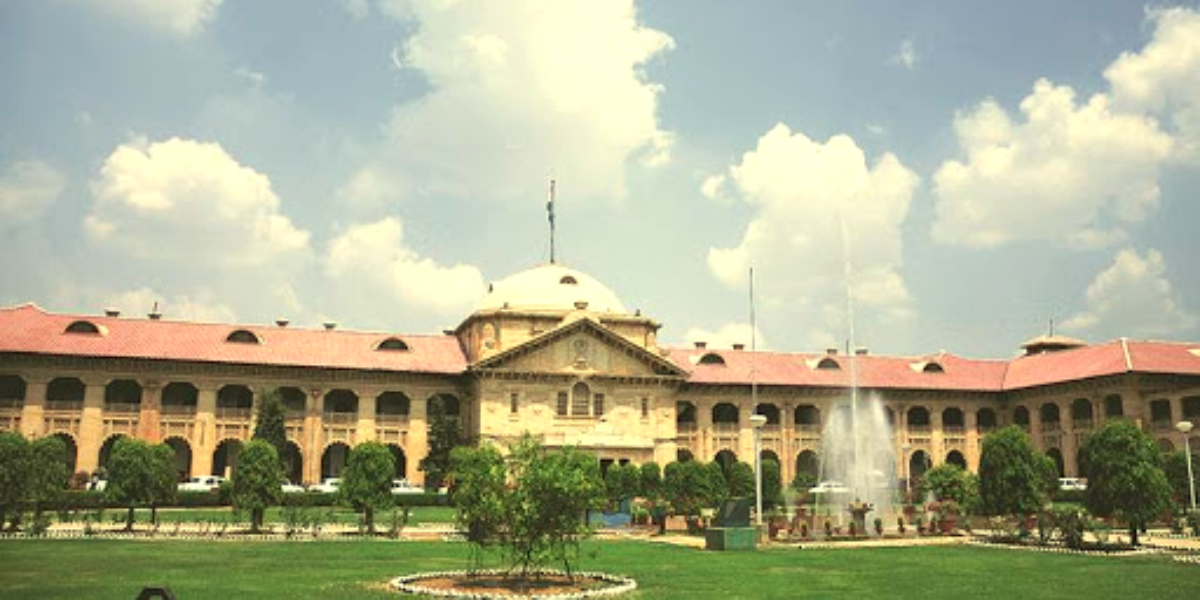
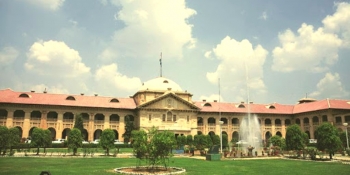
Recently, The Indian Express carried a report of their investigation into the verdicts of the Allahabad High Court, during January 2018 to December 2020, which quashed the orders passed by the Uttar Pradesh Government under National Security Act (NSA), for detention of individuals apparently undeserving of punishment under such a draconian Act, but belonging significantly to one particular minority community. It was quite a laudable, and in these days, a really bold effort.
The fact that of the 120 orders passed by the State Government under the NSA, 94 – as high as nearly 80% - were quashed by the High Court is too significant not to be taken special note of. Particulars of these orders are tabulated below:
|
Total NSA Orders |
NSA Detentions- Cow Slaughter | NSA Detentions - Communal Incidents | NSA Detentions - Political Cases |
NSA Detentions - Others |
|
120 |
41 | 20 | 25 | 34 |
|
Quashed by HC |
30 | 20 | 20 | 24 |
The 94 detention orders which were given out by the District Magistrates in 32 districts, were conspicuous by the usage of same or similar phrases, the Court noted, as if these were cut-pasted from one order to another! Also, the Court emphasized, these were too general and lacked specificity. One can easily trace the chain of command followed by the meek Magistrates!
Delving further into the reasons for quashing these orders, the IE report states that the learned Judges perceived “non application of mind”, “denial of due process to the accused” and “repeated use of the law to block the trial”.
In case after case, says the IE report, the Allahabad High Court has red-flagged the way the UP Government has used the draconian NSA which gives the State powers to arrest people without formal charge or trial.
Cow slaughter, as the above tabulation indicates, is the first category for invoking NSA. Although the individuals concerned could very well have been arrested under the Anti Cow Slaughter Act, they have been booked under the NSA, presumably to prevent them appealing for and securing bail. In 30 out of the 41 cases under this category, the High Court indicted the state administration strongly and ordered immediate release of the respective prisoners. These 41 rulings were delivered by ten two-judge benches of the Allahabad High Court, involving a total of 16 judges, thereby establishing an uncomfortable fact – the decisions of the State Government were patently unjust in the eyes of the law, as perceived by so many judicial personnel.
IE investigation supports their report with an exhaustive list of 10 individuals released. For the sake of brevity, an illustrative list of five case is given in the following tabulation with relevant particulars:
|
Detenu |
NSA Order |
Key observations of the High Court |
|
Liaq Alias Lakku |
On July 31, 2017, by DM Kannauj Relying on FIR alleging cow slaughter in “open field” |
“….Subjective satisfaction as recorded by the DM is bad in law…… Detaining authority was unduly swayed by the representations and the applications given by the city President of the BJP as well as the District President of the Hindu Yuva Vahini and …the detaining authority has not evaluated the circumstances with a free mind, individually and independently.” |
|
2. |
On August 14, 2017, by DM Muzaffaarnagar on FIR that claimed police received a tip-off from “informer” about cow slaughter in “vacant field”; police team heard a “conversation” that the accused would “despatch the material to Delhi and will bring more cows from Haryana to make their profession flourish”. |
“….. the order was passed in a mechanical manner …merely on the basis of the report of the police” and that the DM was “not at all conscious of all the relevant aspects of the case”… It is essential that the detaining authority must have applied its mind to the question whether it is necessary to detain a particular person with a view to prevent him from acting prejudicially to any of the objects mentioned the Act”. |
|
3. |
On Aug 30, 2017, by DM Azamgarh on FIR alleging cow slaughtser inside a house. |
“ …….Qureshi was detained under the NSA, as there was anger among the other community, but could not point out that the act of the petitioner was prejudicial to disturbance of public order”…Citing Supreme Court, the HC said that “the proper course would be oppose the bail application and if granted, challenge the order in the higher forum, but not circumvent it by passing an order of detention merely to supersede the bail order”. |
|
4. |
On April 13, 2018, by DM Muzzaffarnagar on FIR alleging cow slaughter “inside a house, behind a graveyard” |
The order has been challenged on the ground that the accused was to be given an opportunity to appear, or represent him, before the Advisory Board…… Citing Supreme Court, it said: “If the detaining authority or the government takes the aid of a legal practitioner or legal advisor before the Advisory Board, the detenu must be allowed the facility of appearing before the Board through a legal practitioner. If it is denied to him then a clear case of breach of Article 14, is made out in favour of the detenu”. |
|
5. |
ON July 26, 2019, by DM Bulandshahar on FIR alleging cow slaughter inside a house. |
A report from certain central agency was expected by the concerned officer…….. “ The officer dealing with representation of the petitioner acted in a most irresponsible and negligent manner and has failed to account for the reason as to why did he call for the report from the central agency”. |
While the whole episode exposes the extraordinary zeal of the UP Government to hunt out and punish members of one particular community, it shows a benevolent judiciary, which despite occasional forebodings to the contrary, flashes a ray of hope.
(The article is indebted to the report in The Indian Express of 6 and 7 April 2021. The writer is a Development Consultant and can be reached at petermundackal@yahoo.com.)
.png) Cedric Prakash
Cedric Prakash
.JPG)
 A. J. Philip

.png) Jacob Peenikaparambil
Jacob Peenikaparambil
.jpg)
.png) John Dayal
John Dayal
.jpg)
 Pachu Menon
.png)
.png)
.png) Robert Clements
Robert Clements