

.jpg) Prakash Louis
Prakash Louis
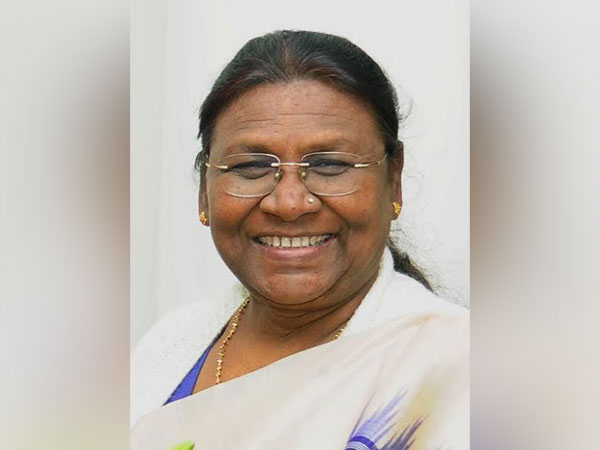
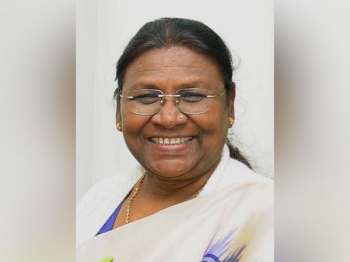
"You need to do something for these people. Who are these people in jail? They do not know the fundamental rights, preamble or the fundamental duties," the President, Droupadi Murmu, was quoted by PTI in its news report. President Murmu, in her valedictory address at the Constitution Day celebrations organised by none other than the Supreme Court in New Delhi, further said that it was everyone’s responsibility to make the process of seeking justice affordable for all. This is an indictment of the central and state governments, the government officials and machineries, politicians and political parties who have violated the fundamental rights of common and ordinary citizens of this country.
The President reiterated the central and crucial aspects of Indian Constitution and its heritage. She declared, “The cornerstone of the Constitution is summed up in its Preamble. Its singular focus is on how to increase social good. Its entire edifice rests on justice, liberty, equality and fraternity. I would like to note here that these four stellar values enshrined in our Constitution have been part of our own timeless heritage.”
Digressing from her prepared speech, the President posed a question, “Are we going ahead or going back? We are thinking of building more jails. Why? What is the need of these jails? Who are the people who are there?” Thus, she posed one of the fundamental democratic questions that haunt this country.
It is reported that over 4,000 young men and women of Jharkhand alone are in jails. Their only crime is that they are Tribals who want to save their jal, jungle aur zamine, that is, their water, forest and land. For the Tribals, these three are central and crucial, as well as integral aspects of their lives, culture, society and religion. The government-politician-official-corporate nexus wants to displace them and appropriate their resources. Whey they resist this sinister and anti-Constitutional plans, they are called naxals and are put behind bars without trial for ages. It is to release these people Fr. Stan Swamy, along with civil society, lawyers’ association, and Tribal leaders, relentlessly fought for.
The President went on to highlight the fact how she got drawn into the issue of those poor and exploited people in our prisons. She said, “As an MLA of Odisha Assembly, I was appointed as a member of the Standing Committee of Home Affairs. I visited all the jails in Odisha. I wanted to know who these prisoners are, how they are, what they are doing, what are they eating, why are they in jail, etc. I realised that they were ordinary people who were falsely accused of and put in jail. Their families cannot get them released due to huge money needed for this. If they have to release them, they will have to sell all their possession, even their utensils. Hence, they languish in jails. As the Governor of another poor state, Jharkhand, in collaboration with judges and lawyers, I managed to get around 5,000 of them released.” She further said, “There are those who are killers and criminals, rioters and rapists who are roaming around freely.”
In the last 70 years of Republic of India, the nation has witnessed many Presidents who were mere ‘rubber stamps’ toeing the line of the establishment. Dr. K.R.Narayanan was one who became the conscious keeper of the country. For instance, when a delegation of Tribals met him in 2000 to express its reservation on the proposed ‘National Policy on Tribals’, he directed the government to withdraw the draft. The then Prime Minister, Atal Bihari Vajpayee, was magnanimous and withdrew the draft policy. For many of his pro-citizen stand, Dr. Narayanan was called ‘conscious keeper of the country’.
When the name of Droupadi Murmu appeared as NDA’s candidate for President of the country. conscious citizens were skeptical. But the President has proved us wrong and has taken a stand in favour of the ‘weaker sections’, that is, the Tribals, the Dalits, the most backward castes, the minorities and others whose rights are being trampled upon by the powerful of this country. These exploited and marginalized citizens constitute over 70% of the population. It is they who are denied constitutional protection at all levels.
From her speech one can gather more instances of her being and becoming the conscience keeper of the country, especially in favour of the vulnerable and the marginalized. She further stated, “The onus to make the process of seeking justice affordable is on all of us.” Thus she laid the responsibility on the ruling elite of the country to discharge their responsibilities in a just manner. She went on to urge the executive, judiciary and legislature to provide an effective dispute resolution mechanism to mitigate people's plight.
It is heartening to see that the President has not forgotten her humble origin like some of the others. After being sworn in as the 15th President of the country, she stated that she started her life journey from a small tribal village in Odisha. She went on to say that it was like a dream even to get primary education. Coming from this background and now occupying the position of Head of the State of the Republic, Droupadi Murmu has shown clearly her option. That is, not to enjoy the power, position and privileges but to speak in favour of the citizens. Especially the most marginalized segments.
The President also highlighted the role of women in the framing of the Constitution. She appreciated the progress made with regard to women but cautioned that there is no place for complacency. This goes to state that she recognises the state of women in the country and society and would take the lead to keep calling the rulers to work to ensure total and integral rights and dignity of women as enshrined in the Constitution.
The President did not limit herself to call the attention of the government to issues necessary to put the Constitution into practice. But pointed to the fact that the Constitution outlines a map for good governance. Good governance exists where there is accountability, transparency, equality and inclusiveness. This goes far beyond the powers and functions of government. Governance calls for total responsibility of the various sectors of government to be answerable to its citizens through its pro-poor and pro-citizen policies and programs, rules and regulations, schemes and provisions. Also, the government should treat every citizen equal before law of the nation. But this is thrown to the winds by the rulers of the country.
It is reported that two days after the President’s address, the Supreme Court directed the state jail authorities to submit details of the prisoners who have been languishing in jail even after obtaining bail. The jail authorities are directed to first send the details to the state governments, who will then forward the same to the National Legal Service Authority within 15 days. Thus, the President has set the ball rolling to provide justice to those who are languishing in jail.
Drawing inspiration from Dr. Ambedkar, it can be boldly affirmed that justice implies that all benefits and privileges in the society and polity should be shared by all its members. If there is any structural inequality towards any particular section, the government should, through positive action, do away with the inequality and injustice. But it appears that the political elite have become partisan in their discharge of democratic duties. In conclusion, paraphrasing the Talisman of Mahatma Gandhiji in the background of the President’s speech on the Constitutional Day it can be stated, ‘Even if one Indian languishes in jail being falsely accused by the powerful or in trivial matters, the entire conscience of this country is imprisoned’.
.jpeg)
 A. J. Philip
.jpg)
.png) Jacob Peenikaparambil
Jacob Peenikaparambil
.jpg)
.png) John Dayal
John Dayal
.jpg)
 Pachu Menon
.jpg)

.png)
.png)
.png) Robert Clements
Robert Clements
.jpg)