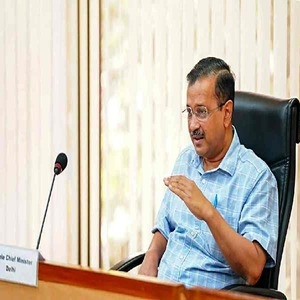


.jpg) Mathew John
Mathew John
.jpg)
The incomparable James Baldwin pronounced with profound simplicity that “one writes out of one thing only – one’s own experience,” and from that experience tries to wrench out “the last drop, sweet or bitter it can give.” How true of the writer’s craft, even that of a lowly hack! This composition is, after a fashion, the upshot of an association of ideas, events and people relating to the experience of corruption. In the end, it is a story of nemesis confronting hubris!
A recent essay on the monstrous corruption under the present regime provoked remonstrations from some critics who chastised me for describing the India Against Corruption (IAC) movement steered by Arvind Kejriwal as “messianic” and a force for good, for ramming through the groundbreaking Lokpal Act in 2013. I was admonished for bestowing a halo on what was a sanctimonious and disingenuous middle-class uprising against political corruption that, in tandem with the infamous CAG, Vinod Rai, and his trumped-up notional loss of Rs 1.76 lakh crores to the Exchequer apropos of the 2G spectrum allotment, cleared the way for the alleged but now absolved conductor of Gujarat 2002. In my critics’ view, it was ultimately not about fighting corruption but a deep-rooted RSS-backed plot to wrest control of the polity. One should have but didn’t smell the rat when Kejriwal roped in Hindutva icons Ramdev and Sri Sri Ravishankar to the IAC fold. Much later, Prashant Bhushan, one of IAC’s leading lights, conceded that his outfit was “propped up by the RSS and the BJP”.
Ironically, almost all my critics were at one time passionate devotees of Kejriwal and gang. Who wasn’t? The entire country was initially suckered into believing the third-rate cops-and-robbers narrative spun by these self-righteous do-gooders. A decade ago, Kejriwal and his cabal -- with Anna Hazare as bewildered talisman – were perceived as starry-eyed idealists on a mission to awaken people to the rot in the system. Despite a host of seasoned professionals and intellectuals in the IAC, it was the Kejriwal, the upstart, who usurped the leadership mantle through sheer ingenious guile. To give the devil credit, he was undoubtedly the moving force in the crusade against corruption.
What was unknown at that time was his pathological craving for power. And his unbridled ambition was far from quenched by bringing the venal UPA government to its knees and forcing through the Lokpal Act. Having got a taste of power, albeit without accountability, he lusted for more. Kejriwal realised that the anti-corruption movement had run its course and he needed to migrate to where the real power was to remain relevant in the public sphere.
In late 2012, Kejriwal broke away from Anna Hazare who had, in any case, expended his usefulness as titular head of the anti-corruption campaign but the rumoured trigger for the parting of ways was the issue of converting the IAC movement into a political entity. Even as the old man faded into insignificance, Kejriwal formed the Aam Aadmi Party (AAP), determined to exploit the mass public support and goodwill generated by the IAC movement. His instincts were spot on as the new kids on the block emerged ahead of the Congress and the BJP with 28 of the 70 Assembly seats in the 2013 Delhi election.
In the 2015 Delhi Assembly elections, this fledgling party won a resounding victory, claiming 67 of the 70 seats, decimating the two major political parties. AAP struck a chord among all sections with its message of a moral political order based on the sovereignty of the people and devolution of powers to the grassroots. It denounced caste and community-based politics and upheld the dignity of the individual and her right to essential goods including free water and subsidized electricity. It purveyed an ideological neutrality that sought to absorb the best in capitalism and socialism. A party comprising academics, lawyers, technocrats, bureaucrats, actors, holy men, et al spoke an audacious democratic idiom that held out hope of a new form of governance free of corruption and based on the well-being and collective will of the people. As it has turned out, AAP’s success is premised on a BIG LIE!
The Bible proclaims that God created man in his own image. Likewise, a powerful leader inevitably moulds his party into a mirror reflection of his personality and character. And when the leader is self-obsessive, the party is subsumed under the sheer weight of his egomaniacal persona. Both AAP and the BJP have been morally crippled by such supermen.
There are striking similarities between Kejriwal and the Vishwaguru. Although the bush shirted, mufflered aam aadmi is sartorially very different from the dandy accoutred in Maybach shades and flashy kurtas, they share much in common. They are possessed of an all-consuming lust for power, who refuse to be distracted by considerations of right and wrong. They are so addicted to mendacity that exaggeration is their nearest link to the truth. They shamelessly parade religion in the public square for personal benefit, heedless of the damage it does to the secular fabric. They take credit when things are going well but are deft at deflecting blame when anything bombs. The universe is only about them!
Very early in the piece, Kejriwal decided to hitch his lot to self-serving power politics. Autocratic to the core, he went about neutralising anyone who was seen as a competitor or pricked his conscience. Much like the Vishwaguru who, without ado, consigned Advani and MM Joshi to the margdarshak back burner, Kejriwal’s first significant move was to banish Prashant Bhushan and Yogendra Yadav who represented the conscience of AAP and incessantly reminded him of the moral code that was the raison d’etre of the party. In another cynical move, he nominated two nonentities – a businessman and a CA belonging to his caste – to the Rajya Sabha, ignoring luminaries who had slaved for the party, provoking allegations that he had traded the seats.
Perhaps the clearest pointer to Kejriwal’s metamorphosis into a power-hungry politician has been his stance on the Lokpal as head of the Delhi government. The Jan Lokpal Bill passed in 2015 by the Delhi Assembly has still not been ratified into law – the casualty in an unending saga of obfuscation and bitter recrimination between the AAP and the Lieutenant Governor, neither keen on an independent ombudsman. Another indicator of his transformation into a hardened, reprobate leader was his abortive attempt to wrest control of the Anti-Corruption Bureau of the State in direct contravention of the IAC’s sacred credo that anti-corruption units should be independent of the political executive.
A man’s real character is revealed in dire adversity. Long ago Dante said that the hottest places in hell are reserved for those who are non-aligned in times of grave crisis. The riots in North-East Delhi in 2020, over four nightmarish days, was the most awful exhibition of human depravity since the Sikh pogrom in 1984. At this critical time, the Chief Minister went missing, using the fig leaf that law and order was not his domain. A man who has sought the limelight in every situation, played the artful dodger when his people needed him most for the treacherous reason that any intervention would antagonise the majority community; so he let people die. Thomas Paine had people like Kejriwal in mind when he observed that the cunning of the fox is as murderous as the violence of the wolf.
A memorable quotation credited to Kejriwal reads: “Power does not corrupt men; fools (and I would add “knaves”), however, if they get into a position of power, corrupt power.” The author of the phrase is, in truth, George Bernard Shaw. Ironically, the Shaw quote that he usurped fits him like a glove. Having betrayed the enormous faith and goodwill of his people, the hubristic preacher on public morality is today running scared, fearful of being sent to jail for alleged corruption. Is it Karma catching up?
And yet, in the next election, confronted with a Hobson’s choice of deciding between the devil and a bigger devil, the elector might still opt for the devil. That’s how far gone we are in the all-pervasive venality of our politics!
(The writer is a former civil servant. The views are personal)
.jpg)
.png) Cedric Prakash
Cedric Prakash
 ICPA
ICPA
 ICPA
ICPA
 ICPA
ICPA
 ICPA
ICPA
 ICPA
ICPA
 ICPA
ICPA
.jpg)
 A. J. Philip
.jpg)
.png) Jacob Peenikaparambil
Jacob Peenikaparambil
.jpg)
.png) John Dayal
John Dayal