


.jpg) Abdul Khaliq and Mathew John
Abdul Khaliq and Mathew John

It was the 18th of March 2020. A nation-wide lockdown was announced. The University was closed. Most of the students returned home. A few of us decided to stay back. Fortunately, one mess was functioning. Even though the food was not good, still I decided to stay back and prepare for a competitive examination. My mother too supported this idea. Soon it was learned that flights and trains were also cancelled. In short, I was “locked” in the University Town of Manipal, India.
Usually ours is a bustling university with sky-rise buildings, heavy traffic and crowds everywhere, especially in the evenings. Surprisingly, the lock-down was so complete that it was like a deserted place. It looked as though the old tiger may visit the Tiger Circle again, the centre of Manipal and an important landmark in the days of old. Of course, neither the tiger, nor the circle is there presently.
By now, the virus has taken over, not only our country but most parts of the world. People suffered quietly with the hope that the attack would be short-lived. The rituals like clanging the vessels and lighting special lamps did not scare the virus. After a few days, there was some respite. The health authorities boasted that they had conquered the virus. Alas! The virus changed into another outfit: they called it the delta variant. This time it attacked more severely. The death toll mounted to lakhs. People died due to lack of oxygen, leave alone medicines and hospital beds. The health infrastructure collapsed. Still many were saved by the hardworking doctors, nurses and health-care personnel.
During this difficult period, teams of scientists were working on war footing. They did achieve excellent results, leading to the development of vaccines in record time. Experimental trials on existing medicines gave some valuable therapeutic regimens against COVID-19.
A large number of research papers flooded the literature; however, these often created confusion due to lack of enough data or evidence.
Similarly the technology group added many innovations born out of common sense and earned a few patents. These innovations were short lived. As on any occasion of human tragedy, the crooks made quick bucks by hoarding and black-marketing of some medicines and even oxygen. The health care authorities painfully realized the fact that the infrastructure and their preparedness were grossly inadequate. The virus had outsmarted them.
On the positive side, the research scientists have invented a number of vaccines against COVID-19. The major candidates are based on messenger-RNA (m-RNA) technology. Protein-based and viral vector-based vaccines were also made. All these were done in record time. Naturally there are deficiencies like limited efficacy, repeated inoculation requirements and side-effects. Further, industry could adopt the technology in record time and large doses of vaccines were manufactured. Equitable and need-based distribution is still a major problem, but then this is not in the realm of scientific research. Scientists should now focus on identifying the best technology that can lead to the most efficacious candidate with minimum or no side-effects.
Another major achievement is the finding that simple measures like wearing masks, social distancing, hand hygiene with frequent washing with soap and water or using sanitizer is very effective against respiratory pathogens. The seasonal outbreak of common cold and flu has decreased during this period. As doctors were not available for routine consultations, face to face tele-health technologies using online platforms were found to be effective.
The importance of health infrastructure was realized by the authorities and appropriate action has been taken. The significance of mental health was brought into focus by the pandemic. One of the important realizations is that the virus does not show partiality or bias against caste, religion, economic or gender considerations. It is not just a poor man’s disease; but unless the marginalized are protected, the rich are not safe.
What are the major takeaways from this pandemic? It looks as though time itself may be classified as the pre-pandemic and post-pandemic period. Of course, human resilience and the ability to overcome tragic situations may bring life to normal. However, a new normal is likely to be established. The economic melt-down and loss of jobs have been a serious trap for the common man, even though the pandemic provided tremendous financial gains to a few billionaires. The gap between the rich and the poor further widened threatening the delicate social fabric of a nation.
The pathetic scenes of migrant workers in India, travelling on foot without food and water, are difficult to be erased. Many died due to exhaustion and dehydration. Emotional disturbances including domestic violence, mainly due to isolation and the culture of work from home is also a painful lesson. However, many realized the importance of a disciplined life, with only essential travels, avoiding crowds and enjoying nature, the treasures of beauty available locally and to lead a healthy life. The pandemic gave a chance for animals and birds to re-assert their space.
We have learnt what is called COVID-appropriate behaviour. Is it enough? Human beings are like wounded soldiers waging a war on the pandemic. We have not yet conquered the virus. The corona virus can practise guerrilla warfare against us. Of course, the bigger question is, why this pandemic? The answer is not just in the Wuhan Laboratory or the animal market there. We may have to examine our role against nature -- our overindulgence in plundering the environment. In other words, our behaviour has to change. We have found that we are no match to viral energy. Mighty man is kneeling before the smallest of the living creatures. We have realized that we are not in total control.
Spirituality is an important asset of the human person. This is why health is a state of physical, mental and spiritual well-being. We often ignore this aspect in our life. I am not advocating religiosity; spirituality is different. Most people practice religiosity and often to the extent of fundamentalism. This is dangerous. Spirituality in essence is a form of silence. It provides comfort, serenity, hope and a sense of security. The practice of silence of the mind leads to humility and one realizes his own limitations.
When the power of science goes unchecked, it leads to the arrogance of the powerful rulers of the world. They ignore the fundamental human rights. The checks and balances of democracy are ignored. Hence freedom is in danger in many parts of the world. These forces try to divide the people on one pretext or other. Without a declared World War, the world is at war with its own subjects. The pandemic has been a great opportunity to correct this malady, with the power of silence. However it did not happen. Those in power used COVID-19 as an opportunity to further their goals.
The world has also experienced the eloquence of science. We have seen many doctors, nurses, paramedics and social workers toiling in hospitals and other make-shift health care facilities day in and day out; wearing uncomfortable personal protective equipment (PPE). They could not go home for many days at a stretch. Besides, quite a few of these core-groups succumbed to the attack of the virus. The energy for such personal sacrifice comes from spirituality, the silence of the mind. These martyrs were exposed to the loud noise of the outside world. They ignored it and concentrated on their work by the sheer will-power of their internal silence. These real achievers used scientific knowledge in a disciplined manner and saved many lives, providing succour to the sick and suffering.
In conclusion, it can be stated that the “new normal” should be governed by more science and more silence. Both these forces should go hand in hand. Intellectual humility should provide self -control to scientific achievements. One can learn a lot from the virus.
COVID-19 did not spare any one; it treated every section with equal contempt. This means that the scientific break-throughs against the virus should also reach every section of society -every nook and corner of the world. Such an approach is possible when we practice silence of the mind.
The virus, which originated in one corner of the world, has ravaged the whole world in record time. No community or nation is safe. We are all deeply intertwined in this complex web of life and death. We therefore need to respect each other and also respect nature and Mother Earth. We need to find a method of equitable distribution of nature’s wealth through scientific and social cooperation. This is the kind of lesson that the pandemic is trying to hammer on human heads. One can understand this philosophy only through “science and silence” practised together.
( Jeanne Maria is a medical student from Kasturba Medical College, Manipal.)
.jpg)
.png) Cedric Prakash
Cedric Prakash
.jpg) Elsa Lycias Joel
Elsa Lycias Joel
.jpg)
 A. J. Philip
.png) Jacob Peenikaparambil
Jacob Peenikaparambil
.jpg)
.png) John Dayal
John Dayal
.jpg)
.jpg)
.png) Joseph Maliakan
Joseph Maliakan
.png)
.png) Robert Clements
Robert Clements
.jpg) Cedric Prakash
Cedric Prakash
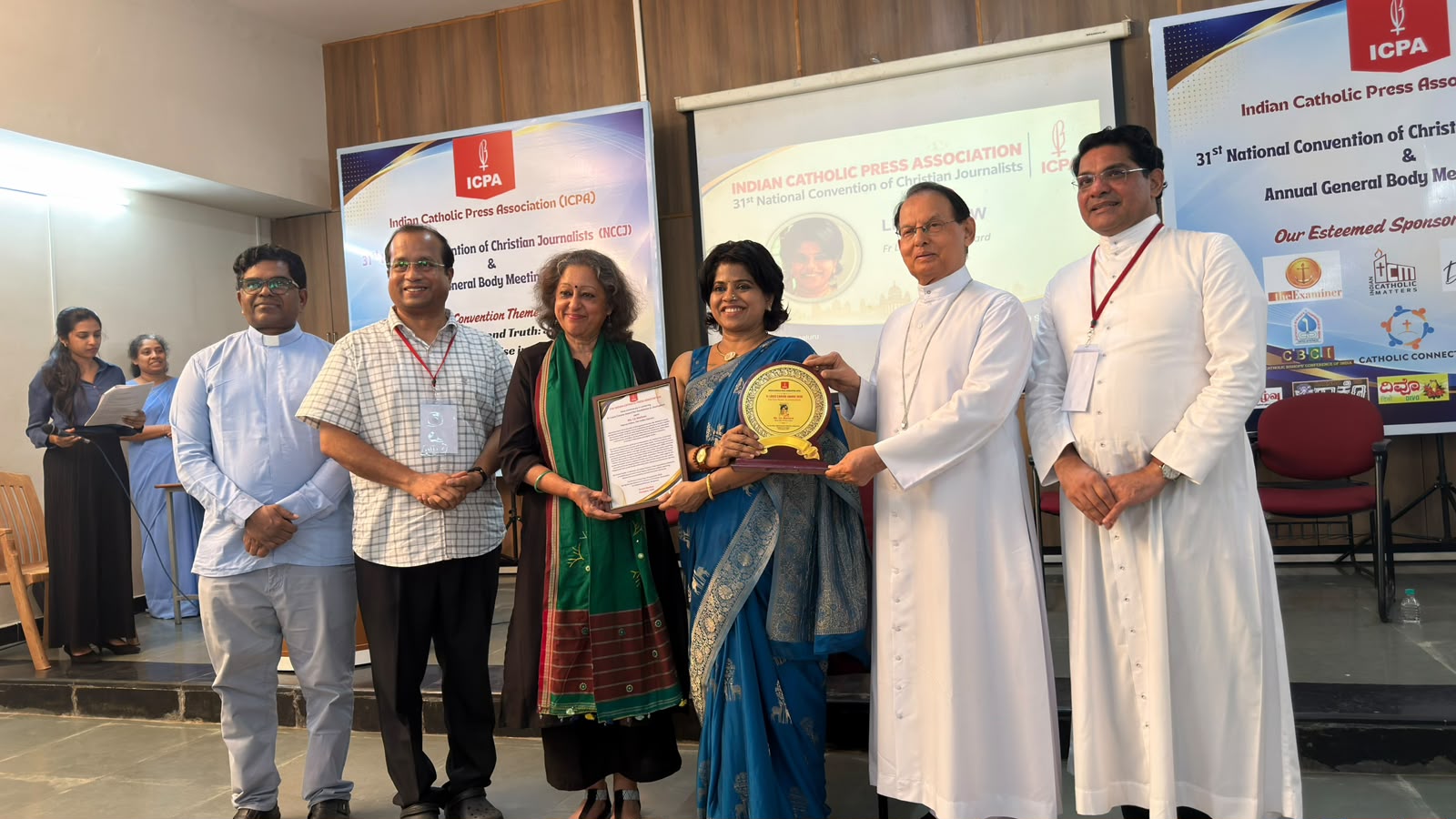
 ICPA
ICPA