

.png) Jacob Peenikaparambil
Jacob Peenikaparambil
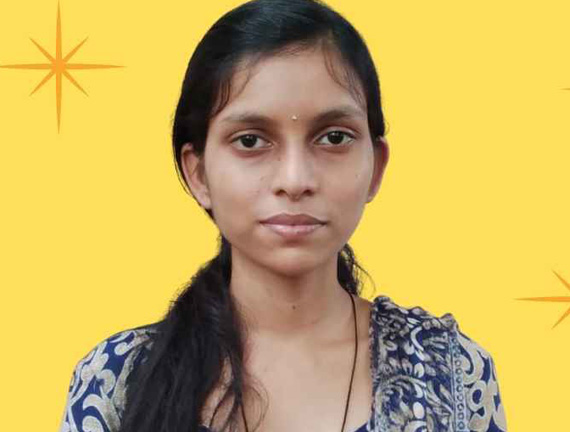
We, human beings, learn from different sources. Books, newspapers and news magazines are a few sources easily available to us. But the most important source of learning is the book of life. Indeed, we can learn a lot from our life and the lives of others. Payal Kumari, who bagged the first position in the under graduate final year examination 2020 in Mahatma Gandhi University, Kerala as a student of history and archaeology, in an interview with Ronnie Kuriakose of Manorama shared some of her experiences, insights and learning which are very enlightening to all.
Payal Kumari, daughter of a migrant worker from Bihar, securing the first rank in the final year examinations of Mahatma Gandhi University, Kerala was big news in the media in the third week of August. Despite facing many obstacles, she passed 10th Class exams with 83% and higher secondary final exam with 95% marks in the humanities stream. She has a great dream of doing Post Graduation in Jawaharlal Nehru University, Delhi and becoming a civil servant. The Chief Minister of Kerala, Pinaray Vijayan, Finance Minister Thomas Isaac and Congress MP Shashi Tharoor congratulated her on her spectacular achievement.
Payal Kumari in her interview has highlighted the significance of quality education and how it can make remarkable transformation in the life of a person. “I could have a better future here because of the quality education system. It is better than everywhere else”, she told. Kerala State is in the forefront of literacy and political awareness in comparison with other States of India because of the quality education available to the common people through the government schools and aided management schools.
Unfortunately, in the context of India good quality of education is available for the rich and the middle class who can pay for it and poor quality education to the poor who do not have the means to pay. Even though every child has the right to free and compulsory education up to the age of 14 under the Right to Education Act, the quality of education imparted through many government schools and a good number of private schools is very poor. Bulk of the poor in India is enrolled either in the government schools or the substandard private schools where the quality of learning outcomes is very poor. As per the Annual Status Education Report (ASER) 2018 about 50% students from class 5 and 25% students from class 8 cannot read a simple text of class 2 level.
The insight of Payal Kumari is a reminder to the State and Central governments to enhance the quality of education imparted through the government schools and of the private schools through proper outcome monitoring. Unequal opportunities in education will only perpetuate the gap between the rich and the poor in India.
Experience of being treated equal without any discrimination was a great encouragement for Payal Kumari to continue her education despite various roadblocks. “We were treated as equals. For me it is something endearing about Kerala.” “I had many friends. I was never made to feel any less, any different-not not then, not now”, asserts Payal. Kerala may be one of the States in India where caste, religion and economic status based discriminations are less prevalent and all people experience a sense of equality at least in the public spaces and forums. High levels of literacy and education and political awareness could be the reasons for this scenario. Media often report discrimination of children belonging to Scheduled Castes in some government schools. Discrimination of children based on caste and gender will definitely discourage them to come to school and they may dropout before completing their school education.
Learning Malayalam language was not a problem for Payal Kumari and Malayalam was the medium of her primary, high school and higher secondary education. She is fluent in three languages: Hindi, Malayalam and English. Language is not an issue for the people of India and they are open to learn any language, depending on the situation. The politicians unnecessarily create problems by playing on the emotions of the people. Imposition of any language on the people will be rejected. If our people feel that learning a language is beneficial to them they will learn it easily. Encouragement and motivation are the best means for promoting the learning of any language and not imposition.
One of the reasons for Payal Kumari’s success is the awareness of her parents about the power of education. “My parents could not study well, but they knew quite well how empowering education is. They wanted to give the best education for us. They struggled really hard to see this. Their struggle pained me, but they kept me focused”, says Payal. Parents have a very significant role in the education of their children. Hence in order to improve literacy and education parents are to be made aware of their role in the education of their children and how they can fulfil it effectively. The States that are backward in literacy have to make special efforts to motivate the parents, especially of the socially and economically disadvantaged sections.
Payal is very generous in giving credit to others for her success. She is very grateful to all those who supported and encouraged her. “I was able to continue my studies because of the generosity of many, especially my teachers. This success belongs to them too. I hope they are proud”, affirms Payal. She is also very grateful to the State of Kerala when she says, I often wonder what our lives would have been had we stayed in Bihar. Moving to Kerala has certainly changed our lives for the better.” Being grateful to God and others makes a person happy. It also creates in the persons a sense of giving back to the society.
Payal’s choice of subjects for her higher studies is based on her interest and she doesn’t blindly imitate others. Despite scoring high marks in Class 12, Payal decided to pursue Archaeology for her graduate studies. She gives a convincing answer to her strange choice when she says, “I am very much interested in Archaeology. I know not why there are not enough people pursuing it. Everyone seems to blindly follow what is now expected of all- either engineering or medicine”. Very often the parents impose their dreams on their children instead of helping them to discern their interests and unique talents and choose subjects in tune with the God given capacities to them. Payal gives a very relevant message to the students as well as to the parents- help the students to evolve their vision for life and choose the route in tune with their interests and talents.
One of the greatest drawbacks of Indian education is that it is mainly oriented towards preparing the students for a lucrative job without taking into account their real interests and capacities. That is why we have an excess of engineers and a large number of them are jobless.
In the context of India, the poor people are often the victims of multiple inequalities. “It is the mutual reinforcement of severe inequalities of different kinds that creates an extremely oppressive social system, where those at the bottom of these multiple layers of disadvantage live in conditions of extreme disempowerment”, writes Dr. Amartya Sen and Jean Dreze in their book, An Uncertain Glory of India: India and its Contradictions. It is quality education that can liberate the poor from the vicious circle of poverty and disempowerment. Payal Kumari as well as her parents understood this secret and that is their success.
(The writer can be reached at: jacobpt48@gmail.com)
(Published on 07th September 2020, Volume XXXII, Issue 37)
.jpg)
.png) Cedric Prakash
Cedric Prakash
.jpg) Elsa Lycias Joel
Elsa Lycias Joel
.jpg)
 A. J. Philip
 Jacob Peenikaparambil
.jpg)
.png) John Dayal
John Dayal
.jpg)
.jpg)
.png) Joseph Maliakan
Joseph Maliakan
.png)
.png) Robert Clements
Robert Clements
.jpg) Cedric Prakash
Cedric Prakash
 ICPA
ICPA