

.png) Joseph Maliakan
Joseph Maliakan
After two decades of slumber, the Supreme Court of India decided to wake up. Recently, in a series of judgments upholding liberty, the Supreme Court has ruled that the principle of bail being the rule and jail being the exception cannot be violated even in cases charged under the draconian Unlawful Activities Prevention Act 1967 or the Prevention of Money Laundering Act 2002.
On September 2, granting bail to Vijay Nair, the former communication in charge of the Aam Admi Party, a Supreme Court Bench of Justices Hrishikesh Roy and SVN Bhatti said that the Enforcement Directorate has not been able to complete the trial on time despite its assurances to the Court, and around 350 witnesses have to be examined.
The Supreme Court ruled that the universal proposition of bail being the rule and jail being an exception will be entirely defeated if Vijay Nair is kept in custody as an undertrial for such a long duration for an offence punishable with a maximum of seven years sentence. The bench further pointed out that the right of liberty under Article 21 is sacrosanct and must be respected even in cases where stringent provisions are enacted. The Court said Nair has been in custody for 23 months and incarcerated as an undertrial.
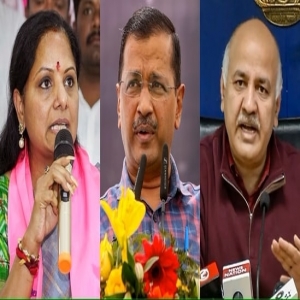
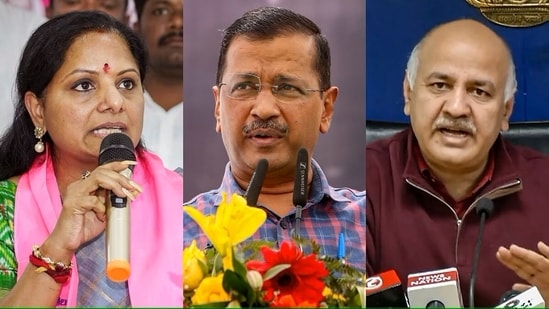
The Supreme Court order granting bail to former Delhi Chief Minister Arvind Kejriwal is significant because it questioned the legality of the Central Bureau of Investigation's arrest of him. A bench comprising Justices Surya Kant and Ujjal Bhuyan delivered the September 13, 2024, order granting bail to Kejriwal. Arvind Kejriwal was first arrested by the Enforcement Directorate on March 21, 2024, under the Prevention of Money Laundering Act in connection with the Delhi Liquor Policy 2021-22. The Central Bureau of Investigation (CBI) arrested him on June 26 in a corruption case also connected to the Liquor Policy.
While Justice Surya Kant said Kejriwal's arrest by the CBI was not illegal, Justice Bhuyan said that the arrest raises more questions than it answers. "The CBI did not feel the need to arrest him though he was interrogated in March 2023 and it was only after his ED arrest was stayed ... CBI became active and sought custody of Kejeriwal and thus no need to arrest him for over 22 months... Such action by the CBI raises serious questions on the timing of the arrest, and such arrest by the CBI was only to frustrate the bail granted in the ED case," Justice Ujjal Bhuyan said. He further pointed out that he failed to understand the hurry of the CBI to arrest Kejriwal when it had not arrested him for 22 months and only arrested him when he was on the cusp of getting bail in the ED case.
Justice Ujjal Bhuyan said, "CBI must be seen above board, and every effort must be made so that arrest is not made in a high-handed manner. In a country, perception matters, and CBI must dispel the notion of being a caged parrot and must show it is an uncaged parrot. CBI must be like Caesar's wife, above suspicion." Justice Ujjal Bhuyan added that it would be a "travesty of justice to keep Kejriwal incarcerated when he is on bail in the ED case." The power of arrest must be exercised sparingly. Pointing out that the CBI's arrest of Kejriwal was unjustified, Justice Bhuyan said, "Bail jurisprudence is a facet of developed jurisprudential system. Thus, bail is the rule, and jail is an exception. The process of trial or steps leading to arrest should not become harassment. The CBI arrest is unjustified, and thus, the appellant should be released forthwith."
On August 9, 2024, a bench of the Supreme Court comprising BR Gavai and KV Viswanathan granted bail to former Delhi Deputy CM Manish Sisodia in the corruption and money laundering cases. "We find that on account of long incarceration running around 17 months and trial having not been commenced, the appellant has been deprived of the right to speedy trial," the judges said. It further noted that there was not even a remotest possibility of a trial being completed in the near future, considering there were 495 witnesses and thousands of documents running into lakhs of pages. The order said keeping Sisodia under custody for an unlimited period of time in the hope of a speedy trial completion would result in a grave violation of the fundamental right to personal liberty under Article 21.
The Court further reiterated that prolonged incarceration and the delay in the trial should be considered in Sections 439 of the Code of Criminal Procedure and 45 of the Prevention of Money Laundering Act.
The Court also called out the prosecuting agencies' contradictory positions. On the one hand, they were ready to expedite the trial, but on June 4, they sought one month to file a supplementary chargesheet.
On August 27, 2024, a BR Gavai and KV Viswanathan bench granted bail to BRS leader K Kavitha in the money laundering and corruption cases. Kavitha was arrested by the ED on March 15, 2024, and has been under custody since then. The CBI arrested her while she was in judicial custody in the ED case. During the hearing of Kavitha's case, the Supreme Court bench also questioned the fairness of the prosecution agencies and criticised their selective treatment of some accused as approvers. "Prosecution has to be fair. A person who incriminates himself has been made a witness! Tomorrow you pick up anyone as you please? You cannot pick and choose any accused. What is this fairness? Very fair and reasonable discretion!" remarked Justice Gavai.
We can only hope that these Supreme Court judgements will lead to better behaviour by the prosecuting agencies. They will resist arbitrarily arresting people without adequate reasons and also encourage the High Courts and trial courts in the country to become liberal in the matter of granting bail.
.jpg)
.png) Cedric Prakash
Cedric Prakash
.jpg) Elsa Lycias Joel
Elsa Lycias Joel
.jpg)
 A. J. Philip
.png) Jacob Peenikaparambil
Jacob Peenikaparambil
.jpg)
.png) John Dayal
John Dayal
.jpg)
.jpg) Joseph Maliakan
Joseph Maliakan
.png)
.png) Robert Clements
Robert Clements
.jpg) Cedric Prakash
Cedric Prakash
 ICPA
ICPA