


.jpg) T.M. Joseph
T.M. Joseph

In a school year, one of the most important days for the students is Teachers’ Day. It falls on September 5, marking the birth anniversary of Dr. Sarvepalli Radhakishnan, the former President of India. He was an outstanding teacher, a famous writer, an eminent educationist and a great philosopher. Students celebrate this day to highlight the importance of the valuable contribution that the teachers make to the society.
The teachers are entrusted with the all-important task of educating the young. A teacher should always keep in mind what Horace Mann said about teaching: “A teacher who is attempting to teach without inspiring the pupil with a desire to learn is hammering on cold iron.”
William Butler Yeats says, “Education is not the filling of a pail, but the lighting of a fire.” What then is education? Education is the life-oriented, integral formation of the child that enables him to develop all his God-given potentialities to the highest possible point and grow into a person intellectually well-trained, morally a person of conscience, right principles and values, socially service-minded and committed to doing justice, spiritually inspired and personally mature, loving and open to life-long growth. A teacher’s job is the awesome task of helping the child to achieve this goal.
Ability to guide the child in his attempt to develop himself is one of the essential qualities of a teacher. A true teacher should be able to help the child to develop himself intellectually, morally, socially, spiritually and emotionally. Education should help the child to develop and organize all his human potentialities. A teacher’s job is to help the child in his attempt to develop himself.
Hitler hated the Jews and exterminated some six million of them because they were Jews. One of the Jews who was imprisoned by Hitler could not be killed because the war ended before he could kill all the Jews. That particular Jew later became the headmaster of a school and he told his teachers the following on the reopening day of the school: “I am the survivor of a concentration camp. My eyes saw what no man should have seen: gas chambers built by learned engineers, children poisoned by educated physicians, infants killed by trained nurses, women and babies shot and burned by high school and college students. So, I am afraid of education… My request is: Help your children to become humane. Your efforts should never produce learned monsters, skilled psychopaths and educated Eichmanns (Adolf Eichmann was a German-Austrian, one of the organizers of holocaust). Reading, writing and arithmetic are important only if they serve to make children more humane.”
Once a young man, desiring to become a teacher, entered the classroom and asked the students: “What would you learn of me?” The reply came: “How shall we care for our bodies? How shall we rear our children? How shall we work together? How shall we live with our fellowman? How shall we play? For what end shall we live …?” And the teacher, pondering over these words, sadly walked away, for his learningtouched not these things.”
The young beginner-teacher knew his subject well, but he was unable to answer his students’ questions; his knowledge was confined only to his academic subject. He was unable to deal with the various aspects of human life. Just the knowledge of the subject alone does not qualify a person for the teaching job. A teacher’s job would be much simpler if he has to teach only academic subjects. Teaching academic subjects is only just one aspect of the multifaceted job of a teacher.
Education should help students to organize their physical, intellectual, emotional, moral, social and spiritual activities, aptitudes, tendencies and habits. When they are well organized, we have a mature, wholesome personality. A teacher has to address the whole child, his or her mind and heart. He should instill in the children worthwhile habits of mind and heart and should really shape their character and personality. He should foster creative and critical thinking, human relationship and values, self-esteem and self-confidence. He should also aim at building up human communities of love, fellowship, freedom, justice, peace and harmony. The teacher should teach the children to care about themselves, their classmates, their school, the society in which they live and the whole world at large. David Orr says, “Education must foster in the students the essential leap from I know to I care.”
A teacher’s job is a very demanding one because he has to address the whole child, his whole personality. But I can assure you from my own experience that it is a highly enjoyable and satisfying work. It will give you immense joy and satisfaction when you see the children slowly, gradually and systematically unfold their potentialities. A teacher should continually educate oneself and should be fully aware that his or her own ongoing education will end only with his or her death. He or she should know that a teacher’s job is not simply repeating what other generations have done. He or she should try to form human beings who are creative, inventive and critical thinking. Confucius said, “Learning without thought is labor lost, thought without learning is perilous.”
A teacher should never fail to love his or her students. Goethe says, “We are shaped and fashioned by what we love.” Love is reciprocal. If a child is convinced that he is loved by his teacher, he will do whatever he or she asks him to do. “Look into our own childish faces. See you not our willing hearts? Only love us, only lead us. And we will do our parts” – Mary Howitt.
In conclusion, I would like to assert that, of all professions, the teaching one is the most satisfying and fulfilling. A teacher should always keep in mind what Chesterfield said, “Whatever is worth doing at all, is worth doing well.” Remember that no success is possible without discipline, effort and sacrifice.
.jpg)
.png) Cedric Prakash
Cedric Prakash
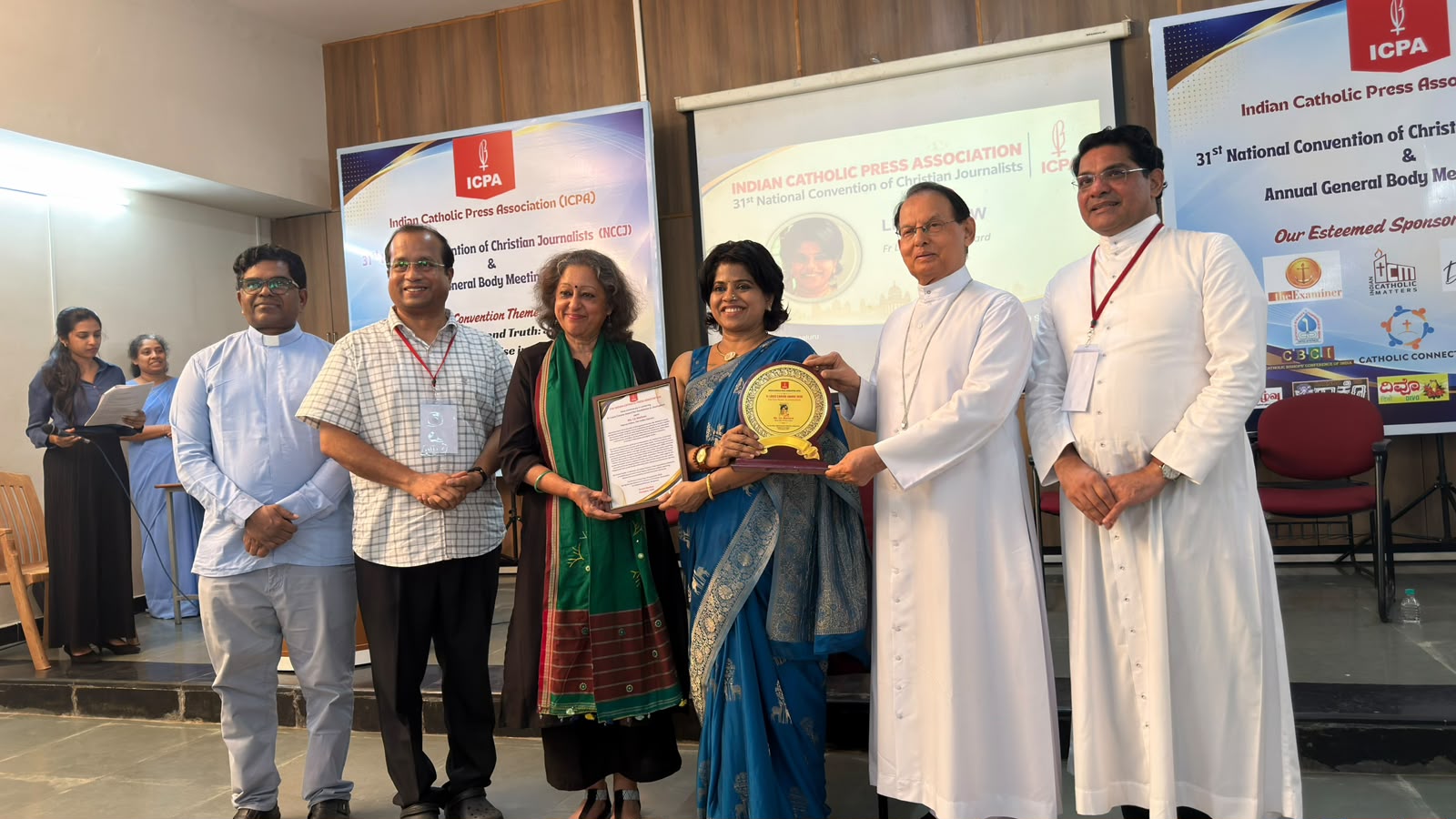
 ICPA
ICPA
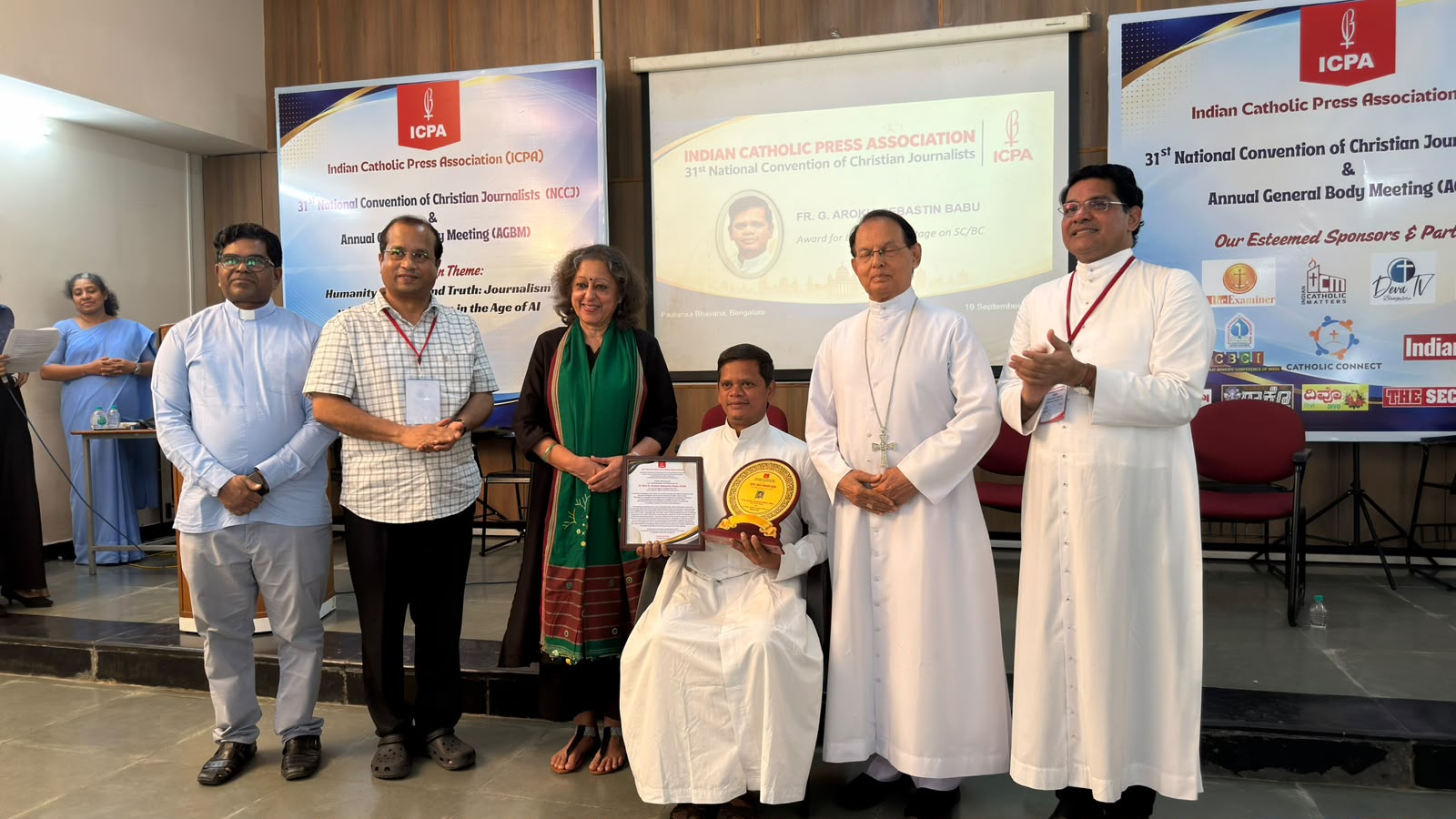 ICPA
ICPA
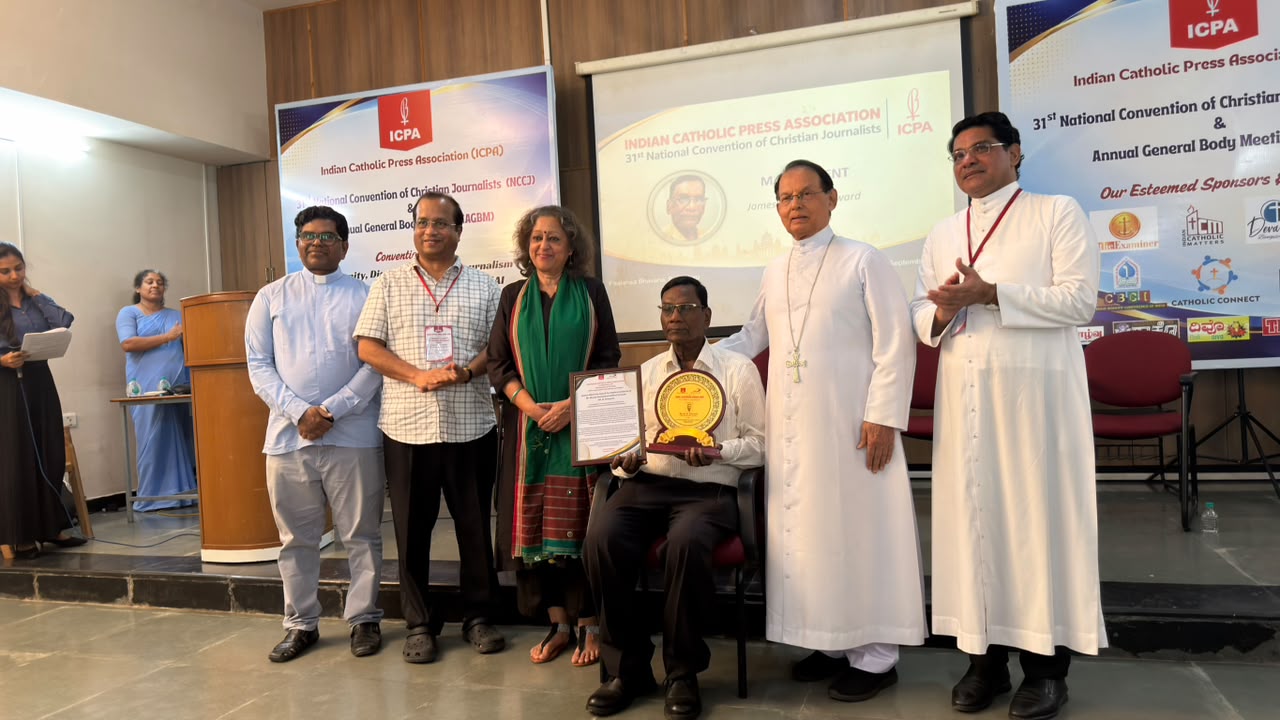 ICPA
ICPA
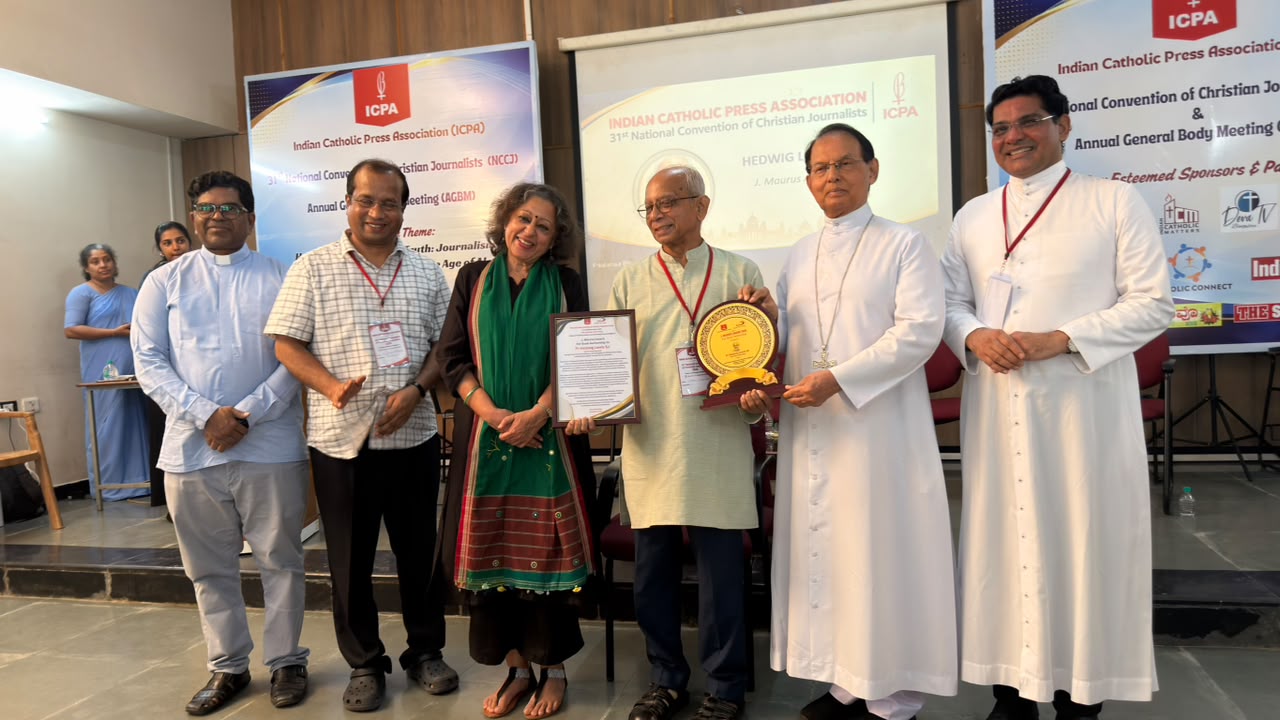 ICPA
ICPA
 ICPA
ICPA
 ICPA
ICPA
.jpg)
 A. J. Philip
.jpg)
.png) Jacob Peenikaparambil
Jacob Peenikaparambil
.jpg)
.png) John Dayal
John Dayal