

.png) Jaswant Kaur
Jaswant Kaur
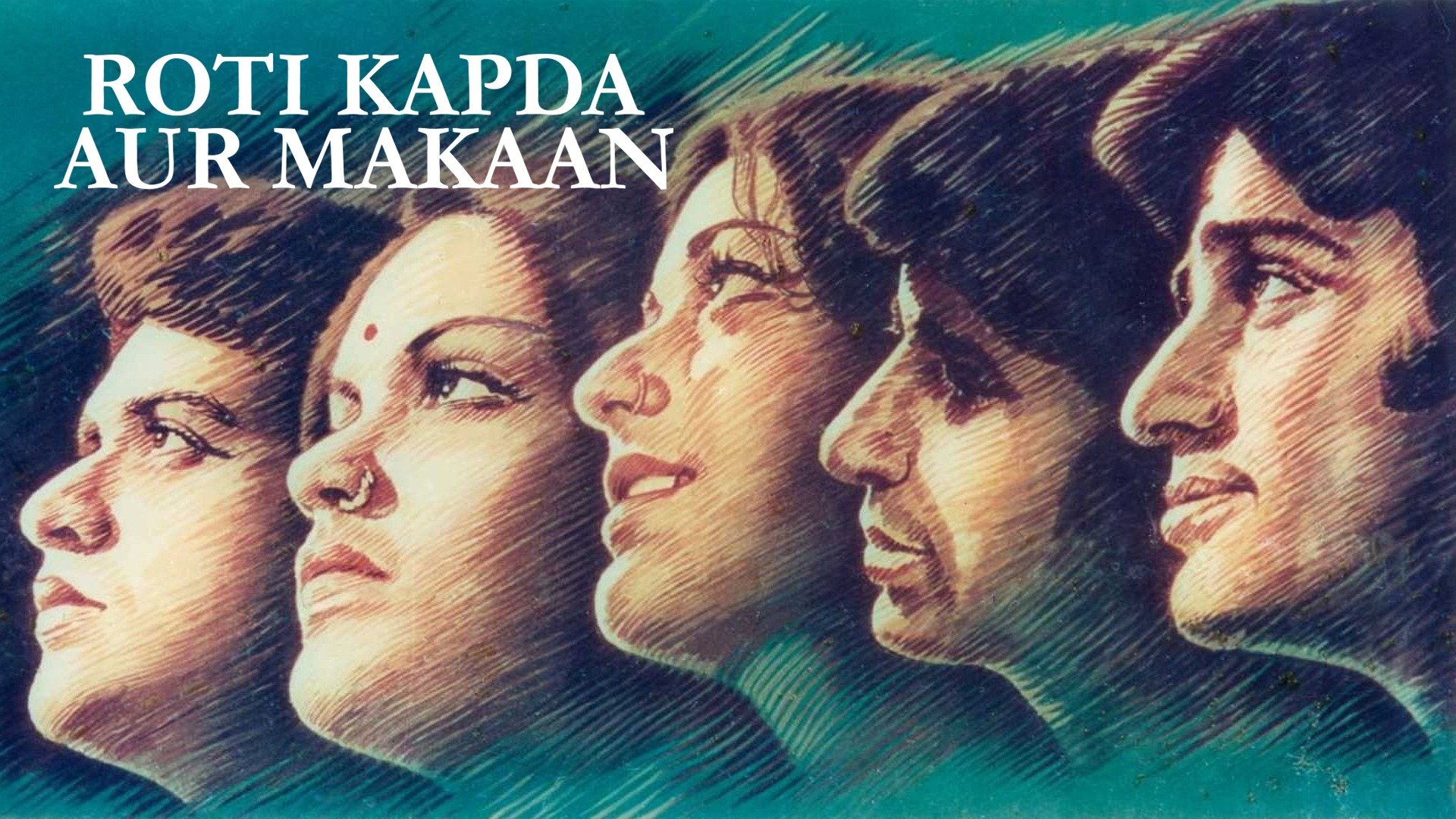
Half a decade ago, a Bollywood movie took the entire industry by storm. The Manoj Kumar starrer "Roti, Kapda aur Makaan" (Food, clothes, and housing) grabbed a lot of attention and was the highest grosser of the year with a revenue of Rs. 5.5 crore. Of course, this is too small compared to the kind of business a hit film makes these days. But what made this film a Superhit was the stark ground reality it presented. It depicted the severe deprivation and devastation of a man, Bharat (Manoj Kumar), who finally chose to work with a corrupt businessman to keep his kitchen running.
Being the eldest in the family, Bharat is responsible for looking after his family, comprising two brothers and a sister of marriageable age, after his father's retirement. Despite being a graduate, he could not get a suitable job and had to work as a low-paid singer. Be that as it may, the film depicted the state of affairs of a typical family below the poverty line, struggling to meet their basic requirements.
Fast forward to 2024, if we look at most of the slum clusters in Delhi or any other metropolitan city, and the kind of life migrant workers or those engaged in the unorganised sector lead, it would be worse than what Bharat had to undergo in "Roti, Kapda aur Makaan" in 1974. Their struggle is much more strenuous. And yes, like Vijay, Bharat's brother, many children commit petty crimes to have two square meals a day. Bharat and his brothers were at least graduates. Education remains a distant dream for children staying in the slums or on the streets.
It has been estimated that more than 70 million people reside in slums in India with inadequate housing and miserable living conditions. Most of them have migrated from other states in search of greener pastures. However, all they get are petty jobs or work as casual labourers and are stripped of any permanent source of income. Small wonder that many sleep empty-stomached. The condition of those staying on the streets is worse than those who have at least a temporary shelter. In fact, it is difficult to estimate the kind of population we have on the streets.
As we aspire to be the fastest-growing economy among the seven largest emerging market and developing economies (EMDEs), tall claims are being made about growing affluence and, more worryingly, about an astonishing reduction in the Multidimensional Poverty Index by nine percentage points between 2015-16 to 2019-21.
In sharp contrast to these exaggerated claims, the Gallup World Poll Survey for India/GWP draws attention to the pervasive and growing deprivation of access to food and shelter. Incidentally, the survey pertains to the same period as Niti Ayog's Multidimensional Poverty Index.
The results show that 40 per cent of the respondents did not have enough money to buy food in 2018, and the percentage increased to 48 in 2021. It was also observed that among those who had no money to buy food in 2018, 34.2 per cent were from other backward classes (OBC), 32.3 per cent were from the scheduled castes (SCs), and 23.6 per cent were from the unreserved category. The scheduled tribes had the lowest share as they primarily consume local food available in remote forests.
In 2021, the share of the OBC and the SCs declined to 31.5 per cent and 29.9 per cent, respectively. However, that of the unreserved category rose to 30.8 per cent! Most of the people who lacked resources for buying food or shelter were in the 25 to 45-year-old age group.
Many will be quick to point out that the government has launched several schemes for the welfare of such people. They can always get those benefits. Why make so much fuss about it? Well, that is where the twist is. Most of these people stay in highly vulnerable conditions and lack proper documents, such as a ration card or a BPL card, to avail of the benefits announced under such schemes. Besides, there is a lack of awareness about these schemes. The government agencies, both at the Centre and in the states, have been entrusted with the responsibility of identifying such people/families and linking them with flagship schemes like the National Food Security Act (NFSA), the law which aims at providing subsidised foodgrains for up to 75 per cent of the rural population and 50 per cent of the urban population.
At present, around 81.35 crore people are availing of the benefits. In fact, the government has been renewing the scheme year after year. Does this not mean we are a hungry nation that is in line with what the Global Hunger Index has claimed? Despite this vast quota, many migrant workers/casual labourers/those working in the unorganised sector remain deprived of this scheme. First, they do not have any documentary proof like the ration card. Secondly, the government has already exhausted the quota available under NFSA. This also means that we have been unable to calculate the exact requirements, even after a decade of the implementation of NFSA!
Last week, the Supreme Court came down heavily upon all states and UTs. The apex court directed the issuance of ration cards to 80 million migrant and unorganised workers within the next two months. In fact, the court passed a similar order in April of last year and ordered the concerned government to issue ration cards under NFSA. However, there have been delays in getting eKYCs of all 800 million existing ration cardholders before adding these 80 million migrant and unorganised workers registered on the eShram portal.
The court also ordered that these ration cards must be issued beyond the allocated quota under NFSA. Unfortunately, a matter that should have been resolved by various governments had to be brought to the Supreme Court's attention. In fact, the court's earlier order was not complied with under the pretext of updating the record of existing ration cardholders.
This is just one side of the story. There have been cases where people have been unable to avail themselves of the monthly foodgrains despite holding a ration card simply because of the mismatch in the biometrics. In other words, Bharat's story is as relevant as in 1974. Our population has been increasing much faster, reducing equitable access to resources.
With rising food prices, the government cannot close its eyes based on the flawed interpretations of a few reports. Budget allocations for social protection schemes have been reduced over the last few years. The right to food is a fundamental right of every human being and must always be protected.
.jpg)
.png) Cedric Prakash
Cedric Prakash
 ICPA
ICPA
 ICPA
ICPA
 ICPA
ICPA
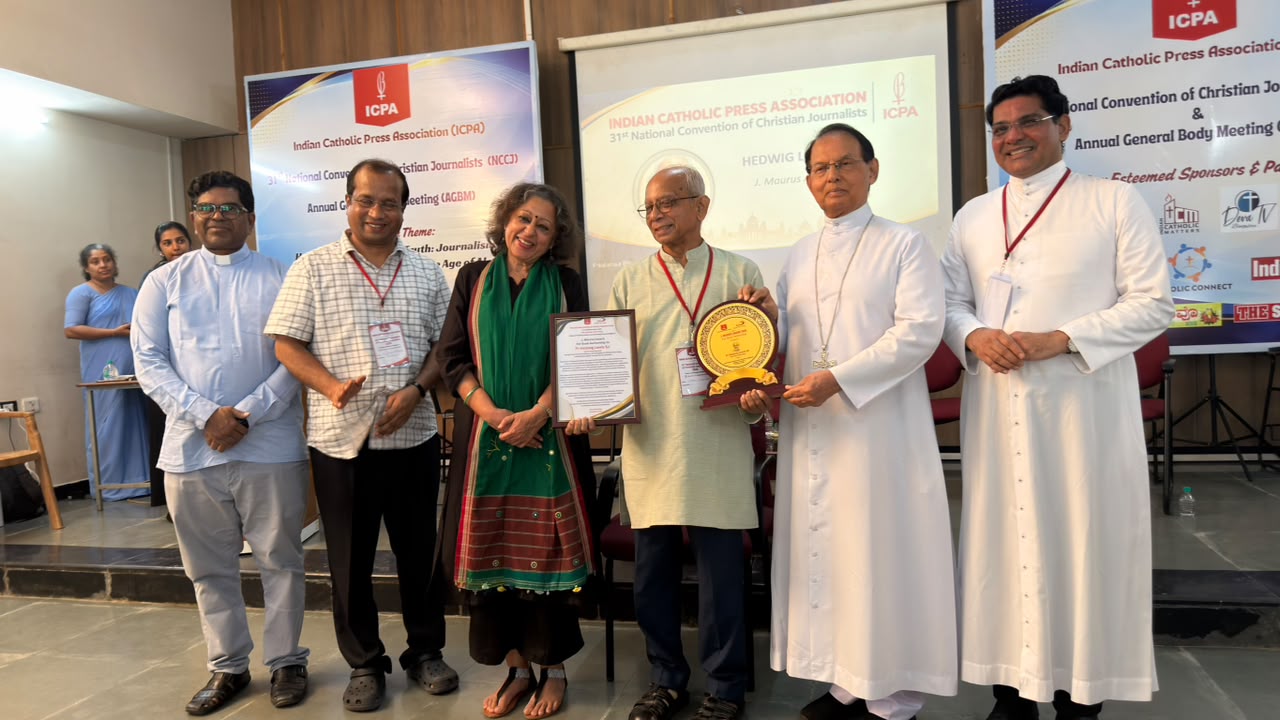 ICPA
ICPA
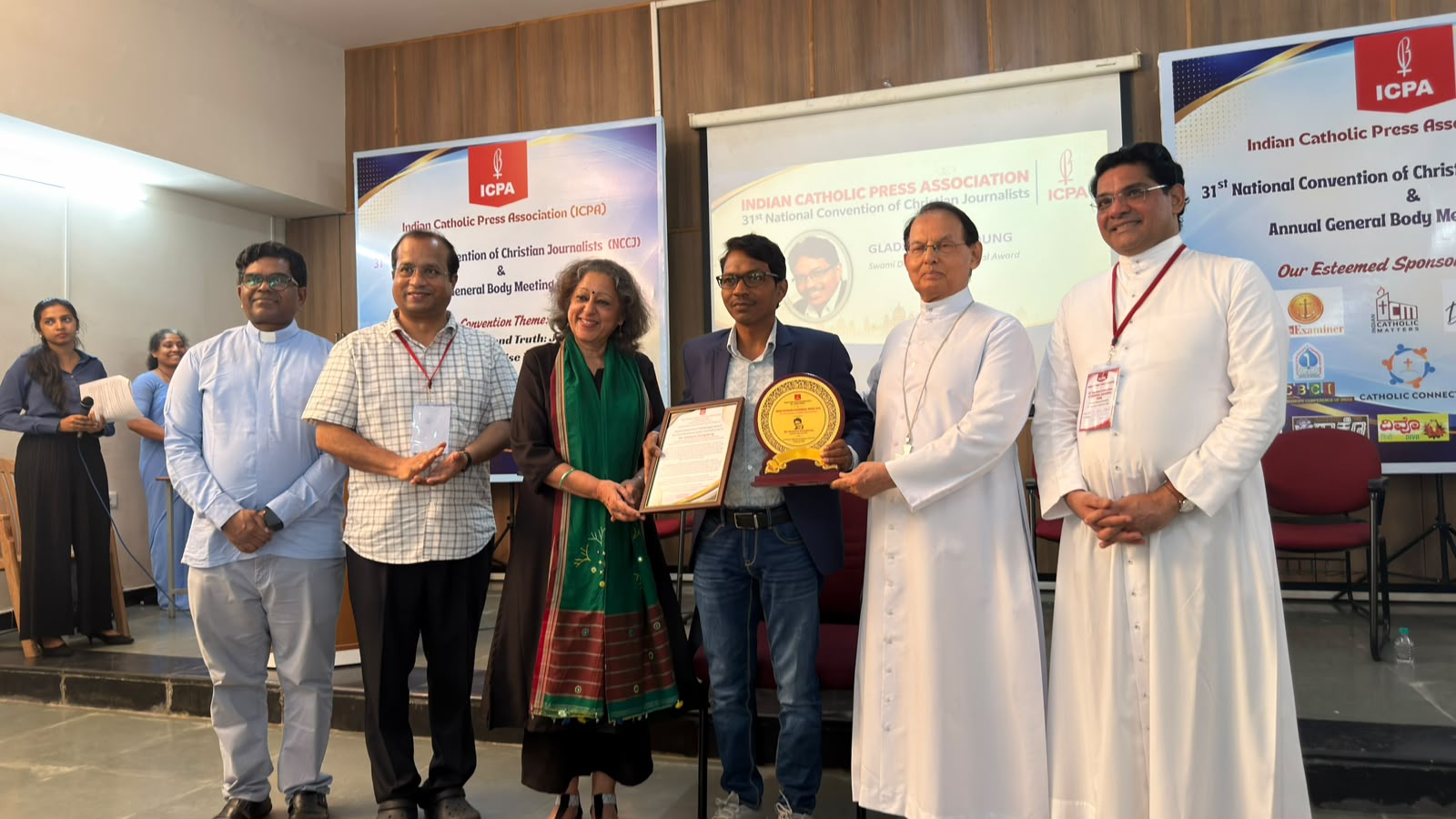 ICPA
ICPA
 ICPA
ICPA
.jpg)
 A. J. Philip
.jpg)
.png) Jacob Peenikaparambil
Jacob Peenikaparambil
.jpg)
.png) John Dayal
John Dayal