

.png) Aarti
Aarti
In the second week of February this year, Tamil Nadu woke up to newspaper reports of blood chilling episodes of not only torture and physical attacks but even sexual exploitation of residents at a privately run shelter home – Anbu Jothi Ashram (AJA) located in Villupuram, Tamil Nadu.
What we know so far is Halideen, a resident of Tiruppur, admitted 70-year-old Zafirullah (uncle of his close friend Salim Khan presently in the US) at AJA on 4 December 2021. Zafirullah did not have any close relatives to look after him. Later, when Halideen tried to meet Zafirullah, he was informed by the owners of AJA that the latter and some others had been transferred to another home in Bengaluru on 6 December 2021. Halideen, then proceeded to Bengaluru but to his shock, he could not find Zafirullah there. When a Tamil Nadu police team visited the Bengaluru shelter, they were informed that the elderly man and a few others escaped from the facility by smashing open a bathroom window. Halideen accordingly, filed a habeas corpus petition at the Madras High Court on 19 December 2022, which came up for hearing on 2 January this year.
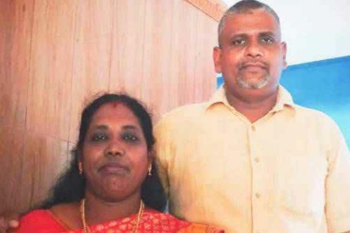
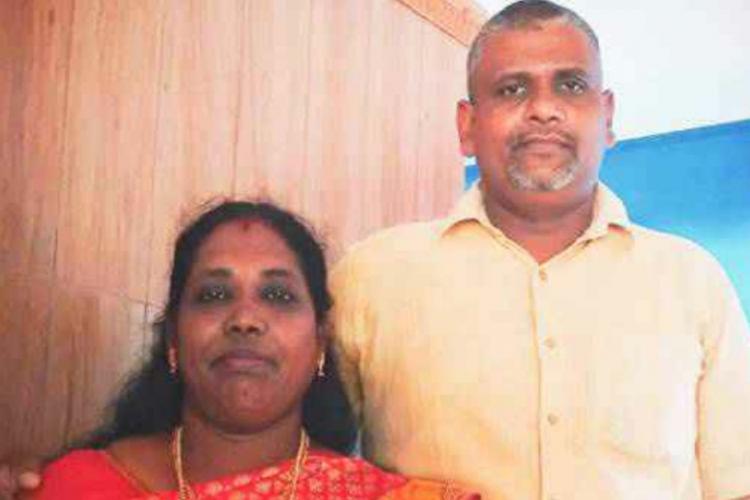
Under the directions of the court, when the police visited AJA, to investigate the missing Zafirullah, the owners – Jubin Baby (45) and his wife Maria (43) – released two wild monkeys on the officials. However, the monkeys turned against them and attacked the duo, following which they were admitted to the local Government Medical College hospital. Around 142 persons, including 109 men, 33 women and a boy have since been rescued. With the possibility of human trafficking not ruled out at AJA, the case is being handled by the Crime Branch-Criminal Investigation Department. The State Human Rights Commission, taking suo motu cognisance of media reports over the incident, has sought for a report from authorities. In the meanwhile, the Court has directed the police to file an Action Taken Report by February 27.
It was reportedly found that AJA which functioned without permission accommodated destitute women, abandoned senior citizens, beggars, alcohol addicts and persons with mental retardation or illness. During his early days in 2004-05, Jubin is said to have gone door-to-door seeking donations, old clothes and food. He used to target people roaming in and around bus/railway stations. After bringing them to AJA they would be tonsured and shackled. Long back the Supreme Court had directed that inmates cannot be kept chained.
According to residents who were rescued, many had undergone untold torture. After admission, they would be thrashed and some were given drugs. A 42-year-old woman had testified to local media that employees of the home including Jubin and Maria used to beat her and other inmates with long sticks after chaining them to the window grills if they failed to obey their commands or found making phone calls to their relatives. Another resident who in came as a teenager from north India through a rescue group that took her to AJA said she was repeatedly raped, beaten up and threatened. Whenever she tried to resist, the employees set on her the two ferocious monkeys which were kept in a cage. The employees also used to kick the residents on the back with their knees folded.
So far nine, persons including Jubin Baby and his wife Maria, have been arrested.
The CB-CID has since sealed the AJA and also blocked its website which was being used to seek donations. It is rather baffling as to how the nefarious activities of AJA went unnoticed for nearly two decades and how the shelter was able to sustain itself financially. Whether Jubin was just a small fish or was he part of a bigger group, particularly, human trafficking network? Well, the ongoing investigation is expected to unravel what was actually happening inside AJA.
Remember the Muzaffarpur shelter home case that hit headlines in 2018? Well, in 2017, the Bihar Government had engaged Mumbai-based Tata Institute of Social Sciences (TISS), to perform a social audit of around 110 short-stay and shelter homes for homeless girls, women, boys and juveniles in conflict with law indirectly run by it. These shelter homes were funded by the State, but managed by non-governmental organisations (NGOs). The TISS social audit found that almost all the 110 government-funded institutions were run in violation of the mandate of the respective schemes and the Juvenile Justice Act, 2015 which was enacted to provide care, protection, treatment, development and rehabilitation of neglected or delinquent juveniles. While bathrooms at some shelter homes did not have latches inside leaving the girls vulnerable, in one short-stay home for girls, a security guard, said to be sexually abusive, had been vested with management powers. A boys' home was found to be a place of serious physical violence and sexual abuse was reported by those living there.
Although sexual exploitation and physical abuse was reported at six short-stay homes and 14 shelters in varying in forms and degrees of intensity, shockingly enough the Muzaffarpur short-stay (shelter) home run by the NGO Seva Sankalp Evam Vikas Samiti was the worst performer. Here, the audit team reportedly found "grave instances of violence". The girls had no access to open space, were locked up in their wards and allowed to go outside just to take their meals - that too up to the dining hall only. No vocational training and recreation means were provided to the inmates. The said NGO had received about Rs 4.5 crore over a ten-year period from the State Government for its activities.
Notably, following submission of the TISS Report on 26 May 2018, which blew the lid over an organised sex scandal in the State, the government immediately formed a special investigation team, sealed the Muzaffarpur shelter home and rescued 46 minor girls from there. Taking cognisance of the matter, the Supreme Court handed over the case to the Central Bureau of Investigation and in February 2019, the Apex Court ordered the transfer of the trial of the Muzaffarpur shelter home to a Special Court in Delhi. In February 2020, the trial Court sentenced Brajesh Thakur, owner of the Muzaffarpur shelter home to imprisonment till his last breath including 11 others for several offences under the Protection of Children from Sexual Offences (POCSO) Act as well as the Indian Penal Code.
During the hearing of the Muzaffarpur shelter home case, the Supreme Court had also ordered the National Commission for Protection of Child Rights (NCPCR) to undertake a social audit of all childcare institutions (CCIs) across the country. NCPCR’s social audit of 7163 CCIs, which house 2.56 lakh children across the country, found that 2764 CCIs accounting for nearly 40 percent of these homes did not have adequate measures to prevent any form of physical, emotional abuse of children. 2039 CCIs (28.5 percent) were not registered; 1504 of CCIs lacked exclusive toilet facilities and 434 lacked privacy in toilets and bathing areas. 23 percent CCIs did not have a cook to prepare food for children and about 48 percent of CCIs did not have counsellors. 29 percent of the CCIs had untrained staff with regard to the rehabilitation process of children.
Also, the first social audit of education undertaken in India across ten states as a pilot project under the aegis of NCPCR, not long ago, revealed interesting information. Briefly put, it provided an opportunity to a Block Education Officer to highlight the challenges he faced in discharge of his duties - like having to monitor some 400 schools under his jurisdiction in the absence of financial or in-kind support for undertaking visits to schools. Similarly, it gave a student the chance to expose his teacher, who routinely asked the boy to procure alcohol for him from a neighbouring store and remained inebriated during school hours even as selling of liquor in the proximity of educational institutions as well to minors is banned. After the social audit, it was found that discipline improved in many schools which not only started opening on time but teachers, too, became more punctual.
To ensure that flagrant violations of law as well as human rights do not happen in shelter homes, there is an imperative need to keep Anbu Jothi-type Ashrams under check through regular and continuous social audits. Most importantly, the outcome of such audits needs to be analysed and corrective actions merit to be implemented in the right earnest. Also, regulatory authorities must make it mandatory for shelters run by the Government as well as NGOs to maintain an online registry of their inmates and also upload quarterly returns with respect to their sources of funds to bring about the much-needed transparency.
.jpg)
.png) Cedric Prakash
Cedric Prakash
 ICPA
ICPA
 ICPA
ICPA
 ICPA
ICPA
 ICPA
ICPA
 ICPA
ICPA
 ICPA
ICPA
.jpg)
 A. J. Philip
.jpg)
.png) Jacob Peenikaparambil
Jacob Peenikaparambil
.jpg)
.png) John Dayal
John Dayal