

.png) Joseph Maliakan
Joseph Maliakan
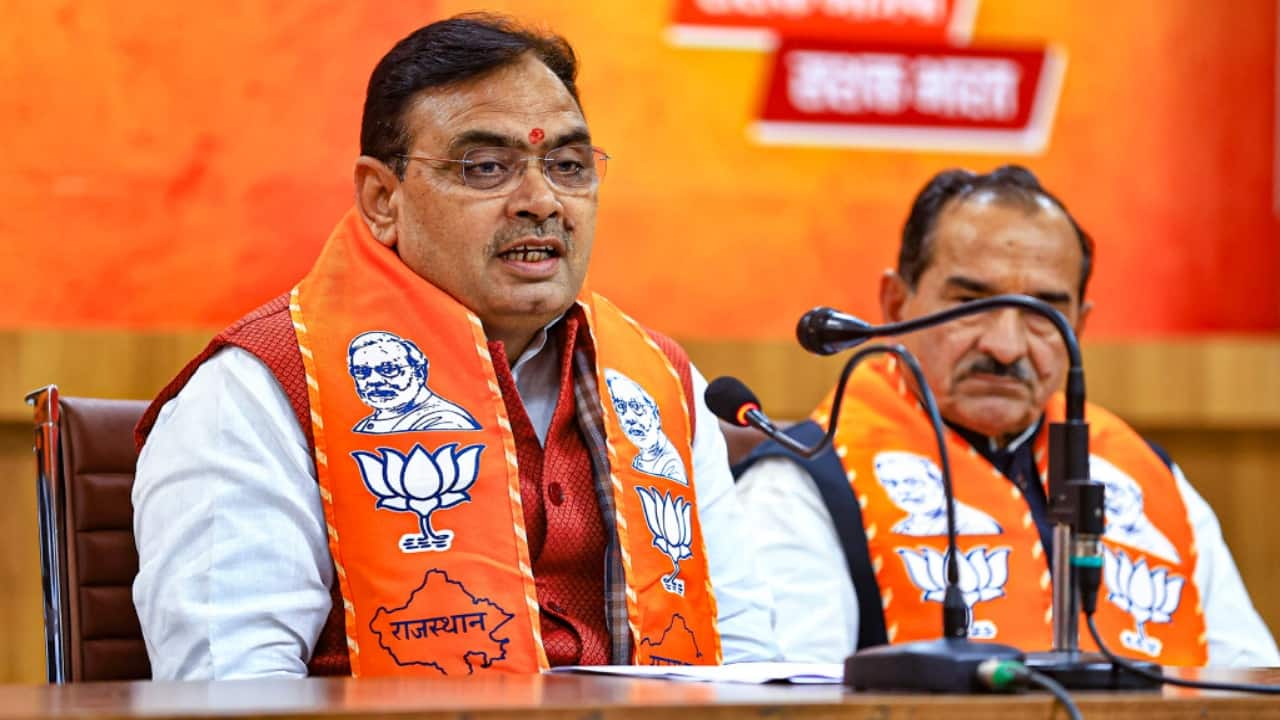
If passed, the Rajasthan Prohibition of Unlawful Conversion of Religion Bill, 2025, tabled in the Rajasthan Assembly on February 4 2025, will turn the criminal jurisprudence upside down. Hitherto, according to criminal law as practised in India, an accused is presumed innocent until proven guilty.
However, under the Prohibition of Unlawful Conversion of Religion Bill," the burden of proof that a religious conversion was not carried out through misrepresentation, force, undue influence, coercion, allurement or by any fraudulent means or marriage lies on the person who has "caused" the conversion, that is, the accused. This is actually a reversal of the practice of the presumption of innocence of an accused.
Ironically, the statement of Objects and Reasons for the Bill says," The Constitution confers on each individual the fundamental right to profess, practice and propagate his religion. However, the individual right to freedom of conscience and religion cannot be extended to construe a collective right to proselytise; the right to religious freedom belongs equally to the person converting and the individual sought to be converted."
It added that many examples of conversion through fraud and misrepresentation have recently come to light. "The law related to the right to religious freedom already exists in various states of the country, but there was no statute on the said subject in Rajasthan," it added.
The Rajasthan Government introduced a bill, the Rajasthan Dharma Swatanttraya Vidheyak, or the Rajasthan Freedom of Religion Bill, in 2006, when the Bharatiya Janata Party led by Vasundhara Raje Scindia ruled the state, to ban religious conversion through "force, allurement or by fraudulent means."
The government had in 2006 claimed that "It has been observed by the state government that some religious and other institutions, bodies and other individuals are found to be involved in Unlawful Conversion from one religion to another by allurement or by fraudulent means or forcibly which at times has caused annoyance in the community belonging to other religions. The inter-religion fabric is weakened by such illegal activities and causes law and order problems."
The Bill was returned without assent by the then President of India, Pratibha Patil, following criticism by Human Rights groups and minority groups who argued that the law was being brought to harass minorities.
The President also did not give assent to an amended version of the Bill in 2008. When Vasundhara Raje became Chief Minister of Rajasthan for the second time (2013-18), she tried to make the 2008 Bill a law. The President once again returned the Bill in 2017, saying that it "deviated from the National policy."
What is really very shocking about the 2025 Bill is that all offences under the Bill are proposed to be made COGNIZABLE and NON-BAILABLE. Any undergraduate law student will know that this provision is unconstitutional. Recently, on January 20, 2025, a bench of the Supreme Court of India comprising Justices JB Padriwala and R Mahadevan, while granting bail to a Muslim Cleric, Syed Shad Kazmi, arrested under the Uttar Pradesh Prohibition of Unlawful Conversion of Religion Act 2021, said, "We are of the view that the High Court (of Allahabad) should have exercised its discretion by granting bail to the petitioner. There was no good reason for the High Court to decline bail. The offence alleged is not that serious or grave like murder, decoity, rape etc."
Another very draconian provision in the Bill is that it provides blanket protection to government officials, including the police, against any legal proceedings for anything done in pursuance of the proposed law.
Section 13 of the Bill, "Protection of action taken in good faith," protects authorities from any adverse action against them. Government officials and the police in our country are known for arbitrary and high-handed behaviour towards the common man, and this blanket protection will only lead to increased harassment of ordinary people.
"No suit, prosecution, or other legal proceedings shall lie against any authority or officer for anything done in good faith or intended to be done or purported to be done, or omitted to be done in pursuance of this Act, or any rule or orders made thereunder," says the Bill.
The Bill specifically targets inter-religious marriages. If a marriage is found to have been carried out for the sole purpose of religious conversion, it can be annulled by the family court. The Bill defines "love jihad" as a marriage conducted with the intent of converting a person's religion. The legislation also has provisions for stringent punishment for the conversion of minors, women and people from the scheduled castes and Scheduled Tribes.
.jpg)
.png) Cedric Prakash
Cedric Prakash
 ICPA
ICPA
 ICPA
ICPA
 ICPA
ICPA
 ICPA
ICPA
 ICPA
ICPA
 ICPA
ICPA
.jpg)
 A. J. Philip
.jpg)
.png) Jacob Peenikaparambil
Jacob Peenikaparambil
.jpg)
.png) John Dayal
John Dayal