

.jpg) Dr. M. D. Thomas
Dr. M. D. Thomas
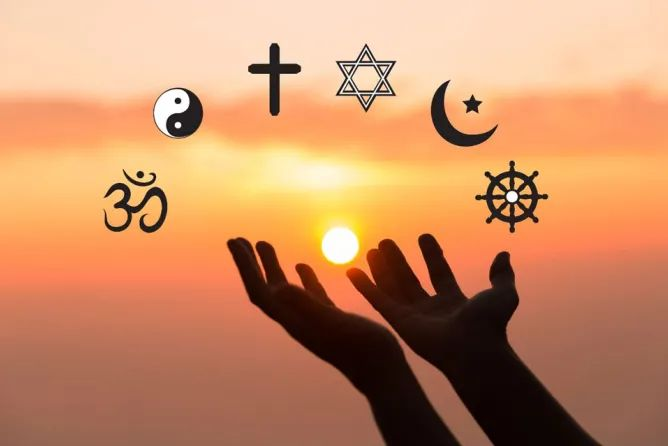
Religion is a prominent entity in human society. It plays a significant role in regulating human social life. In other words, religion is a key factor in establishing social order. Undoubtedly, it has and will have an unparalleled place in human life.
Undeniably, religion has contributed substantially to the cultivation of human life and to the creation of civilisations worldwide. It has added taste and meaning to the lives of millions of people and benefited human lives immensely.
All the same, it cannot be denied that religion has been behind wars, conflicts, tensions, frictions, divisions, discrimination, hatred, and the like from time immemorial, though in varying degrees. Besides, it has been responsible for a lot of communal divide, distance and havoc in the country and the world over, directly or indirectly.
It is also true that religion originated from prophets and great men and women and from their teachings and lifestyles. As time passed, theological theories, stipulations, observances, devotions, and practices became almost unnegotiably rigid and complex.
Religion could be compared to streams. The water in streams at the source is pure. As they flow on, dirty elements get mixed with the water, and consequently, the flow becomes slower, and the water in the river becomes dirtier.
In a similar fashion, religions were simple and straightforward in the beginning. As time passed, worldly elements of money, power and self-interests got mixed up with them. Eventually, the mighty systems of religions became highly static, rigid and complex.
It cannot also be denied that religion, and all religions, for that matter, are highly past-centred in their content. Along with the times, the theories and practices of religions were repeated and repeated, establishing them as a reality of the present. Only minor exceptions of alteration could be observed in the way they are appropriated.
To a large extent, the content of the past in religions has to be taken for granted. This is because the lives and contributions of the prophets and great humans cannot be repeated. It will continue to remain a property of the past only, for all times.
The problem arises when the past is carried forward without reflection. When the past comes to the present in an exaggerated form and becomes customary, it becomes stuffy and complicated. Repetition is a regular habit in religion. As a result, the present becomes almost a double of the past.
In fact, religion has to be a shared reality of the past, present, and future. The contribution of the present and the future will definitely enrich religion.
When the past is carried forward to the present, that too, unreflectively, religion becomes irrelevant and burdensome. When time management becomes upside down in religion, it becomes a liability or a curse.
Only the best of the past should be brought forward to the present. Similarly, only the best of the present requires being carried forward to the future. Such an approach makes religion simple and relevant at all times.
Whatever has life cannot be preserved as it is. The places where lifeless things are preserved are refrigerators or museums. Preservation is done after killing or after dying. To consider religion lifeless is an anomaly.
Religion has to be a living entity. Practitioners of religion have to instill life into the religion they practice. This calls for believers to be ever alive and awake regarding the precepts and practice of religion. Religionists have to live their religion in a lively way.
Religion has to be lived lively. New interpretations are called for in line with the demands of the times. An attitude of simplifying religion has to be evolved. 'Less luggage, more comfort,' thus goes the dictum. Religion should not be a burden.
Religion is for life and not life for religion. The clothes have to be suited to the body and not otherwise. Food is for the body and not the body for Food. One should not be a victim of religion. One should refrain from getting glued to religion, especially one that lives in the past. One has to be realistic by placing life above religion.
A sense of quality has to be applied to religion. A smaller number of dogmas is enough, but they must be well-believed. Observances have to be reduced to the minimum. The values of the religion have to be given the utmost importance. 'Value-conscious' and value-based life is the core of religion.
Sree Narayana Guru of Kerala states, "Whatever the religion, it suffices if you are a good human being." Being a good human being is the actual result of religion. If one is not a good human being, being religious is of no import. Religiosity has to be measured in terms of one's goodness.
The most visibly growing phenomenon in the world today is the increasing number of self-proclaimed 'atheists.' This applies to all religion and countries, though in varying numbers. They are mostly good human beings, too. The lack of interest of atheists in religion is a question mark to what religion currently is.
Life can be understood in two ways: what is inherited and what is acquired. Both are essential components of life. This has to be applied to religion. The religion that is inherited from the past has to be edited, simplified, and adjusted to the present. Whatever is new in the present is what is acquired. Religion has to acquire a form that suits the present and, eventually, the future as well.
Unfortunately, most religions, all religions, for that matter, are hardly edited with new perspectives and interpretations. As a result, much of the irrelevant material of religion is carried by believers blindly and unreflectively, like donkeys. No wonder religion becomes a burden on human lives since they do not produce fruit.
Religion has to move with the times. It has to be edited, simplified, and updated according to the passage of time. It has to be an ever-living entity. It has to be simple, light, and meaningful always. Only then will it remain relevant and expressive. Only then will it be a blessing to human society.
.jpg)
.jpg) Stanislaus Alla
Stanislaus Alla

 Adv. Rev. Dr George Thekkekara
.jpg)
 A. J. Philip
.jpg)
.png) John Dayal
John Dayal
.jpg)
.png) Jacob Peenikaparambil
Jacob Peenikaparambil
.jpg)
 P. A. Chacko
.png)
.png) Robert Clements
Robert Clements