

.png) Joseph Maliakan
Joseph Maliakan
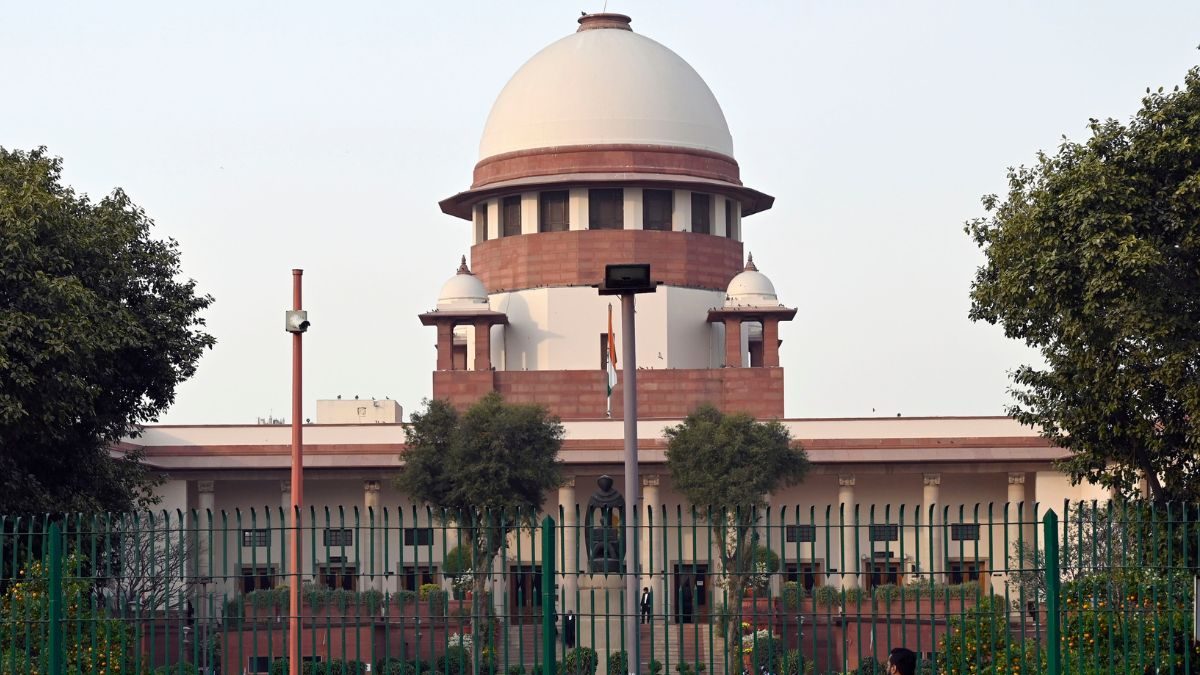
The Supreme Court on January 20 granted bail to Muslim Cleric Syed Shad Kazmi, arrested 11 months ago under the draconian Uttar Pradesh Prohibition of Unlawful Conversion of Religion Act 2021. The Court said that judges cannot deny bail to any accused on their whims and fancies, saying that conversion is very serious. Instead, judges should show courage to grant bail.
A bench of the Supreme Court comprising Justices JB Pardiwala and R Mahadevan said the matter should not have reached the Supreme Court. "We can understand that the trial court declined bail as trial courts seldom muster the courage of granting bail, be it any offence. However, at least, it was expected of the High Court (Allahabad) to muster the courage and exercise it's discretion judiciously," the order pointed out.
The state counsel submitted that the Muslim Cleric was arrested for converting a mentally challenged minor boy to Islam under Anti-conversion law, which carries a maximum punishment of 10 years imprisonment. The petitioner submitted that the boy was abandoned on a street in Kanpur, Uttar Pradesh, by the family, and he gave shelter to the minor boy on humanitarian grounds.
After hearing both sides, the SC bench observed, "We are of the view that the High Court should have exercised its discretion by granting bail to the petitioner. There was no good reason for the Allahabad High Court to decline bail. The offence alleged is not that serious or grave like murder, dacoity, rape etc."
Soon after the Uttar Pradesh Prohibition of Unlawful Conversion of Religion Act 2021 was passed, critics said that the law would be extensively misused against religious minorities. The law said that if the conversion is of a minor, scheduled caste, scheduled tribe or a woman, the guilty will face a jail term of three to 10 years and a fine of Rs 25,000. In the case of mass conversion (conversion of more than two persons is 'mass conversion' according to the law), the guilty will face a jail term of three to 10 years and a fine of Rs 50,000.
The law clearly violates Article 25 (1) of the Constitution, which guarantees to every citizen the freedom of conscience and free profession, practice, and propagation of religion, subject to public order, morality, and health, and not merely to the followers of one particular religion.
Under the circumstances, the Supreme Court felt that the trial court itself should have been courageous enough to release the petitioner on bail. However, "discretion has to be exercised judicially, keeping in mind the well-settled principles of a grant of bail. The petitioner is going to be put to trial, and ultimately, if the prosecution succeeds in establishing its case, he would be punished," the order said.
The order further said that year after year, many conferences, workshops, and seminars are held to educate trial judges on exercising discretion when considering bail applications. The reluctance of the trial judges to grant bail even in highly deserving cases leads one to the conclusion that the trial judges do not understand the scope of Section 439 of the Criminal Procedure Code (CrPC) or Section 483 of the Bharatiya Nagrik Suraksha Samhita (BNSS).
The SC further said, "At times when the High Court declines bail in matters of the present type, it gives an impression that altogether different considerations weighed with the presiding officer ignoring the well settled principles of grant of bail." What harm would have been done if the petitioner was released on bail, the Supreme Court judges wondered.
"This is one of the reasons why the High Courts and now unfortunately the Supreme Court also are flooded with bail applications," the bench added. Though the trial is in progress in this case and the prosecution witnesses are being examined, it is a fit case to order the release of the petitioner on bail subject to the conditions that the trial court may deem fit to impose.
One hopes the Supreme Court's latest bail order will inspire trial court judges to grant bail to thousands of undertrial prisoners languishing in Indian jails for years.
Undertrial prisoners constitute 75.8 per cent of prisoners in Indian jails. The jails are also overcrowded, with 131.4 per cent occupancy. Further, 60 per cent of these inmates are either illiterate or come from marginalised sections of society. Scheduled castes, Scheduled tribes and Muslims constitute the majority of the prison population.
.jpg)
.png) Cedric Prakash
Cedric Prakash

 ICPA
ICPA
 ICPA
ICPA
 ICPA
ICPA
 ICPA
ICPA
 ICPA
ICPA
 ICPA
ICPA
.jpg)
 A. J. Philip
.jpg)
.png) Jacob Peenikaparambil
Jacob Peenikaparambil
.jpg)
.png) John Dayal
John Dayal