


.jpg) P. A. Joseph
P. A. Joseph

In a way we are all addicts. Mostly human beings are addictive by nature. Sometimes we are not aware of this. You may call it by any name. It may be called passions or attachments. Some take these as illusions or entrapment. Everyone experiences that serious measures are required to understand it and to come out of it. Some may be addicted to substances like alcohol, drugs, gadgets, cosmetics, perfumes and things like that. In any way we are all addicted to our own habitual way of doing anything, often our own defenses, our special patterned way of thinking. The very fact that we hesitate to admit it shows how much we are blinded by it. In any way, we find difficult to discern or handle what we are addicted to. It is always hidden and disguised as something else. Jesus asked an addicted person, “what is your name” (Lk: 8,30). That meant a lot. To heal the addiction, first of all we must be aware of it, acknowledge it, and accept it. This is really the first phase of our healing.
All human societies are addicted to co-dependent addictions. These are in a way shared, and agreed upon in every culture and institution. These have become the way of the society as a sort of compulsive blindness where we cannot enter. To cite some examples, the Americans are addicted to war and empire; a poor person’s addiction is to powerlessness and victimhood; the white person’s addiction is to superiority; religions’ addiction is tradition; the church’s addiction is to its own exceptionalism, uniformity, etc.
To whichever society, religion we belong, we must be able to come out of the addiction -- either personal or societal. We see people of different religions and cultures becoming victims in various ways. People who routinely go for pilgrimage to holy places, who do rigorous fasting, or do so many other ritual practices, fall into the same addiction even after long-lived practices.
All the religions give motivation to prayer and contemplation to get rid of all addictions. The end is to guide the people to develop alternate consciousness, to get rid of superiority thinking, promote loving relationship, to change the operating system, to bring in reconciliation in societies, to accept the path of forgiving, and to work for peace-making. It is to be noted these are the core of all religions. If these are lacking or ignored, the so called religion ceases to be such. These values cannot be enforced on anyone group, but must be realized and accepted as the core of religion. It is meaningless to give stress on any form of ritual or tradition.
.jpg)
.png) Cedric Prakash
Cedric Prakash

.jpg) Elsa Lycias Joel
Elsa Lycias Joel
.jpg)
 A. J. Philip
.png) Jacob Peenikaparambil
Jacob Peenikaparambil
.jpg)
.png) John Dayal
John Dayal
.jpg)
.jpg)
.png) Joseph Maliakan
Joseph Maliakan
.png)
.png) Robert Clements
Robert Clements
.jpg) Cedric Prakash
Cedric Prakash
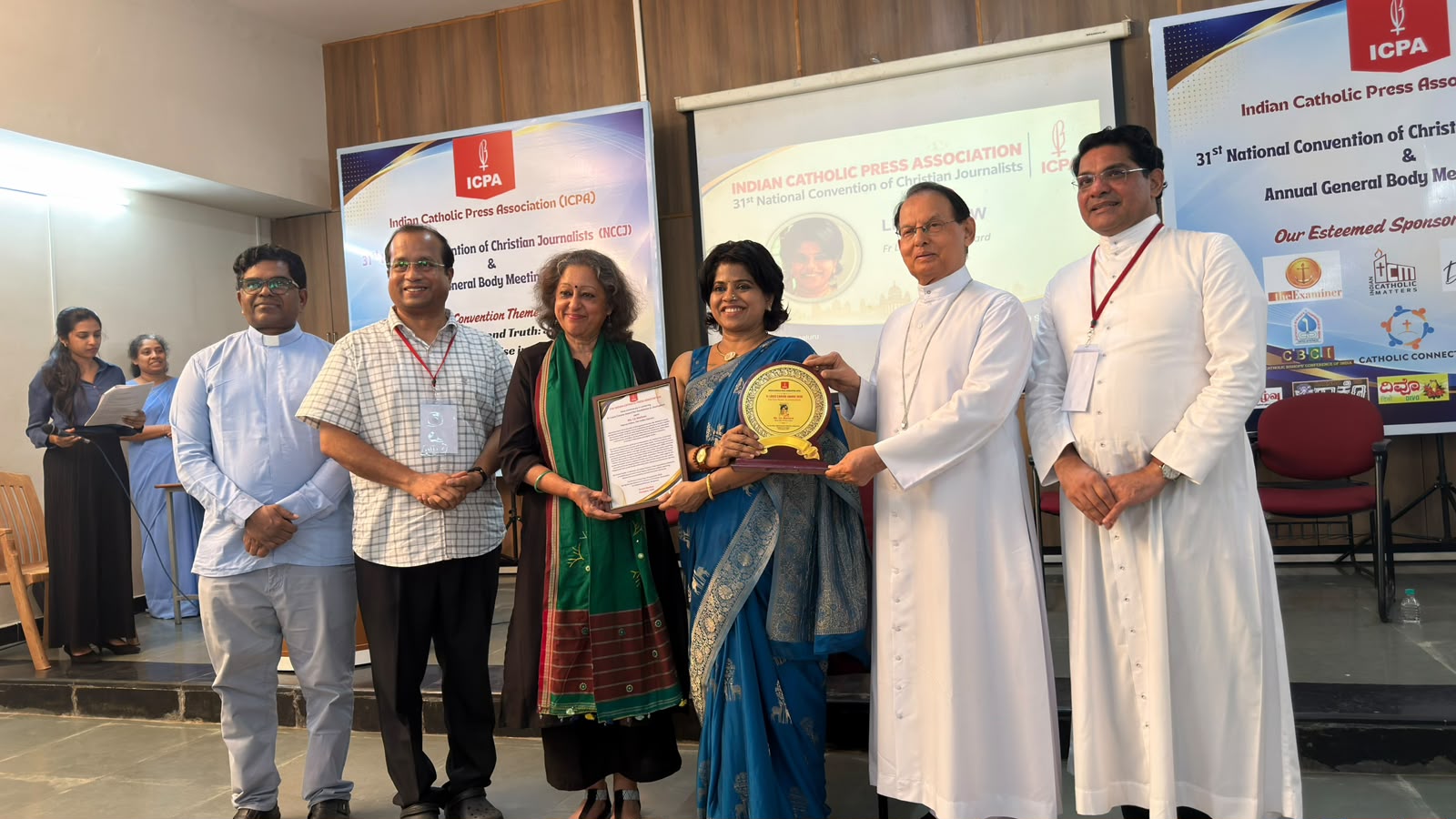
 ICPA
ICPA