

.png) Ram Puniyani
Ram Puniyani
Currently as the rightwing wing ideology is gaining ground many a films have already come to promote divisiveness, to glorify the icons of communal nationalism or to demonize the particular communities.
In recent times we have seen films on these lines, be it Padmavat, or one on Prithviraj Chauhan, ‘Gandhi Virudh Godse’, ‘Kashmir files’ and ‘Kerala story’. Many of these in the name of artistic freedom are total propaganda films and some of them are very vulgar too.
Film makers are rushing to this genre of films as some of them are ideologically oriented in the rightwing ideology, while others are assured of good moolah as those who matter in current political dispensation are out to promote these films for their political goals.
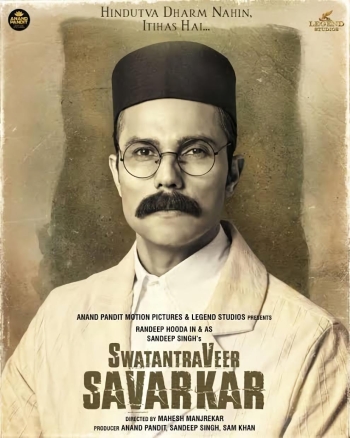
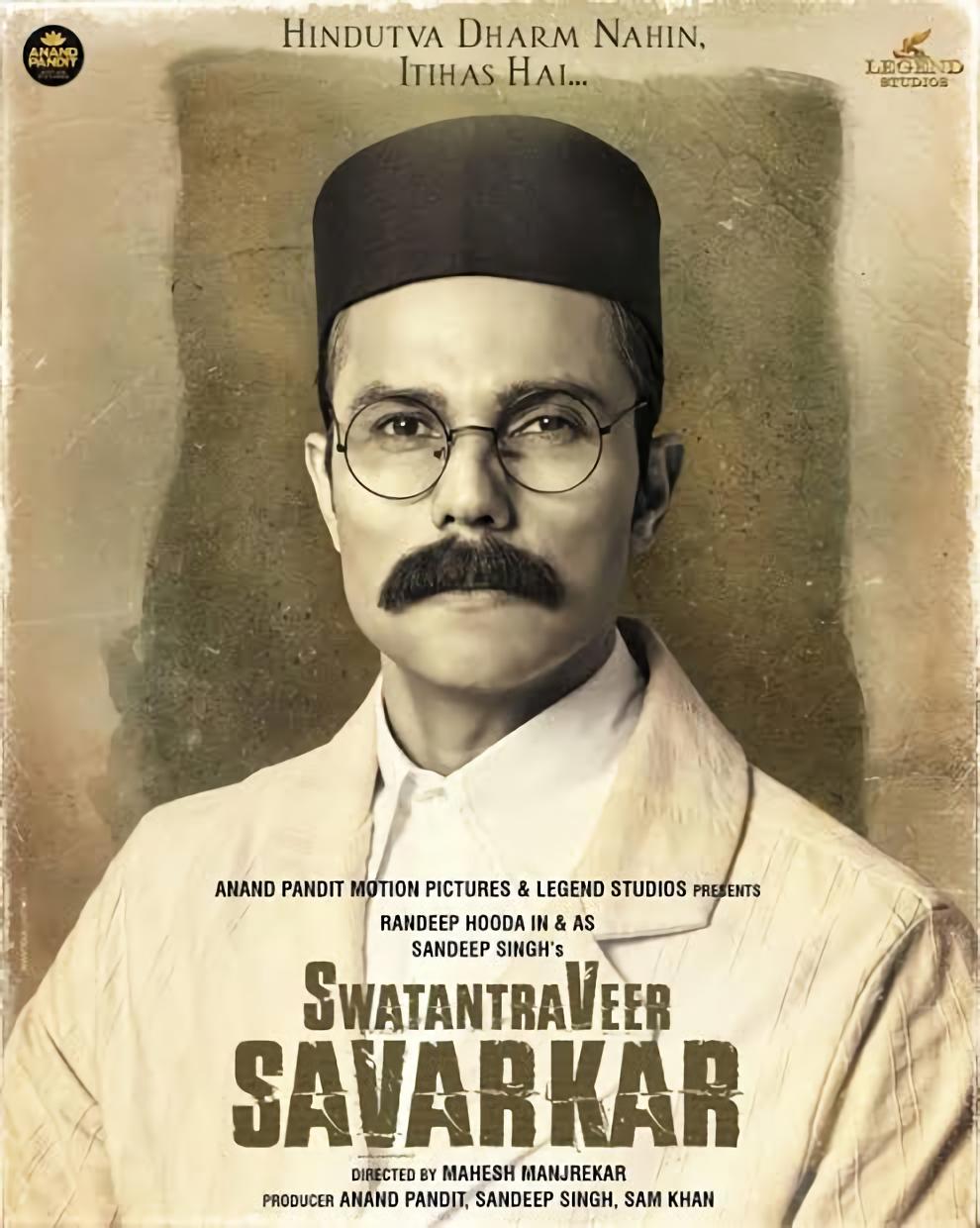
In this chain one new film’s teaser, ‘Swatantraveer Savakar’s teaser was released timed with his 140th birth Anniversary on 28th May when the new parliament building was also inaugurated. The 73 second teaser makes some statements and all of them are either false or manipulated to glorify Savarkar, the patron saint of Hindu nationalism. Though he was not part of RSS, it was his book ‘Hindutva or Who is a Hindu’ which formed the ideological base of RSS.
As RSS did not participate in the freedom struggle, it has been constructing icons which it thinks can be ideologically close to its political agenda. Savarkar is their major choice as in the first part of his life till he was jailed in Andman’s and was anti-British revolutionary. Harping on this part of his life the Hindu nationalists glorify him to the sky.
When Atal Bihari Vajpayee led NDA came to power in 1998, Savarkar’s portrait was unveiled in the parliament. The debate around unveiling of his portrait also projected the second part of his life when he emerged as the ideologue of Hindu nationalism, ‘two nation theory’ and his collaboration with British rule.
During his regime Vajpayee planned to give Bharat Ratna to Savarkar, but this proposal was turned down by the then President of India, Dr. K.R. Narayanan. That notwithstanding a plaque was put up in his honor in Andmans. Now during the last nine years as Modi is ruling, Savarkar anniversary is celebrated with pomp and the latest in the series of honoring him was to inaugurate the new parliament building on his birthday.
The teaser states that only few people participated in the anti-British struggle and the rest were there to grab power. This is a big insult to all those revolutionaries who, unlike Savarkar rotted and died in Andman jail, to all those Indians who participated in the major anti British Movements of 1920 (Non Cooperation), the Civil disobedience (1930), Dandi March, the Quit India. It is also an insult to the likes of Bhagat Singh, Chandrasekhar Azad and their colleagues who in the bravest possible fashion put their lives on their palms and stood rock solid against the British Empire. It is an insult to the efforts of Netaji’s Azad Hind Fauz.
Teaser goes on to state that had Gandhi not insisted on nonviolence India would have got freedom 35 years ago, i.e. in 1912! The script writer must have been in the world of unadulterated fiction to have written this. In 1912, Savarkar himself was in Andmans, Tilak, the major leader of Congress, was in Mandalay prison and Gandhi was in South Africa. That the major role in the freedom of the country was played by non-violence is stating the obvious. The revolutionaries like Bhagat Singh, in later part of their movement, opined that nonviolent mass movement is the path for getting freedom.
Teaser claims that it was Savarkar, who was the source of inspiration for Khudiram Bose, Bhagat Singh and Netaji Bose. Lies should have their limits but not for those who are motivated ideologically especially in sectarian nationalism. Eighteen year old Khudiram Bose was martyred in 1908 an year before Savarkar’s book on 1857 came to light, while Savarakr himself was in London from 1906 to 1911. As far as Bhagat Singh is concerned he did mention Savarakr’s book on 1857 and ‘Hindu Padpadshi’ among many other books, not as a source of inspiration but for some quotes. Bhagat Singh was inspired by Gadar party’s Kartar Sarabha, whose photo he used to carry in his pocket. And also by Lenin, whose literature he devoured through and through.
Bhagat Singh was a total contrast to Savarkar. Savarkar pleaded for clemency, offering to serve the British in whatever way they thought fit. He did help strengthen their army in the context of the Second World War and was a recipient of a British pension of Rs 60 per month. Savarkar did not utter a single word when Bhagat Singh was hanged to death!
As far as Subhashchandra Bose, the rumor is spread through multiple mechanisms, that it was on Savakar’s advice that he formed Azad Hind Fauz. There is no truth in this. Savarakar actually was helping the British army when Bose’s army was fighting against the British. Bose was for composite nationalism, while Savarkar was the ideologue of religion based nationalism, two nation theory. Bose was equally critical of Savarakar and Jinnah whom he urged to close ranks and join the freedom movement, while this duo served the British designs of suppressing the national movement.
In his article in The Forward Bloc (his paper) Bose argued that ‘The Hindu Mahasabha has been doing incalculable harm to the idea of Indian nationhood by underlining the communal differences—by lumping all the Muslims together...We cannot oblige Mr Savarkar by ignoring the contributions of the nationalist Muslims to the cause of India.’
He wrote in the second part of his book, The Indian Struggle, that while Jinnah ‘was then thinking only of how to realise his plan of Pakistan (the division of India) with the help of the British,’ Savarkar seemed to be oblivious of the international situation and was only thinking how the Hindus could secure military training by entering Britain’s army in India.’
In response to the teaser of the film, Netaji's daughter Pfaff told Times of India, "Like Mahatma Gandhi, Netaji was opposed to the divisiveness based on religious differences. Let Sarvarkar's followers join Netaji in his vision for India and not hijack him for views that certainly were not his,"
We are living in times where the Hindu right wing is being well served by many in the film World, and this forthcoming film based on falsehoods will be one more example of the same.
.jpg)
.png) Cedric Prakash
Cedric Prakash
 ICPA
ICPA
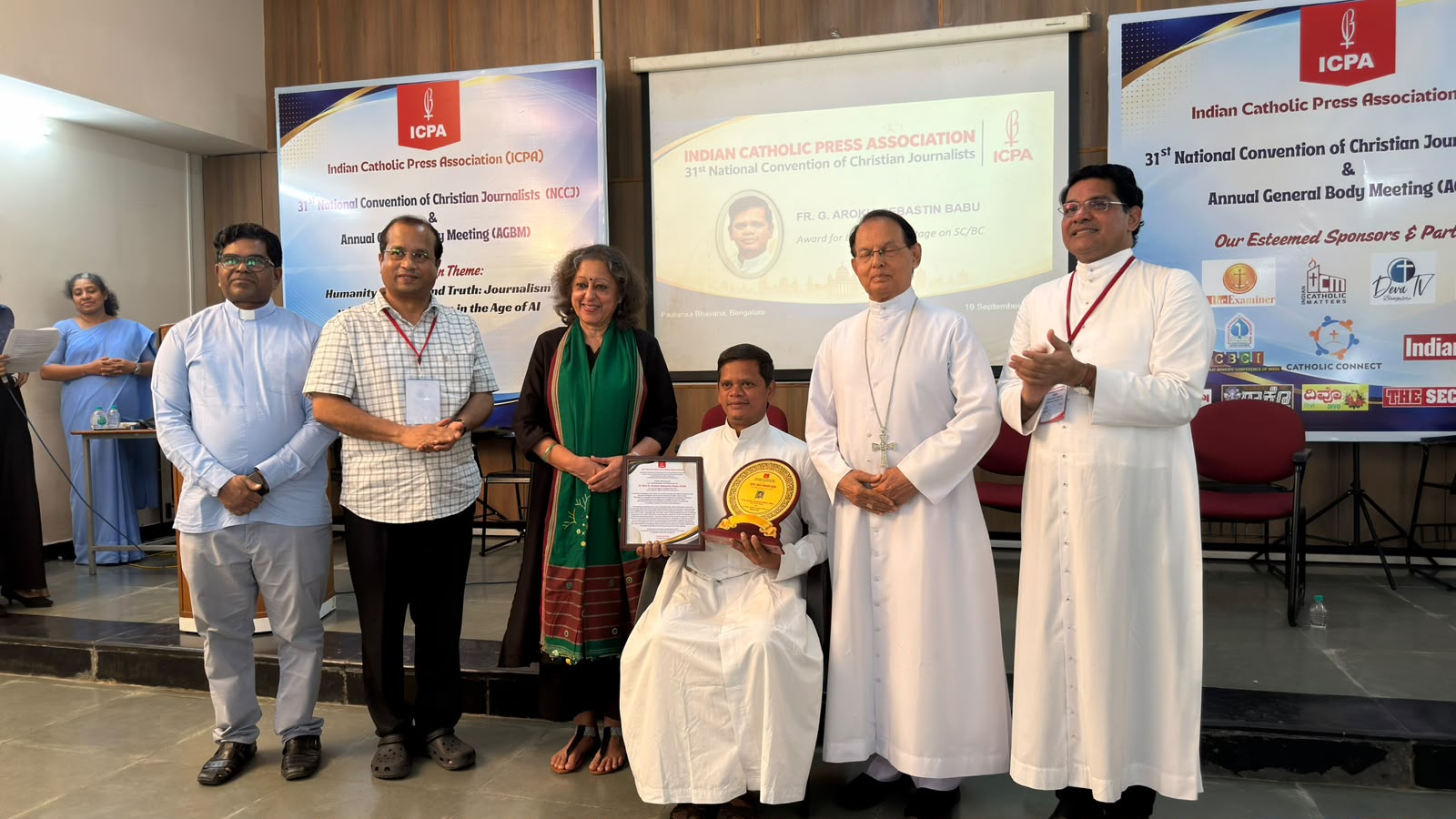 ICPA
ICPA
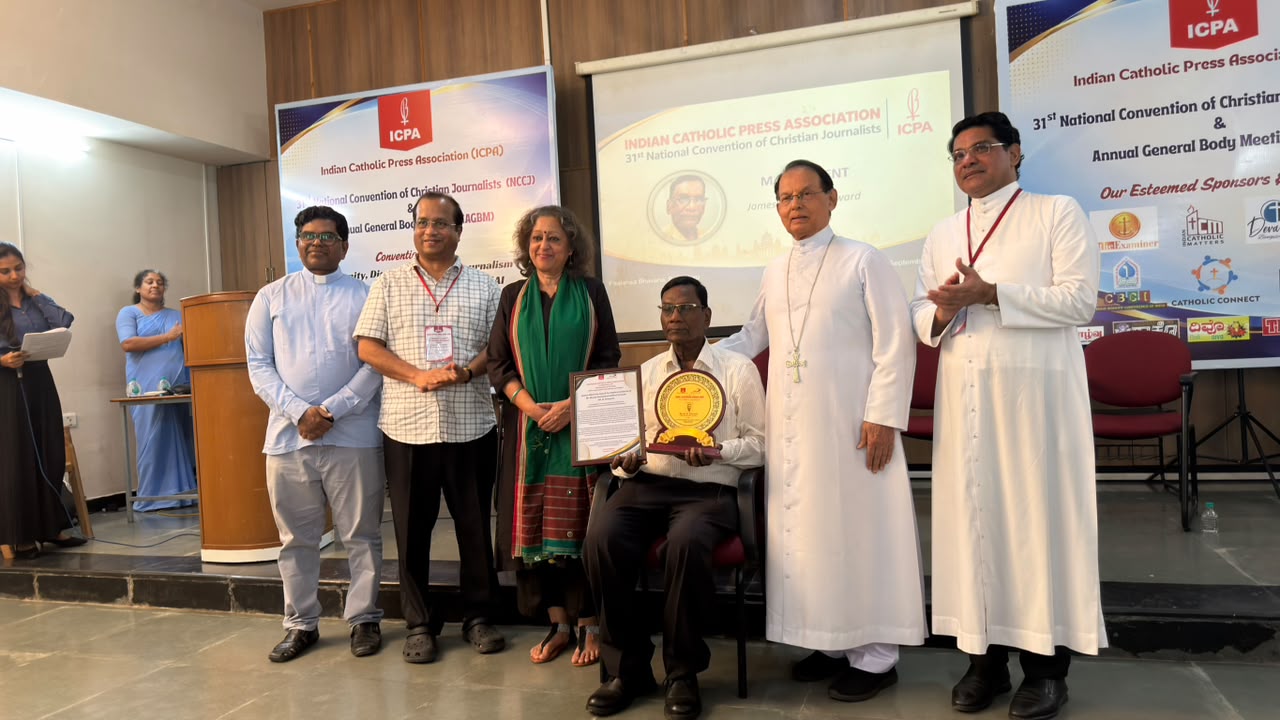 ICPA
ICPA
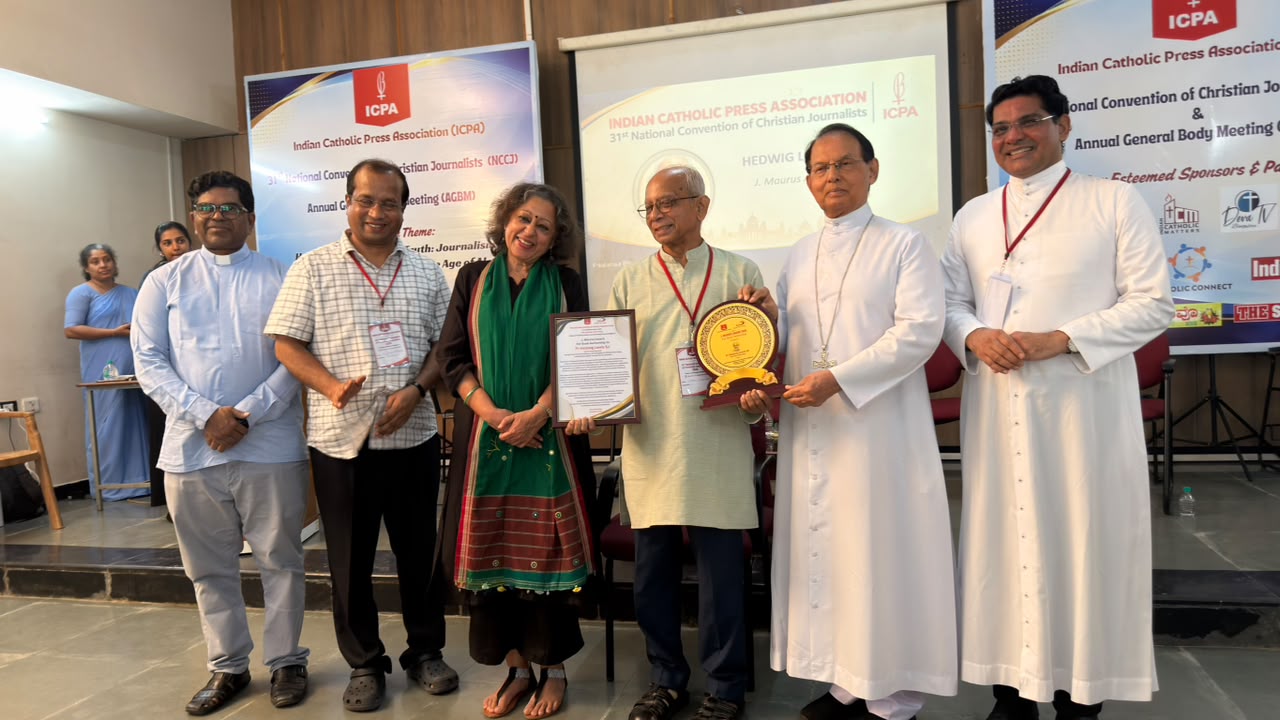 ICPA
ICPA
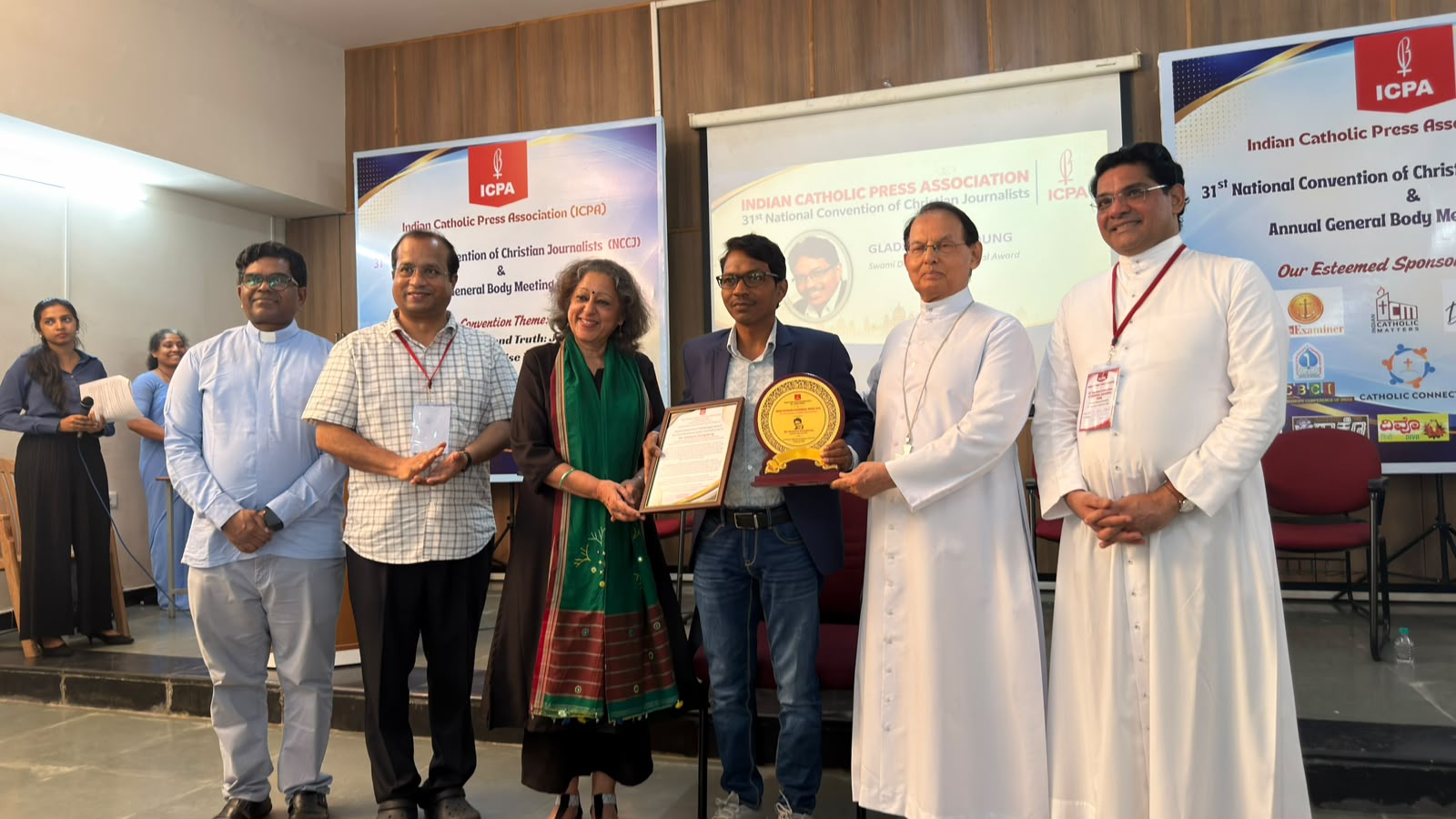 ICPA
ICPA
 ICPA
ICPA
.jpg)
 A. J. Philip
.jpg)
.png) Jacob Peenikaparambil
Jacob Peenikaparambil
.jpg)
.png) John Dayal
John Dayal