

.png) Manoj Varghese
Manoj Varghese
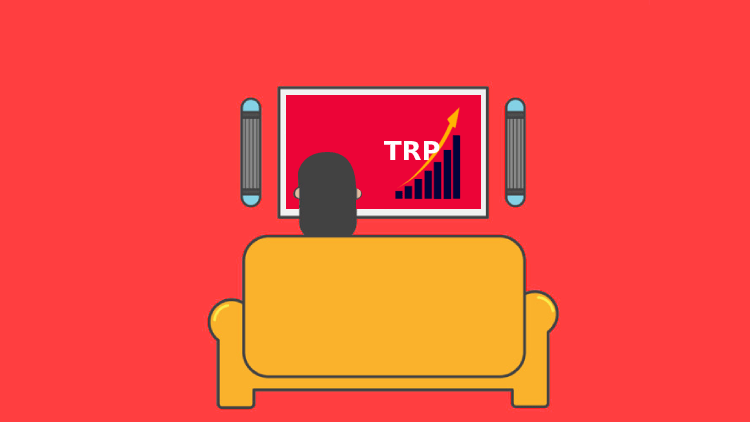
Mumbai Police busted a “racket” of “fraudulent” manipulation of Television Rating Points (TRPs) involving three channels; Republic, Fakt Marathi, and Box Cinema. Four persons – the owners of the Fakt Marathi and Box Cinema channels, and two former employees of the market research agency that collects the TRP data were arrested on October 9, 2020. In India, it is estimated that approximately 20 crore TV sets are operational with over 84 crore viewers, and around 45,000 house TRP metres are set up to record the ratings.
The TV advertisement industry is estimated to be worth around Rs 32,000 crore. As per the records, overall, on an average Rs 1000 crore advertisements is routed through the DAVP, Rs 3000 crore by corporates, and Rs 25,000 crore by Union and state governments in a year. Manipulated TRP ratings result in the miscalculated targeted audience for the advertisers which results in losses of hundreds of crores of rupees. It was revealed that these persons had manipulated the sampling metering services by inducing the barometer users through periodical payments to watch particular TV channels.
TRPs claim to show how many people, from which socio-economic categories, watched which channels and for how long over a particular time period. TRP data are usually released weekly, and form the basis of claims by channels to being the “most watched” over that period. The data is used by the Broadcast Audience Research Council (BARC), an industry body owned by advertisers, ad agencies, and broadcasting companies, to calculate the TRP of each channel. BARC is an industry body set up to design, commission, supervise and own an accurate, reliable, and timely TV audience measurement system and is guided by recommendations of the Telecom Regulatory Authority of India and the Ministry of Information and Broadcasting.
In the recent past, a series of charges were leveled by the Republic TV against the Mumbai Police in the Sushant Singh Rajput case and in the lynching of two sadhus and their driver in Palghar. Republic had alleged – wrongly, as it turned out – a communal angle in the attack, and accused the government of failing to protect the Hindu holy men. Republic TV owner and chief Anchor Arnab Goswami’s screaming, “The Nation wants to know”, “Mumbai kisi ke baap ki nahi”, “Antonia Maino (Sonia Gandhi) can’t remain silent over lynching” and portraying Mumbai police inefficiency, sounded having crossed the ethical limits of a TV reporter. Earlier, the TV channel had lost its credibility, once its connections with the ruling party were revealed. “I don’t want my child to inherit an India built on hate,” says Rajiv Bajaj and pulled out ads from three TV channels, including Republic, because they promoted toxic content, and Parle-G followed. Top film production houses have moved the Delhi High Court against Republic and Times Now channels for their “irresponsible, derogatory and defamatory remarks” and media trial against the film industry.
On the similar lines of TRP, Audit Bureau of Circulations (ABC) develops audit procedures to certify the circulation figures of various newspapers and periodicals. The ABC report enables an Advertiser to know how many people buy a publication and in which area. It enables the publishers to set their advertisement charter, the advertisers to know the worth of their investments and the readers to identify the quantity of publication.
With the advent of Over the Top (OTT) media, online streaming apps and websites are taking over the television industry by storm. OTT is an emerging media service to enhance digital content related to entertainment, knowledge, sports, games, news etc. This technology bypasses cable, broadcast, satellite television platforms that traditionally act as a controller or distributor of such content. Some of the OTT streaming platforms include (i) Video Platforms: Netflix, Amazon Prime, Hot Star etc. (ii) Audio Streaming: Spotify, Apple Music etc. (iii) Messaging platforms: Facebook, Skype, WhatsApp etc. OTT content can be accessed on any device that has internet connectivity - laptop, desktop, smartphones (Android / iOS), smart TV etc. Many of the readers and viewers have switched over to OTT for news feeds and credible viewpoints. Now, with the advent of OTT, the TV viewership and newspaper readership is at stake.
With the exposure of TRP “fraudulent”, TV channels have started leveling allegations against each other on various fronts. The TRP raking started in 1983 by a company named IMRP, where diaries were kept in each homes to measure the viewed channels. With the introduction of several private channels, INTAM was introduced in 1993, which showcased Doordarshan in a bad light, despite the fact that it had a vast coverage area. Then, in 2003, TAM India was assigned the task of noting the TRP, but it too came under fire for installing a very less number of metres and lack of transparency. Under its cleaning act, later the advertising companies consented to form BARC.
TRP ratings have not only favoured a few channels, but have corrupted the content of news, which is not in the interest of public or democracy. The Editor’s news room framework is such that it has all praises for the government. Distortion of news, presenting it in a dramatic form, bringing in the aliens, hate speeches, and media trial has become the routine of the news rooms. Readers have become consumers and are being mentally brainwashed, creating the market for particular brands.
The matter has been brought before the notice of the Cabinet Committee for discussion. The Government and market will be interested in continuing this system as long as it favours them. A reporter or an editor in the news room does not have a say on the policy matters. A regulatory body is required without Government’s interference which has power to monitor and punish the culprits. Removing TRP rating system and bringing in a credible rating mechanism is the way out. Quality over quantity is need of the hour to overcome the propaganda model. Several channels are operating in a loss or on a bad loan from illegal sources. Character of media channels is at stake and the viewers need to develop the intelligence to identify the good and the bad.
According to S Y Qureshi, former member of News Broadcasting Standards Authority (NBSA), a house metre is connected to a TV set by opening its backside and soldering it inside. Once the TV set is opened for soldering, it loses its guarantee or warranty. Which fool will allow the TV to be tinkered, at no cost? He opined to introduce a new setup box technology or install software in the DTH to know the ratings.
The present day TRP follows the Business model of provoking higher ratings by hook or crook for more business. The basic element of any news story is its truth and credibility, but TRP is silent on it. It is well under the Government agenda and as per the propaganda mission planned for those “favoured media”. Several countries have adopted the Subscription model, where the viewer’s pay and use their desired channels. World over the subscription and advertisers ratio is 60:40, whereas in India almost the entire revenue is from advertisers.
As per the experts, qualitative assessment is required along with the quantitative analysis. Credibility based rating may be a better option. The sample size is too low with 700 metres to know English news channels of 20 crore TV sets. 45,000 boxes cannot decide the taste of 84 crore viewers. We need to develop a ranking system to measure the quality and credibility of the channel.
.jpg)
.png) Cedric Prakash
Cedric Prakash
.jpg) Elsa Lycias Joel
Elsa Lycias Joel
.jpg)
 A. J. Philip
.png) Jacob Peenikaparambil
Jacob Peenikaparambil
.jpg)
.png) John Dayal
John Dayal
.jpg)
.jpg)
.png) Joseph Maliakan
Joseph Maliakan
.png)
.png) Robert Clements
Robert Clements
.jpg) Cedric Prakash
Cedric Prakash

 ICPA
ICPA