

 Pachu Menon
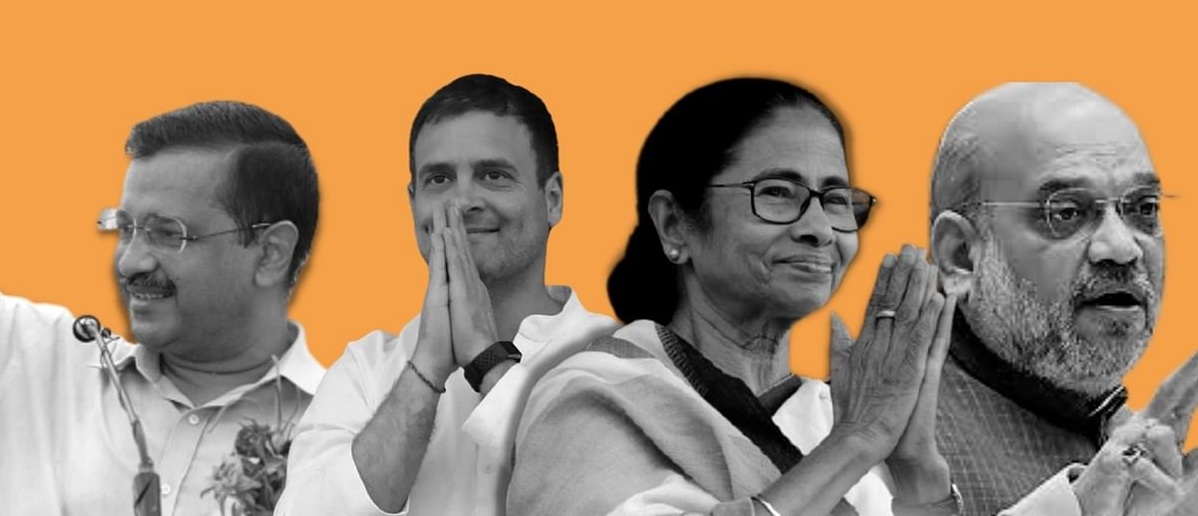
Amidst an unprecedented blaze of confusing theatrics, Politics in Goa has been charting a new course for the rest of the country to emulate.
Beginning with the large ‘incursion’ of national parties into its political scape, Goa has redefined the very concept of defection to give it an aura of legitimacy.
Never before in its history would have Goa witnessed the sort of absurdities that goes for politics as it has been ever since the announcement of elections.
Tracing a path in full contravention of set norms and traditions that describes politics as it has been understood for years now, the current pattern appears to have modern culture impacting it to a far greater extent.
The idiosyncrasies of politics as it is played out now, however, has a huge fan-following going by the appreciations that the unrestrained game of lies and deceptions seems to be garnering.
It is generally believed that political culture assumes all the more importance considering that they shape a population’s political perceptions and actions. But considering the present trend this would imply that public insights about politics are at its nadir.
For, the public is at its wits end trying to understand what exactly shapes the ‘thought perceptions’ of the current corps of politicians in the state for whom ideologies and ethics in politics are something utterly alien in nature.
The ‘snatch and snare’ policy is the order of the day and political parties have been pursuing it with a vigour that is shocking to say the least.
But in the milieu, it is also for the first time that sitting MLAs are finding themselves rendered ‘constituency-less’. With various party think-tanks having their own formulations for a winning combination, many legislators are finding themselves being forced out of contention in their supposed citadels.
While the availability of political options for disgruntled leaders in such a scenario has been vast, it is the electorate which has once again come a cropper staring at a catch-22 situation.
A distinct lack of viable alternatives in the past has had the masses adapting a compromissory stand and make-do with whatever was available. But the current development which allows for the body of voters to pick and choose from a wide variety of choices poses far more confusions.
As a situation presenting two equally undesirable alternatives, the present setting where the deluge of political parties and candidates should have offered some hope for the locals, the multitude vying for the people’s acceptance as their representatives has complicated matters further.
‘Marketed’ as proprietary brands by various dispensations, the realization that although the ‘packaging’ has changed but the ‘contents’ remain the same has gradually brought about a clear distaste for the present order of things.
The comment that big-spending political parties, who are in cahoots with industry captains, are being slowly weaned away from the common man from fighting elections and disenfranchising the weaker rungs of the society cannot just be overlooked and merits some serious consideration.
Just as in Kerala; as mass appeasement, the ‘kit’ policy is gaining momentum by the day in the state. The notification on the revised election expenditure limit for candidates in Assembly and Parliamentary constituencies as announced by the Election Commission recently is presumably an endorsement of the current trend.
What is, however, amazing is the huge financial aid and concessions that the locals stand to benefit from as every party, contesting the elections without exception, has promised them the moon if voted to power.
Considering the economic doldrum the state is in due to the pandemic, it is difficult to gauge where this money is going to come from. Are the parties then planning to dip into their coffers to fulfil their promises?
Or will this be an open-invitation for corruption to set in no sooner the next government assumes power?
In any case it is becoming extremely difficult to understand and assign some sort of sincerity to the political overtures being made by various dispensations vying for a shot at power at the forthcoming elections.
While one professes its overwhelming presence to be the dawn of a new political era in the state, claim of ‘sweeping’ to power with its array of committed leaders has been adding to the amusement quotient that election campaigns are renowned for.
But as has been rightly said, ‘people are being taken for granted and they are made to remain silent spectators to this gamble of opportunistic alliance exercise’. Citizens either have the choice to accept the candidates proposed and thrust on them by political parties or remain alienated from the electoral process.
From the majestic to the most mundane, democracy in India has been tracing a long and winding course. But its shortcomings notwithstanding, periodic elections have made the very concept of the rule of the people, by the people and for the people all the more endearing. Hence in their quest for power, political parties over the years have been pardoned their trivialities.
However, this is the age of political jumlas! As simply bland and inconsequential promises made by political leaders at the spur of the moment, people shouldn’t attach much importance to them.
The changing circumstance brought about by the ‘coups’ affected by various political parties in the run up to the elections has presented the Goan electorate a sea of opportunities to decide on their representatives. But the fact remains that these ‘tactical masterstrokes’ have only compounded problems for the voters.
.jpg)
.png) Cedric Prakash
Cedric Prakash
 ICPA
ICPA
 ICPA
ICPA
 ICPA
ICPA
 ICPA
ICPA
 ICPA
ICPA
 ICPA
ICPA
.jpg)
 A. J. Philip
.jpg)
.png) Jacob Peenikaparambil
Jacob Peenikaparambil
.jpg)
.png) John Dayal
John Dayal