

.jpg) Archbishop Felix Machado, Secretary General, CBCI
Archbishop Felix Machado, Secretary General, CBCI
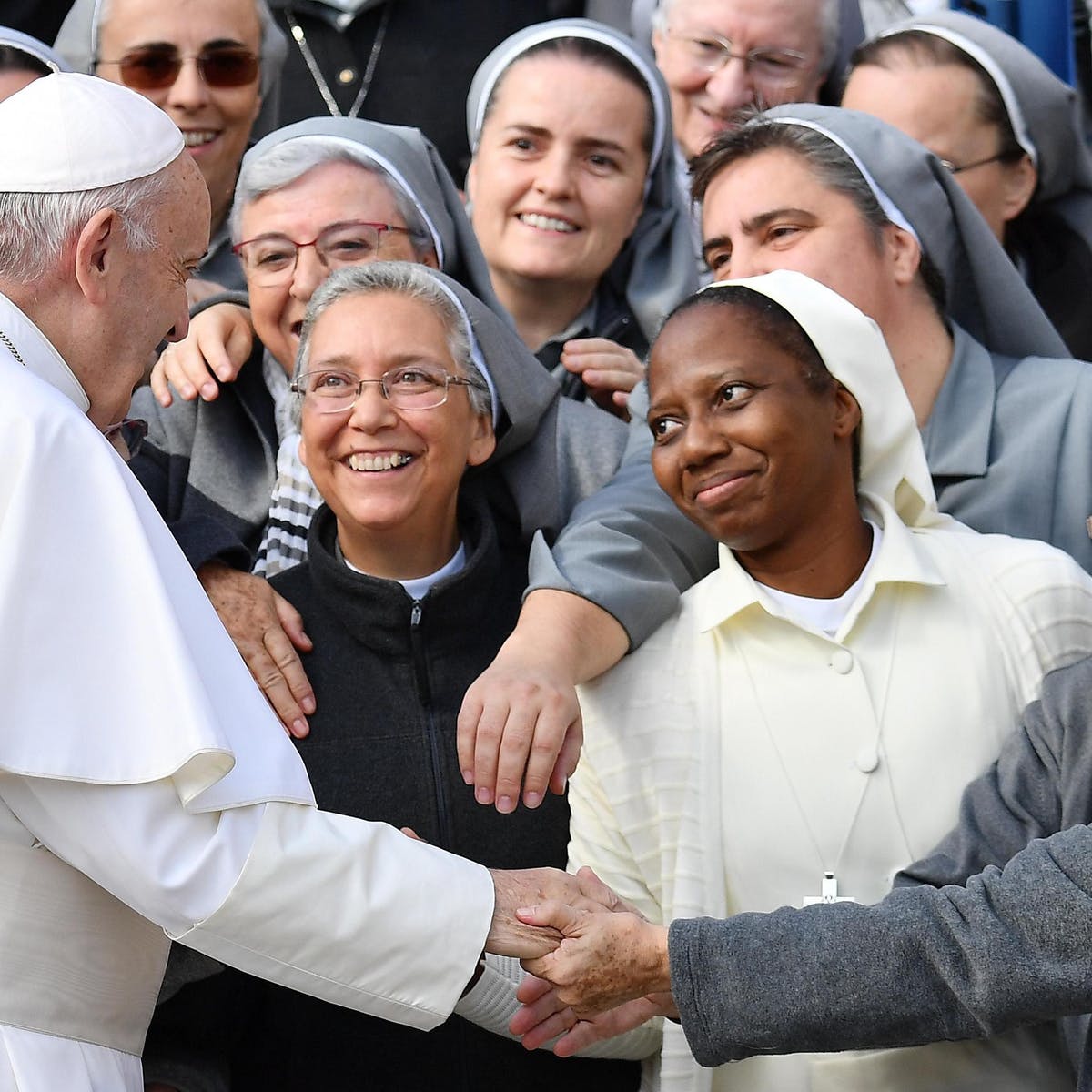
As the preparations for the ‘Synod on Synodality’ are underway, I am captivated by the prayer Adsumus Sancte Spiritus (We stand before you Holy Spirit). It is indeed a beautiful prayer. It has been historically used at Councils, Synods and other Church gatherings for hundreds of years. It is attributed to Saint Isidore of Seville who was born around 560 C.E. It is said that every session of the Second Vatican Council began with this prayer. A simplified version of the prayer is given below:
We stand before You, Holy Spirit, as we gather together in Your name.
With You alone to guide us, make Yourself at home in our hearts; Teach us the way we must go and how we are to pursue it.
We are weak and sinful; do not let us promote disorder. Do not let ignorance lead us down the wrong path nor partiality influence our actions.
Let us find in You our unity so that we may journey together to eternal life and not stray from the way of truth and what is right.
All this we ask of You, who are at work in every place and time, in the communion of the Father and the Son, forever and ever. Amen. (See Vademecum, p.2)
This prayer expresses our total dependence on the Spirit of God since as humans we can always take wrong paths and move away from God’s path. It is my hope and desire that each and every group which participates in the Synodal processes from any part of the globe get inspiration and strength from this prayer to journey together not only with fellow Christians but also the entire humanity and the creation around us.
I felt happy and satisfied to know the purpose of the Synod as stated in PD, 32. It is not to produce documents, but “to plant dreams, draw forth prophecies and visions, allow hope to flourish, inspire trust, bind up wounds, weave together relationships, awaken a dawn of hope, learn from one another and create a bright resourcefulness that will enlighten minds, warm hearts, give strength to our hands” (FRANCIS, Address at the Opening of the Synod of Bishops on Young People (3 October 2018).
Going through the PD and the handbook and understanding the overall process of this Synod filled me with joy and hope even before the first phase started. Ever since Pope Francis started his Pontificate in March 2013, he had been calling the Church to follow Jesus of the Gospels. For example, he invited the Pastors of the Church ‘to have the smell of the sheep’ and to include everyone especially women and other marginalized groups during the foot washing ritual on Maundy Thursday. He himself showed the example by washing the feet of prisoners including women and people of other faiths.
Through his addresses at various occasions, apostolic exhortations, encyclicals like Evangelii Gaudium, Laudato Si and Fratelli Tutti, he has been continuously calling the entire Church for renewal and a radical living of the Gospels. The call for the present Synod is another milestone in that direction of Church renewal and revitalization.
‘Synod’ is not a new concept but it is an ancient word. It indicates the path along which the people of God walk together. It was Vatican II that brought back synodality by emphasizing the nature and identity of the Church as People of God (LG, chap 2) and not so much the hierarchical structure; it brought about a shift from a pyramidal Church to a participative one. However, the Church has to go a long way to realize this ideal in its life and mission. It is unfortunate that the Church has not made much progress in implementing the call of Vat II for a participative Church even after 56 years.
The identity of the Church as People of God denotes a particular style that qualifies the life and mission of the Church. Her nature as People of God emphasizes the concept of journeying together as a pilgrim people (LG, chap 7) and gathering in assembly, summoned by the Lord Jesus in the power of the Holy Spirit to proclaim the Gospel. Though this is the inner reality of the Church, a big gap exists between this theological conviction and the day-to-day functioning of the Church.
The ‘journey together’ is both a gift and a task. It is a call to reflect together on the journey that has been made so far. It is an occasion for diverse members of the Church to learn from one another. Through this listening, God calls us towards a deeper communion, fuller participation and greater openness to fulfilling our mission in the world.
The long term vision of this Synod is that the whole Church gradually enters a new way: participatory, egalitarian and inclusive; a Church where the baptismal equality is lived in every aspect of the Church’s life and mission; a Church where everyone participates in the life and mission of the Church as equal disciples of Jesus. How can this vision be achieved?
The PD gives sufficient guidelines to involve all the members of the local Church in reflection and sharing. The questions given are clear. The first phase of the Synod is the listening phase at the local level, listening to the Spirit of God speaking through diverse members of the Church with varied experiences. One has to wait and see how each local church is going to engage the members both ordained and non-ordained, men and women, single, married, widowed, religious and clergy, members of various age groups and professions, in this listening process.
The patriarchal culture of our country does not expect a man and a woman to walk together. In most places the woman is expected to walk behind the man. Within the Church too we have the hierarchical structure which can easily collude with patriarchal structure if one is not careful.
Even though the PD and the handbook give clear guidelines and rationale for moving into a Synodal Church, there may be struggles to walk together, as men and women, ordained and non-ordained within a structure that is not so flexible. The gap between the ordained and the non-ordained, between men and women is rather wide. However, I am hopeful that if each Local Church earnestly tries to put into practice the listening phase in a planned and systematic manner so that maximum number of members get an opportunity, then the Synod on Synodality will help the Church to take a step forward as Pope Francis has envisioned.
.jpg)
.jpg)
.png) Jacob Peenikaparambil
Jacob Peenikaparambil

.png) John Dayal
John Dayal
.jpeg)
.png) Joseph Maliakan
Joseph Maliakan

.png) Dr Arnald Mahesh SDB
Dr Arnald Mahesh SDB

.jpg) Jose Vattakuzhy
Jose Vattakuzhy
.png)

.jpg) Isaac Gomes
Isaac Gomes
.png)
.png) Robert Clements
Robert Clements