

 Pachu Menon
It is election time again in the country!
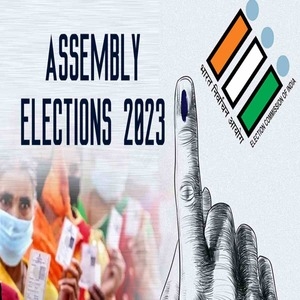
The elections in Mizoram and first phase polling in Chhattisgarh heralded the start of the voting process in this round of Assembly polls with three other states – Madhya Pradesh, Rajasthan and Telangana slated to go to the polls later this month.
“Indian polity is perennially in an election mode. On an average 5-7 Assembly elections happen every year. Such frequent electoral cycles end up negatively impacting administrative and developmental activities in the poll-bound states and impact the larger governance process in general. There is a serious need to evolve a mechanism to end this frequent round of elections.”
‘One Nation, One Election’ is a proposal under consideration by the Government of India to synchronize elections for the Lok Sabha and state Assemblies. It intends to hold these elections simultaneously, either on a single day or within a specific time frame. (Excerpts taken from “Decoding One Nation, One Election,” ‘Drishti IAS’)
But when one garners that the concept was the practice till 1967, but was disrupted due to various reasons such as defections, dismissals, and dissolutions of governments which eventually led to separate polls for Lok Sabha and State Assemblies, it becomes evident that it is one of those ‘reforms’ which was advocated earlier but somehow never saw the light of the day.
If one goes into the technicalities of the pros-and-cons of the implementation of the ‘One Nation, One Election’, varied opinions on this matter bring into sharp glare the tediousness of the whole exercise.
But an apprehension as the most prominent argument put forth is that voters may end up voting on national issues even for state polls which would benefit larger national parties and marginalize regional parties.
However, according to reports, various surveys have pointed out that the assembly polls do not necessarily reflect the mood of the nation, which will come into play in the Lok Sabha elections.
So that would mean that the electorate needs to be attuned both to the national as well as regional issues while exercising one’s adult franchise in both the elections.
Coming back to the assembly elections to the five states which kicked off on November 7, there is a general opinion that the power of the poor will decide the results.
Political analyst Ajoy Ashirwad Mahaprashasta in his article in ‘The Wire’ has cited the Karnataka Assembly elections as an apt example where the Congress party was able to overwhelm the saffron party purely on the strength of its welfare agendas for the masses as compared to the big infrastructure work of the Modi-sarkar in pursuit of a national programme that aims to get the country high up as one of the highly developed nations by 2047.
With a pronounced tilt towards issues that directly impact the lives of the poor and ‘those on the margin of the socio-economic make up’, we could yet again see political parties pampering their lucky ‘mascot’, the common man, in their pursuit of power.
As rightly mentioned, persuading voters is the essence of a political campaign. With changing times, the strategies too have changed. However, even today, many of the methods for persuading voters remain the same. The ‘Revdi Culture’, for instance, threatens to be a perennial and an inevitable part of elections in India.
But can Indians actually do without the ‘joys’ of frequent elections!
Goa however suffers from a variety of maladies that has nothing to do with the rate of recurrence of polls conducted.
The introduction of a spate of development proposals by the government and the equally fast declaration of ‘reversal of intentions’ would have by now convinced one and all about people’s might – or so it appears.
The disgust and aversion shown by the masses towards bad governance automatically translates into a keen desire to ring in changes. Motivating a motley crowd to take up cudgels against specific issues has often yielded results.
However, one often hears of people attributing the present state of affairs in the country to the diabolical ways of politicians. The politics in the country, they lament, has torn the nation asunder. Goans have been no different! Then why not do something about it!
Generally speaking, “politics refers to the activities associated with governing, with obtaining legislative or executive power, or with forming or running organizations connected with government. Accordingly, a politician is one who actively and professionally engages in politics; someone who possesses or displays shrewdness, tact or cunning. Thus he is seen as a schemer who manipulates situations and relationships to serve his purpose.”
It is high time we learn to distinguish between politics and social service. Social service is a selfless ministration that ought to be affected without any ulterior motives. But politics is nothing about aids and contributions. It is big business on the pretext of social service, and a really flourishing one.
If politics is all about social service and serving the masses, there wouldn’t be a visible clamour for a party ticket to contest the elections every time the elections are announced.
The biggest grouse against politicians is that they are the finest specimens of the ‘vanishing breed’; they are all ears for the electorate during the campaigns, only to disappear after the elections.
Then why not set the anomaly right?
Then there are others who grumble about the ‘zero-developmental agenda’ of their legislators; their individual programmes for personal prosperity is what rile them.
The public is not grudging them their chance to make hay while the sun shines; but even if a percentage of the efforts put into ‘self-beneficence’ is diverted to community works, they feel the outright condemnation would have been unwarranted.
This very democracy has also given us the right to elect our very own representative who is apparently the people’s voice in the government. But the habit of thrusting inappropriate candidates to the forefront of political authority has only resulted in us getting straddled with the same old faces who put up a farcical display of nurturing the constituencies.
What then deters us from selecting worthy nominees and assessing their performance periodically, with those found wanting and inefficient in their works shown the door immediately?
Or are we satisfied with the ‘tried and tested formula’ which regulates that a ‘known villain’ is better than an ‘unknown hero’! In any case, if we are not open to changes we shouldn’t be talking of ameliorating the system.
Goa has definitely not been averse to changes.
But political developments over the past few years have shown that while there has been a perceived shift towards ‘Saffronization’ in the state now, Goa is by and large used to the antics of a majority of the legislators, whenever in the Opposition, indulging in ‘crossing the floor’ at will to align with the party in power.
Although the stress given on ‘panchayati raj’ system augers well for a country which is professed to live in its villages, the elected ‘panchas’ tend to have political leanings and this shows in their biased workings as well.
But though the panchayat concerns itself with the administrative aspects of the village, the tumultuous ‘Gram Sabha’ meetings that we have come to hear of a lot paint a different picture altogether.
Why then can’t we think of forming individual groups of well-meaning people in each locality of the constituency and apprise the local legislator about the problems and hardships faced and the irregularities noticed? Wouldn’t a direct approach make more sense than a dependence on the over-awing red-tapism.
Issues like garbage disposal can be solved if every citizen learns to exhibit a certain degree of civic sense. The problem is that we love littering and dumping waste, especially in someone else’s unmanned property.
How one wishes people stop using streetlights for target practice. Likewise, torrents of water spewing from leaking pipelines should no more serve as shower-baths for the urchins. The day we stop differentiating between ‘public and private’ property, I would say that an average Goan has come of age.
A manifesting denigration and censure of the system for its failure is uncalled for one feels, considering that there are hardly any who sincerely wish to do something to do about it and take it upon themselves to start contributing to the change in right earnest.
This in fact is the tragedy of Goa – or the whole country for that matter.
The proliferation of a corps of arm-chair critics is an extravagance the state can well do without.
.jpg)
.png) Cedric Prakash
Cedric Prakash
.jpg) Elsa Lycias Joel
Elsa Lycias Joel
.jpg)
 A. J. Philip
.png) Jacob Peenikaparambil
Jacob Peenikaparambil
.jpg)
.png) John Dayal
John Dayal
.jpg)
.jpg)
.png) Joseph Maliakan
Joseph Maliakan
.png)
.png) Robert Clements
Robert Clements
.jpg) Cedric Prakash
Cedric Prakash
 ICPA
ICPA