

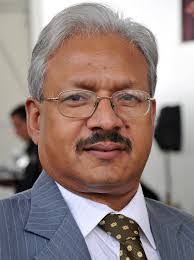
.png) Dr Suresh Mathew
Dr Suresh Mathew
‘Hindi should replace English as the link language and it should be the language of communication for the non-Hindi speaking areas or States,’ said Union Home Minister Amit Shah recently. ‘Hindi will always be India’s mother tongue and national language,’ said Bollywood actor Ajay Devgn in a recent tweet. These two recent developments triggered yet another round of vociferus debate and reignited emotions lying like smouldering embers. Coming from a film star to another actor from the fraternity, the tweet could be ignored, or even dumped to the dustbin. But the statement by the Union Home Minister apparently reflects the ‘Hindi-Hindutva-Hindustan’ ideology that raises its head off and on, thumbing one’s nose at the multi-lingual, multi-cultural and multi-religious country. It is not for nothing that the founding fathers of the Constitution desisted from making Hindi the national language, instead kept it the official language.
The language issue is bound to touch a chord with the non-Hindi speaking people. Any move to make Hindi the national language or the sole ‘link’ language would lead to backlash, especially in Southern states where it is rarely spoken. A random look at countries around the world would help us understand the issue better. The percentage of people speaking the national language of the respective countries is a clear indication of the yardstick used in this regard. Mandarin is spoken by more than 70 % of people in China; Sinhala is the language of over 75 % in Sri Lanka; In Sweden, 90 % speak Swedish; In Brazil, 99 % speak Portuguese. More than 80 per cent people speak Arabic in Saudi Arabia; Close to 75 per cent speak English in Australia. This is true with most countries in the world in deciding the national language. Interestingly, though an overwhelming majority of people speak English in the US, yet it does not have a national language.
In contrast, only around 40 per cent people speak Hindi in India. This might have prompted the Constitution-makers not to opt for a national language. Instead, they opted for Hindi as the official language; and through the Official Language Act 1963, the government also provided for ‘continuation of English language for official purposes of the Union.’ Thus, Hindi and English are ipso facto the link languages of the Union. English is mandatorily used in official purposes and communication between the Central Government and the States. However, States have the liberty to specify their own official language/s through legislation.
Unfortunately, these decades-long practices have been thrown to the wind by the present regime which has been sending communication in Hindi to non-Hindi speaking States. It seems the government is taking forward the notion of ‘one nation-one language’ which is unrealistic in a multi-lingual country. The government has to respect the regional sentiments. It should be left to the people of non-Hindi speaking States to decide what should be their language of communication. If they want to continue with English, which is the link language globally, the Centre should not interfere with their freedom to do so. The government should desist from dictating terms in this regard. ‘Ideologically biased’ moves would widen the cracks between the Centre and the States. It could flare up sentiments; the riotous situation of the 1960s, as witnessed in some parts of the country, should continue to send alarm bells ringing to a regime which has failed to keep its ear to the ground.
.jpg)
.png) Jacob Peenikaparambil
Jacob Peenikaparambil
 A. J. Philip
.jpg)
.png) Cedric Prakash
Cedric Prakash
.jpg)
 P. A. Chacko


.jpg) Thomas Menamparampil
Thomas Menamparampil
.png)
.png) Robert Clements
Robert Clements
.jpg) A. J. Philip
A. J. Philip
 Jacob Peenikaparambil