

.png) Dr Suresh Mathew
Dr Suresh Mathew
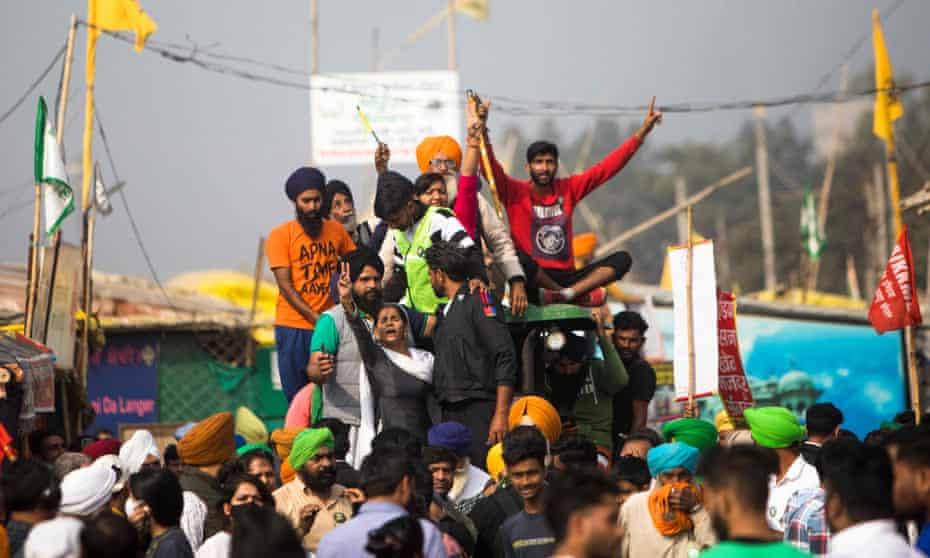
Over 700 farmers laid their lives in protest against the three controversial farm laws enacted by the Narendra Modi government in 2020. Thousands of them spent days and nights in freezing cold and under scorching sun on the borders of Delhi. Many of them braved water-canons, teargas shells and lathi-charge. The hands that harvest crops were up in the air seeking justice; scores of mahapanchayats were held, especially in the Hindi heartland, to give vent to their ire against the government. For close to a year, nothing could shake the stubborn Modi government; nothing could make the government, which turned a deaf ear, to listen to the pleas and pleadings of the farmers. Now the unrelenting government has been brought to its knees. It has been forced to take a U-turn and the Prime Minister himself went on air to announce the decision to repeal the farm laws.
Till the day the Prime Minister made the announcement, the BJP and the government were scornful at the farmers; they stooped to the level of calling the agitation as one led by Khalistani movement and terrorist organizations. The sudden change of mind of Modi and his government is apparently not due to any sympathy for the agitating farmers. Nor the government is convinced of the anti-farmer clauses in the laws. The Prime Minister’s speech makes it amply clear. He said the laws were being withdrawn because the farmers could not be convinced of their benefits. It is a shrewd way of wriggling out of a situation of its own making. And the timing is equally important. On the eve of the crucial Assembly elections to five States, as defeat stared at the ruling party, it was time to harvest votes by any means.
At every stage of the agitation, the BJP governments at the Centre and States were adamant to crush it with an iron hand. The most gruesome incident of mowing down farmers in Lakhimpur Kheri in Uttar Pradesh by a convoy allegedly led by the son of a Union Minister of State hadn’t evoked even a word of sympathy from the Prime Minister. Nor had he come out with a word of condolence for the farmers died during the agitation. Hence, the decision to repeal the laws is not guided by principles, but due to vote bank politics.
However, the farmers do not seem to be over-enthusiastic over the opportunistic decision of the government as the Prime Minister has not made any mention about their demand for guaranteed Minimum Support Price (MSP). The decision to repeal the laws might solve one of the bone of contentions: The ‘mandis’ will remain undisturbed. It will also keep many agricultural produce in the Essential Commodities Act. But not a word on the MSP has left the farmers skeptical. The Swaminathan committee had recommended remunerative price for agricultural produce – a Minimum Support Price which is 50 per cent higher than the cost of production. But the government which swears to double the income of farmers by next year has not spelt out a word on this issue. This is one of the rare occasions in the last seven-and-a-half years when Modi government is forced to roll back its decision. Farmers have shown the Modi government its place.
.jpg)
.png) Cedric Prakash
Cedric Prakash

 ICPA
ICPA
 ICPA
ICPA
 ICPA
ICPA
 ICPA
ICPA
 ICPA
ICPA
 ICPA
ICPA
.jpg)
 A. J. Philip
.jpg)
.png) Jacob Peenikaparambil
Jacob Peenikaparambil
.jpg)
.png) John Dayal
John Dayal