.jpg)


.png) Dr Suresh Mathew
Dr Suresh Mathew
.jpg)
‘Woman is a goddess’ goes the saying. Yet, we get to hear heart-wrenching cries of these ‘goddesses’ due to cruelties perpetrated by their own ‘gods’. Many of them end their life and there is a common thread that links such tragedies: Demand for more dowry, followed by physical and mental torture by greedy husbands and in-laws.
The recent death of 24-year-old Vismaya in Kerala, one of the most literate States, has once again brought the spotlight on the issue. In the last five years, the State reported over 50 dowry deaths.
According to available figures, there were over 7,000 dowry deaths in India in 2019. The actual figure could be much higher since many cases have either not been reported or shown as death due to other reasons. The country boasts of empowering women at various levels, even to the extent of making a woman as President, a feat even the US could not achieve. But the ground reality is far from it. Women in their in-laws’ houses become sitting ducks for dowry-seeking vultures.
The Dowry Prohibition Act says: One who gives, takes, or abets the giving and taking dowry shall be punished with imprisonment for five years along with fine. The law has been honoured more in breach than in observance.
Traditions and conventions are so deep-rooted that laws remain toothless. For many, the prestige of the family will be blown to smithereens if a girl is married off without paying ‘money and material’ as demanded by the groom’s side. The stature of a boy’s family too depends on the amount he fetches in the ‘marriage market’.
It is high time that the sobs of women and tears that trickle down their cheeks should prod us to end this unlawful act of giving and taking dowry. Apart from the Dowry Prohibition Act, there is Protection of Women from Domestic Violence Act that came into existence in 2005. The Indian Penal Code was amended to add section 498A to prevent husband or his relatives from subjecting her to cruelty. Yet torture and deaths in the name of dowry spiral up.
Parents have a major role in containing the dowry plague. They should stop treating girls and boys at different levels – the former as ‘liability’ and the latter as ‘asset’. Instead, treat both as equals; educate them; and make them stand on their feet.
A marriage between equals will not make girls’ life a hell. The girls have to focus on their education and economic independence before getting married. An independent girl will have more self-confidence to face life, unlike a financially dependent girl who will try to flee from life in the face of cruelties at the matrimonial house.
Girls should keep their parents in the loop if they are subjected to ruthless behaviour at in-laws’ house; they should show the courage to shake the dust from their feet and leave the house rather than ending life there.
Men too have a major part in bringing the dowry menace to an end. Bargaining for dowry is a slap on their integrity. It shows their greed for money and material rather than love for spouse.
There should be no mistake: Dowry is a regressive practice. Let there be no more girls who are forced to end their lives in a noose in the name of dowry. Let there be no more women whose lives are sacrificed at the altar of a dehumanizing system.
.jpg)
.png) Cedric Prakash
Cedric Prakash
.jpg) Elsa Lycias Joel
Elsa Lycias Joel
.jpg)
 A. J. Philip
.png) Jacob Peenikaparambil
Jacob Peenikaparambil
.jpg)
.png) John Dayal
John Dayal
.jpg)
.jpg)
.png) Joseph Maliakan
Joseph Maliakan
.png)
.png) Robert Clements
Robert Clements
.jpg) Cedric Prakash
Cedric Prakash
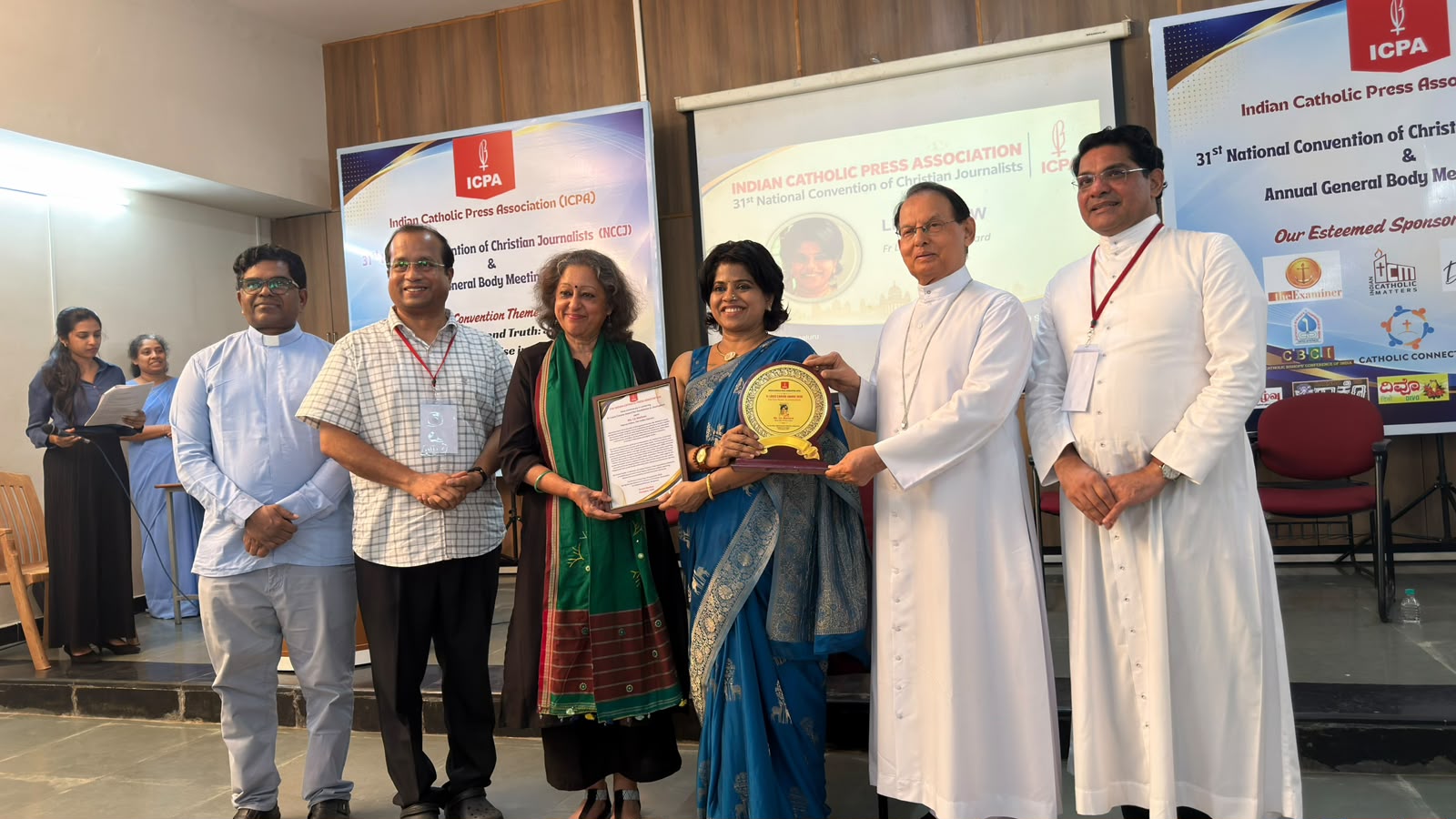
 ICPA
ICPA