

 Fr. Gaurav Nair
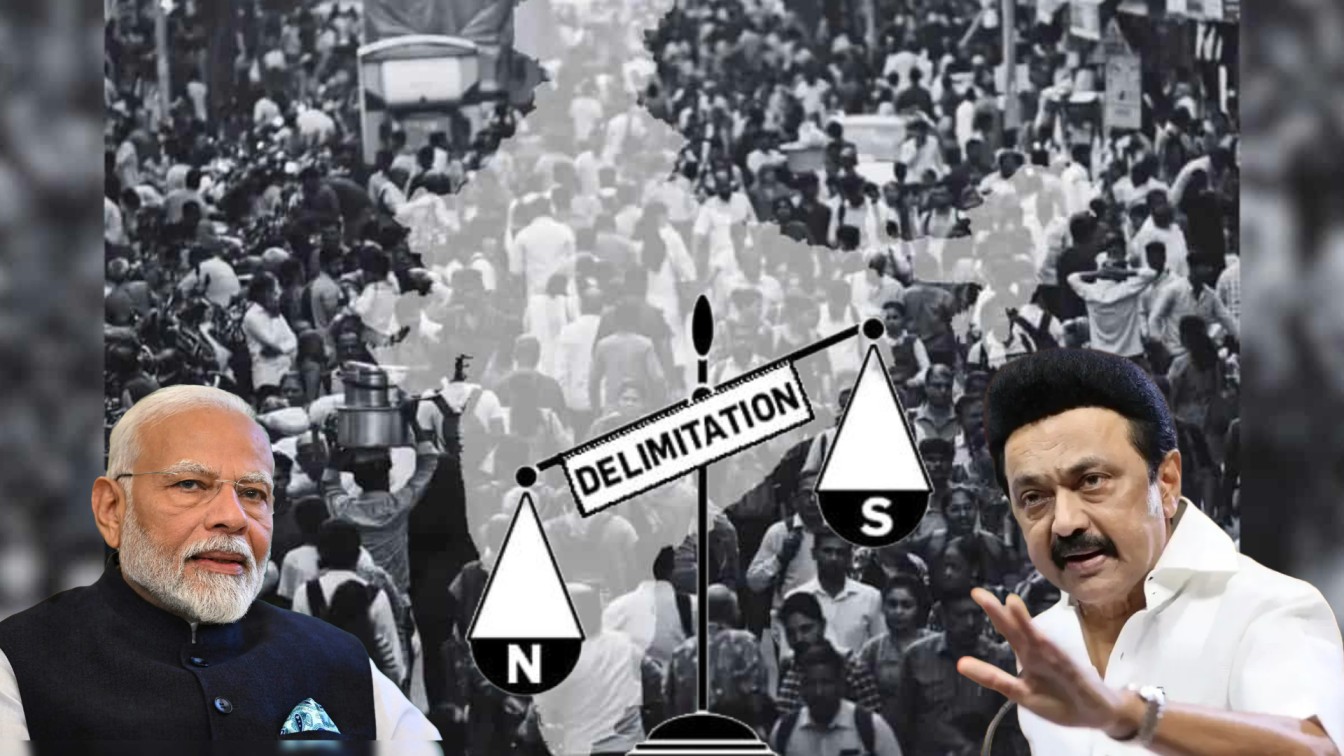
Closing in on the heels of the tongue's tussle, the North and South divide is yet again seen in the difference of opinion concerning delimitation. BJP leaders, including Mr Amit Shah, have "promised" that the South would not lose even a single vote, and many political commentators have tried to gloss over the subject, saying that Stalin and Co are making much ado about nothing and will not lead to real-world repercussions.
The BJP might choose to keep its promise. Nevertheless, it stands to reason that the North will gain overwhelming clout in the parliament owing to its population density. This is not just a conceivable scenario but a mathematical inevitability and precisely what the South is apprehensive about. So, the issue cannot just be dismissed as hyperbole or theatrics. The BJP already has a history of unapologetically weaponising federal institutions and penalising the South for not following it mindlessly like most of Northern India.
Appointing its own people to gubernatorial posts from where they throw wrenches into the working of the state governments, withholding funds for critical programmes, and using choice tasteless words for southern states and their denizens are all atrocities that the party has committed with utter glee and full support of its saffron toting goons and cheerleaders. With such context, it is simply impossible to dream up a situation where the BJP will not exploit this opportunity to perpetrate more mischief.
We must also acknowledge that it is genuinely a problem and cannot be pushed ahead indefinitely. Semantic strictness would require that a democracy must adequately represent its members. But achieving this in India is well-nigh impractical and unexaggeratedly fatal to certain sections due to the political gremlins spreading hate and horror on the playing field. The current predicament arises from the religious, cultural, lingual, educational and every other criterion that makes our country unique.
For southern states, it isn't just about seats—it's about safeguarding their linguistic identity, fiscal autonomy, and resistance to Hindi-Hindu hegemony. For the BJP, it's a demographic jackpot: a chance to cement its "permanent majority" by aligning parliamentary strength with the geography of its voter base.
Tackling this requires more than technical fixes; it demands a reimagining of federal trust and that it be handled idiosyncratically in ways which account for most of the quirks of the Indian landscape. Yet even this approach would not be without its share of quandaries. The primary one would be that any perceived discrepancies in distribution would generate revolt elsewhere, especially as the ruling dispensation is, by all means, hellbent on establishing anarchy.
The tragedy is that delimitation, in theory, should renew democracy. Instead, it has become a proxy war over India's soul. Every democracy has struggled with this problem; it does not mean much for most. Honestly, it may pan out quite differently than everyone expects. But the truth is that the exact same problems, when overlaid on the Indian subcontinent, sometimes become existential issues.
.jpg)
.png) Cedric Prakash
Cedric Prakash
 ICPA
ICPA
 ICPA
ICPA
 ICPA
ICPA
 ICPA
ICPA
 ICPA
ICPA
 ICPA
ICPA
.jpg)
 A. J. Philip
.jpg)
.png) Jacob Peenikaparambil
Jacob Peenikaparambil
.jpg)
.png) John Dayal
John Dayal