

.png) Dr Suresh Mathew
Dr Suresh Mathew
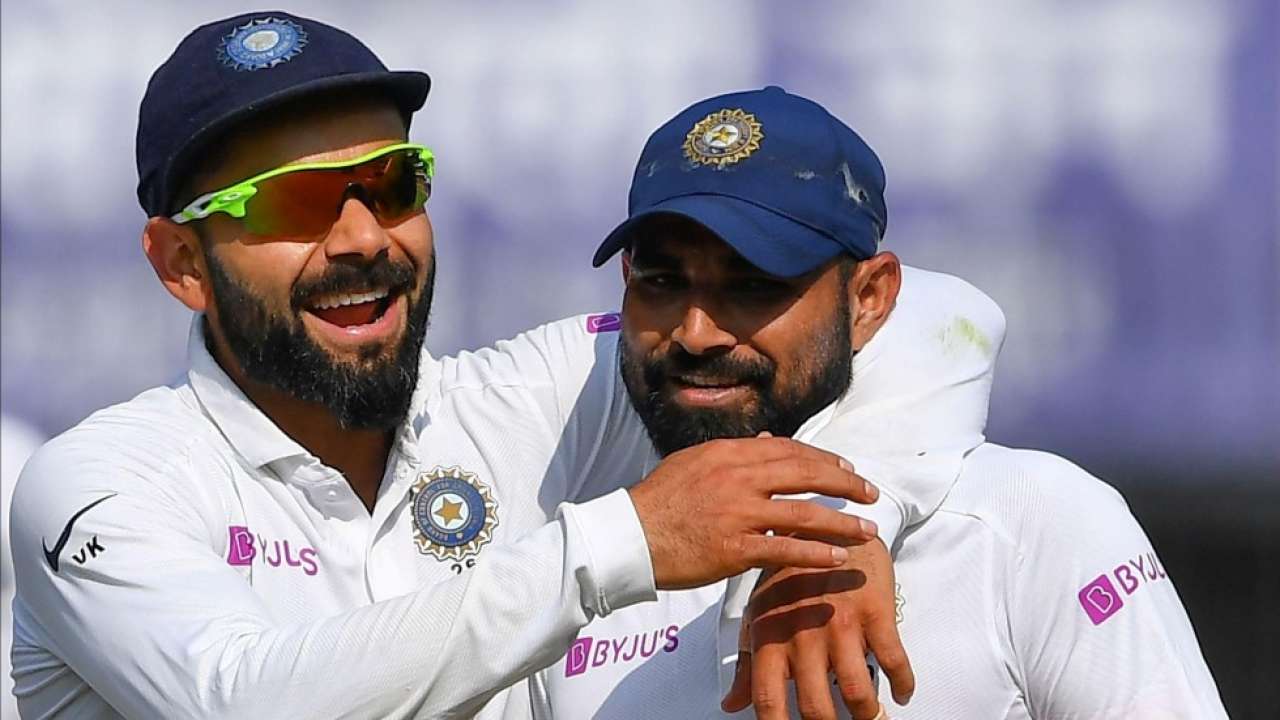
When Virat Kohli stood up to speak for his teammate Mohammed Shami, who was facing the ire of uncouth Hindutva forces for Pakistan’s victory against India in the T20 World Cup match, he preferred to stand on a new pitch. Pakistan got the better of India due to the latter’s poor performance and Shami’s role in the inglorious defeat was nothing more than that of other team members. But the fascists singled out Shami, the only Muslim face in the team, to be on their line of fire.
The cyber-attack on him was out-and-out communal, in line with the Islamophobia prevailing in the country. Instead of coming out in open with outright support to the beleaguered cricketer, many ‘illustrious’ sportspersons have been guarded in their reaction. They wavered in their stand; they vacillated in speaking out against the communal elements; they frittered away an opportunity to be seen with their ‘sports-mate’.
Herein enters Kohli proving his mettle as the captain of the team. He solidly stood behind his teammate and backed him to the hilt. Sticking his neck out, he unleashed a no-holds-barred attack on the communal forces that were after Shami’s blood.
Without mincing words he said ‘attacking someone over one’s religion was the most pathetic thing that a human being can do’. He killed two birds in one shot: defended his teammate passionately and showed the communal detractors their place.
Kohli also showed a mirror to the so-called celebrities that it was not enough to make use of their ‘celebrity status’ to rake in money, they should also speak up for the victims of injustice and inequality.
Their celebrity status, bestowed on them by the people, should become a means for defending the people and helping them in times of dire straits. He blazed a new pitch commendably. In doing so, Kohli joined the league of many other international athletes and sportspersons who have made use of their status to protest against racial discrimination, communal atrocities, human rights violations and war-mongering. Some of them have suffered personally for their acts of courage and conviction.
Kohli’s fearless act of defending Shami is a slap on the face of the governments that went after those who applauded the victory of Pakistan in the T20 match. The Uttar Pradesh Government, led by Yogi Adityanath, was particularly harsh in threatening to invoke sedition charges against those who celebrated it. Several FIRs were registered across the State and many other States followed suit.
It is absurd that the governments did treat with kid gloves those who unleashed communal venom against Shami, but went after the people who clapped the victory of Pakistan. Some of the educational institutions went to the extent of suspending students for celebrating the Pak victory.
An unfortunate development is that democratically elected governments are taking the path and talking the language of religious fanatics and fringe elements. Their pledge to protect the principles enshrined in the Constitution is ripped to shreds.
Would the governments and the institutions have acted the way they did if some other country had defeated India and the people had celebrated the former’s victory. Herein lies the significance of the role played by Kohli at a time when the heart of India is poisoned by communal venom.
.jpg)
.png) Cedric Prakash
Cedric Prakash
.jpg) Elsa Lycias Joel
Elsa Lycias Joel
.jpg)
 A. J. Philip
.png) Jacob Peenikaparambil
Jacob Peenikaparambil
.jpg)
.png) John Dayal
John Dayal
.jpg)
.jpg)
.png) Joseph Maliakan
Joseph Maliakan
.png)
.png) Robert Clements
Robert Clements
.jpg) Cedric Prakash
Cedric Prakash
 ICPA
ICPA