

.png) Dr Suresh Mathew
Dr Suresh Mathew
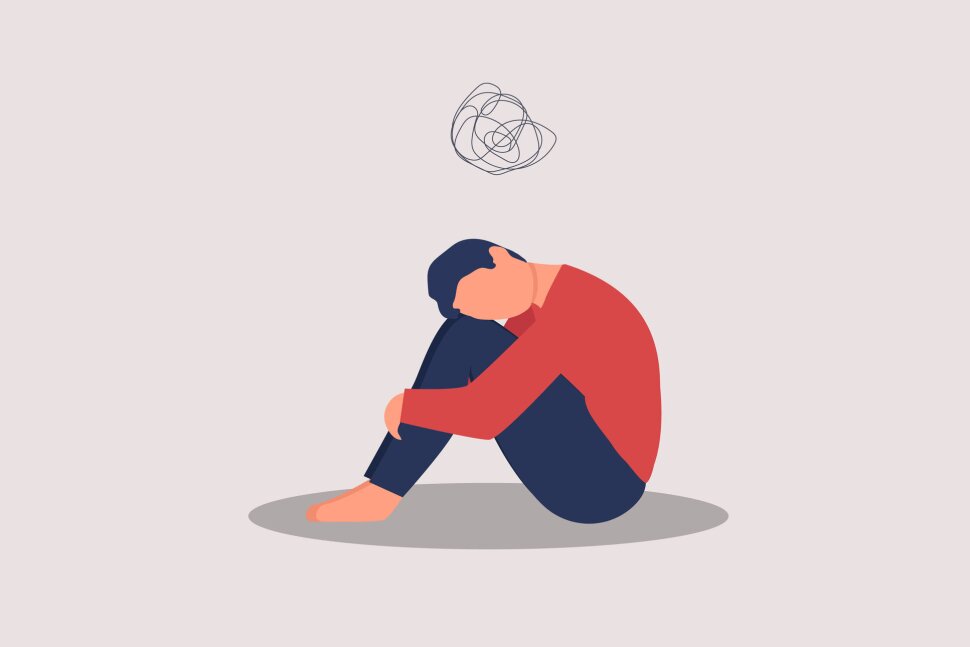
“It is OK to not be OK. It is OK to ask for help. You are not alone.” It is one of the most comforting catchphrases at a time when mental health is on a low level across the globe. The situation has aggravated in the wake of the Covid pandemic, leading to worsening health issues, employment loss, business collapse and economic crisis. Making the condition appalling, mental health services have been severely disrupted, with short supply of skilled personnel and funds, putting severe stress on those dealing with the crisis. Hence World Mental Health Day 2022 on October 10, with its motto of “Make mental health for all a global priority”, attains more significance.
Reports suggest that there had been a steep rise in suicides in India, a clear case of aggravated mental health crisis, with the National Crime Records Bureau (NCRB) revealing that more than 1.60 lakh people took their lives due to various reasons last year. This makes it a whopping 450 dying by suicide every single day of the year. This figure, though reportedly underestimated, brings out the state of mental illness existing in the country. Family disputes, souring relationships, failure in examinations, sexual assaults, etc. add to the mental agony and the resultant illness.
There are also instances like inhuman measures by government, autonomous, and private organizations that push people to mental distress and take the ‘ultimate step’ due to ignominy in the society. Some of them are: Ruthless loan recovery measures by lending agencies; land acquisition by government leaving small-holders without their hearth and home; retrenchment from service, sealing employees’ options for survival. There are many more such issues that push people into the depth of despair. It is important that a responsive government should take a leading role in preventing situations leading to people’s mental health collapse. Despite the enormity of the issue that calls for urgent attention, mental health problems are considered a taboo in India, and many talk about it in hush-hush voice.
It is equally important to nail the lie that happiness is a sign of mental health. The example of Finland is a case in point. It is the happiest country in the world. It has low inequality, successful education system which other countries try to adopt; and it has high living standards. Yet it has one of the highest rates of mental health issues among the European countries. This makes it clear that a well-settled, happy-go-lucky person may look healthy on the face of it, but might be in the thick of mental agony. It is difficult to fathom the mental health issues that some of the cheery persons might be going through. The suicide of several famous and not so famous film-personalities, models and rich people proves this point.
Undoubtedly, one of the best ways to keep people mentally in the pink of health is to maintain human relationships. Leaving people in isolation will have serious adverse impact. Siblings, peer groups, religious and other institutions and organizations can play a big role in boosting the sagging health of mind. It is important to create awareness that mental disorder is not a stigma but something to be taken care of like any other health condition. But, situation on the ground is not all that hale and hearty.
.jpg)
.png) Cedric Prakash
Cedric Prakash
.jpg) Elsa Lycias Joel
Elsa Lycias Joel
.jpg)
 A. J. Philip
.png) Jacob Peenikaparambil
Jacob Peenikaparambil
.jpg)
.png) John Dayal
John Dayal
.jpg)
.jpg)
.png) Joseph Maliakan
Joseph Maliakan
.png)
.png) Robert Clements
Robert Clements
.jpg) Cedric Prakash
Cedric Prakash
 ICPA
ICPA