

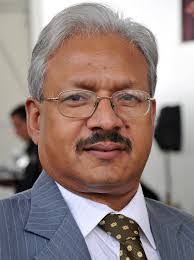
.png) Dr Suresh Mathew
Dr Suresh Mathew

When Tribals in many places were being denied their legitimate rights, Fr. Stan Swamy’s consistent question was: “How long will the Adivasis be victims of systemic oppression?” His was a prophetic voice against an oppressive government and its minions. Like a prophet of olden days, he spoke up for the afflicted and the persecuted; and he paid with his life for what he stood for, and what he spoke. At a time when fascist tendencies are gnawing into the fourth pillar of the largest democracy in the world, journalism is at peril. The prophetic voices of journalists that once kept governments and their officials on tenterhooks have turned feeble. The searing words that exposed the wrong-doings of the government were enough to send a chill down the spine of erring parties and individuals.
Unfortunately, prophetic journalism is slipping to the margins; those who are willing to sing paeans to the powers-that-be are coming to the centrestage. Instead of uncovering the flips and flops of those in governance, the media is after the Opposition trying to ferret out their omissions and commissions. Here prophetic journalism is taking a backseat. Prophets were those who spoke truth without fear or favour. They had the courage to call out the injustices and unfairness of the rulers, unmindful of personal risk and safety. Their objective was nothing but telling the truth. This has been compromised in the present-day journalism. When objectivity gives way to subjectivity, what is reported may not be the whole truth. The real news gets subjected to manipulation to suit vested interests of someone else.
The distortion taking place in media has been picking up momentum in the recent past. The media that withstood the ‘arm-twisting’ tactics and pressures even during Emergency has been bending backwards of late. Instead of becoming voices of the oppressed, they have become mouthpieces of the government or exploiters of the people. This has become evident in reporting tribal agitations, trumped up cases against human rights activists, police highhandedness in students’ stirs, people’s fight for their hearth and home, and many more such issues. Instead of asking questions to the government on policy failures and inadequacies in implementing schemes, media is more adept at becoming loudspeakers of the regime. A section of media has become an instrument of polarization by focusing on such issues at the cost of people’s issues. Divisive communal issues eat up most of their air time.
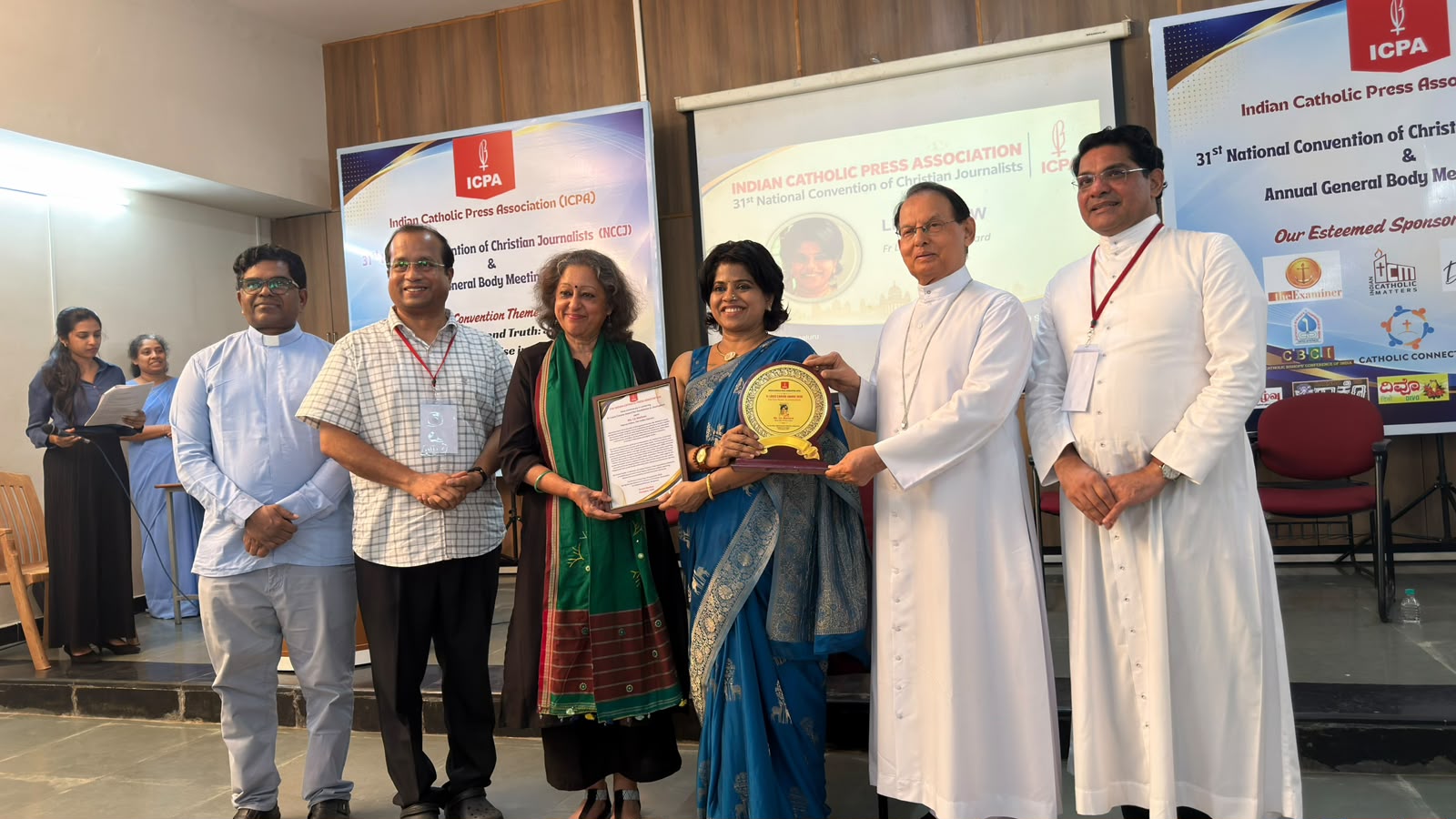
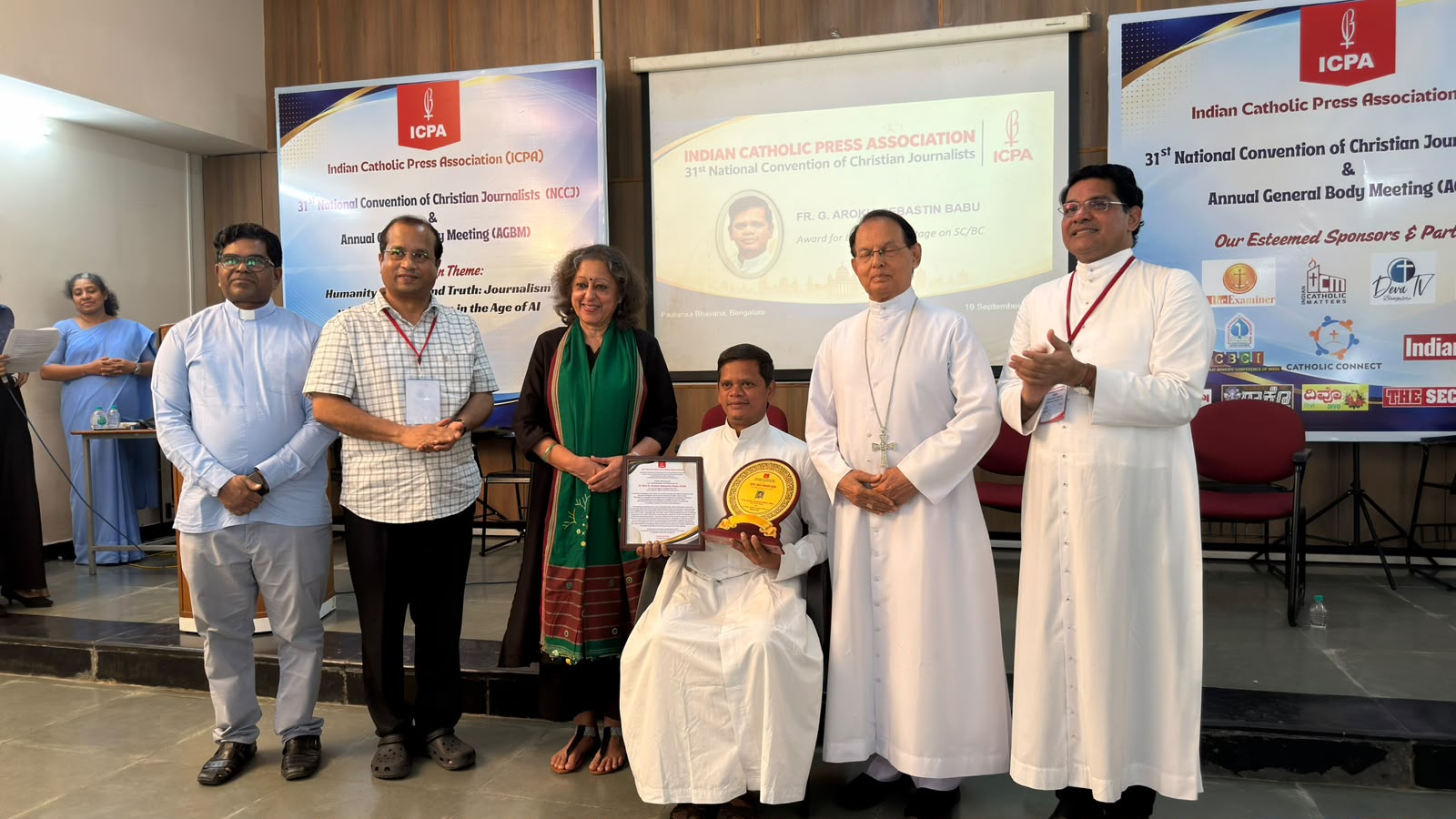
Of course, it would be wrong to paint the entire media with the same brush. There are still media organizations and journalists whose prophetic voices boom, inviting the wrath of the authorities. This is evident from the number of journalists who are killed in the line of duty or jailed. According to a report by the Committee to Protect Journalists, globally 363 reporters are deprived of their freedom as on December 1, 2022. In India, seven journalists are in jail charged under various laws. It is a sign of stifling their voices. It is an indication that journalists who are not ready to toe the official line will have to pay a heavy price. In this context, a recent meeting of the Indian Catholic Press Association (ICPA) held in Chennai on the theme “Journalists called to be prophetic communicators” was an important event in highlighting the issue. Indian Currents carries many insightful reports on the event in this issue.
.jpg)
.png) Cedric Prakash
Cedric Prakash
 ICPA
ICPA
 ICPA
ICPA
 ICPA
ICPA
 ICPA
ICPA
 ICPA
ICPA
 ICPA
ICPA
.jpg)
 A. J. Philip
.jpg)
.png) Jacob Peenikaparambil
Jacob Peenikaparambil
.jpg)
.png) John Dayal
John Dayal