

.png) Dr Suresh Mathew
Dr Suresh Mathew
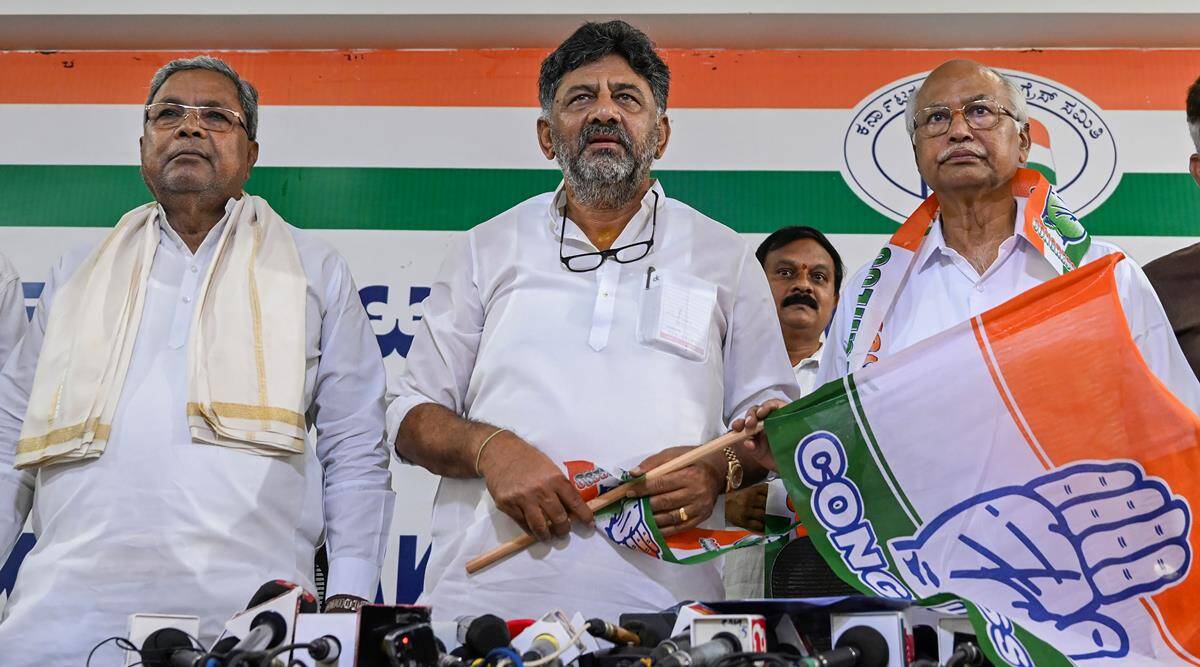
The people of Karnataka scripted a new story by showing the incumbent BJP government the door. They have brought back the Congress party with an unprecedented majority, winning 136 of the 224 seats, surpassing its seat share of 122 in 2013 elections. What is mortifying for the ruling party is its inability to win even half the number of the Congress seat share. The JD(S) which used to be a kingmaker, and hoped to be so this time too, has lost its ground winning only 20 seats, almost half of what it had in the last elections.
The result has lessons for every party, but the BJP has more to take home than anyone else. South India has almost become BJP government-mukt, the only consolation being an ally in the Pondicherry government. The party’s much-hyped slogan, Congress-Mukt Bharat, seems to be slowly boomeranging. State after State, the party lives in the illusion that the charisma of Prime Minister Narendra Modi is enough to win elections. The party and its governments live in a deceptive world that their performance does not matter so long as they have a saviour in Modi. Even before the election dates were announced, Modi had made Karnataka his ‘second home’ making regular visits. During the campaign, it looked like Modi mania everywhere -- he crisscrossed the state, held scores of public rallies and several road shows with pomp and profligacy.
The issues that Modi and other top party leaders, including Amit Shah, highlighted were in sharp contrast to what the principal Opposition party, the Congress, chose to raise. The BJP harped on Muslim fundamentalism, Bajrang Bali, love jihad, the Kerala Story, National Register of Citizens (NRC), Uniform Civil Code (UCC), danger to Hindu religion, double engine government, so on and so forth. While unleashing an avalanche of such polarising issues, they forgot about the people of Karnataka and their life-issues. While carpeting the road with yellow flowers during Modi’s road shows, they forgot the fact that the same roads remained water-logged during rains; they ignored sky-rocketing prices of petrol, gas-cylinders and other essential items; they turned a blind eye to the ‘40 per cent commission’ issue that had become a house-hold talking point in the State.
It is here the Congress scored. The leaders focussed on welfare schemes announcing 200 units of free electricity, Rs 2,000 per month for each home-maker, 10 kg rice for BPL card-holders, Rs. 3,000 every month to each unemployed youth with graduation degrees for two years, Rs 1,500 per month as allowance to unemployed diploma holders, free travel for women in State Road Transport buses. Apart from these people-centric promises, the party assured an end to ‘40 per cent commission sarkar’, increased reservation for Scheduled Castes, restoration of the repealed reservation for Muslims. All these caught the imagination of the people. The election result is a vindication of the relevance and success of the Congress strategy.
The Modi magic is fading. The BJP’s efforts to garner votes by polarising people are failing. The writing on the wall is clear. The minority communities, especially the Christians, whose leaders in Kerala are charmed by the promises of the BJP, should see through the game plan of the saffron party. The strong stand of Church leaders like Bangalore Archbishop Peter Machado who have taken an uncompromising position against communalism and spreading of hatred is vindicated. The ‘Mann ki Baat’ of the people is in favour of democracy and pluralism.
.jpg)
 A. J. Philip

.png) Cedric Prakash
Cedric Prakash
.jpg)
 P. A. Chacko
.jpg)
.jpg)
.jpg) Thomas Menamparampil
Thomas Menamparampil
.png)
.png)
.png) Robert Clements
Robert Clements
.jpg)
.png)
.png) Chhotebhai
Chhotebhai