

.png) Aarti
Aarti
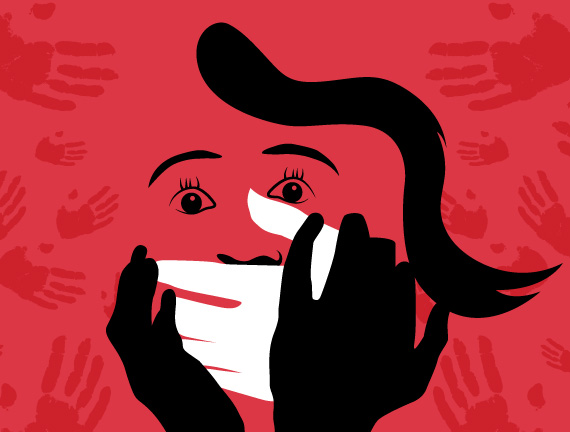
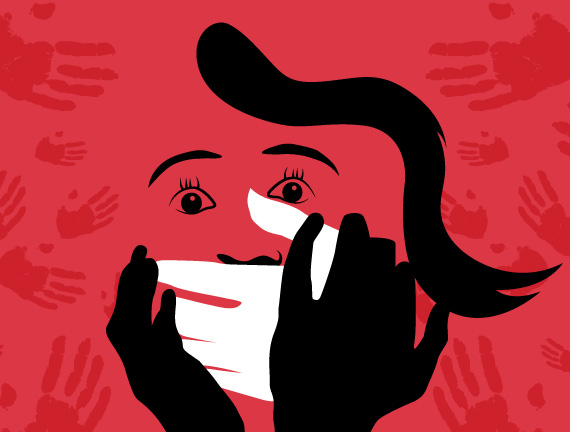
Two instances of COVID-19 related rape in Kerala last week has triggered public angst. On the night of September 5, a 19 year old Covid-19 patient was reportedly raped by an ambulance driver in Pathanamthitta district. Two days earlier on September 3, a 44-year old woman in Pangode in Thiruvananthapuram district was allegedly raped by a health inspector.
Even as both the accused have been arrested, the incidents have taken a political turn with the opposition lashing out at the ruling LDF.
In the first case, according to media reports, the patient who was tested positive was asked to be ready by 9.30 AM on September 5 for being transported to the First Line Treatment Centre which was a 10 minute drive from her home. However, the driver of the 108 Ambulance Service that reached her place close to midnight instead of taking her to the treatment centre, drove past it to a deserted place only to sexually assault the hapless victim.
The originally assigned Ambulance driver is believed to have made an informal arrangement with the accused (Noufal) to take the patient to the treatment centre as he did not have enough fuel in his ambulance. After Noufal was arrested it was found that he is already an accused in a murder attempt case. Noufal’s story ends here as he has been dismissed from service. The investigation team has been unable to obtain from the victim as she is mentally disturbed after the incident even as a psychiatrist has been assigned for her counselling.
In the second incident of sexual abuse, the victim was asked by the health inspector to go over to his house to collect ‘coronavirus negative’ certificate to enable her rejoin duty post quarantine, when the sad and shameful saga unfolded. Reportedly after tying the victim’s hands, the accused not only sexually assaulted her but also threatened her that he would get a case registered against her for jumping quarantine and get her arrested by police.
There was public outcry and both the accused have been swiftly arrested. But the cause for concern is that hardly a day goes without a rape case making headlines in India even during the challenging times when the country is trying to deal with the global pandemic.
The Kerala Ambulance Network for indisposed victims (Kanivu) launched by the State Government almost a year back, was intended to provide free emergency trauma care ambulance service across Kerala through public private participation.
Monitored by the district-level committees headed by the district collector, anyone who wished to avail the services had to dial the toll-free number 108.
The operational part, which was handled by a private company, would collect the name and address of the patient and pass it on to the nearest ambulance. A 24x7 control room was supposed to track each ambulance.
The Kanivu service has been touted as one of the best examples of the 108 Ambulance utilization. During the initial days of lockdown, specifically in April 2020, as many as 12,531 suspected COVID-19 patients from across the states have been transported through the Kanivu ambulance network that has around 316 ambulances across Kerala. It is said that more than 1400 employees are part of Kanivu, which includes nurses (625), drivers (625), call centre staff (100) and support staff (50).
What went wrong with the 108 Ambulance Service on that fateful night?
Was it negligence that led to lapses?
If the antecedents of Noufal had been verified, he would not have been employed with Kanivu.
Was there laxity in monitoring and effective management of the call centre?
Did the drivers exchange duties on their own or it was with the knowledge of the call centre?
While a thorough probe and fixing of responsibility merits serious consideration, the management of the Ambulance service cannot absolve itself of the shameful incident that is shocking beyond words.
Against the backdrop of the 108 Ambulance sexual assault case, let’s for a moment go back to the ghastly rape and murder of 28-year-old Prathibha, a call centre employee on 13 December 2005 in Bengaluru?
Prathibha had left her home to attend the night shift at the office and instead of the assigned cab driver, another driver, Shivakumar, who picked her up in his vehicle, raped and killed her.
The incident had brought the issue of safety of women working in the night shift to the fore as also whether the top management of such companies would be liable for the safety of women.
The Managing Director of the said call centre was booked for violating the Karnataka Shops and Establishment Act. He moved the Karnataka High Court to quash prosecution proceedings arguing that he was exempt from liability under the Act.
The High Court rejected his petition. He moved the Supreme Court, which too, dismissed his appeal, allowing the prosecution to continue.
While the law will take its course in respect of the two Kerala rapists for their crime on unsuspecting women, as the certainty of punishment produces a stronger deterrent effect, there is an imperative need to have these cases fast tracked.
(Published on 14th September 2020, Volume XXXII, Issue 38)
.jpg)
.png) Cedric Prakash
Cedric Prakash
.jpg) Elsa Lycias Joel
Elsa Lycias Joel
.jpg)
 A. J. Philip
.png) Jacob Peenikaparambil
Jacob Peenikaparambil
.jpg)
.png) John Dayal
John Dayal
.jpg)
.jpg)
.png) Joseph Maliakan
Joseph Maliakan
.png)
.png) Robert Clements
Robert Clements
.jpg) Cedric Prakash
Cedric Prakash
 ICPA
ICPA