

.png) Joseph Maliakan
Joseph Maliakan
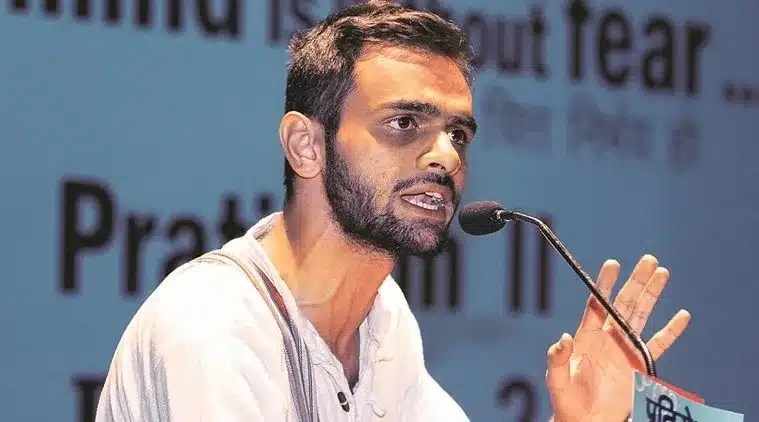
Umar Khalid, the Jawaharlal Nehru University scholar who has spent more than five years in jail, on Thursday, September 11, told a Delhi court that the larger Conspiracy case in connection with the 2020 North East Delhi riots is purely based on fabricated evidence.
Opposing the framing of charges against Umar Khalid, who was arrested by the Delhi police on September 13, 2020, Senior Advocate Trideep Pais submitted before Additional Sessions Judge Sameer Bajpai that the FIR 59 of 2020 investigated by the Delhi police's special cell does not have the sanctity of law, let alone the seriousness of offences as alleged by the Delhi police. If the charge of conspiracy was genuine, it would have had some connection to other offences committed at that time, the advocate pointed out.
The case under the draconian Unlawful Activities Prevention (UAPA) 1967, alleged a larger conspiracy in the commission of the 2020 anti-Muslim North-East Delhi riots in which 53 people, 40 of them Muslims, were killed.
Pais argued that there was absolutely no need for the UAPA FIR, which, according to the prosecution, deals with the death of 53 innocent people, as the deaths are the subject matter of other FIRs and are being dealt with separately.
Each of the FIRs will have general or specific linkages, but they have no connection with Umar Khalid and several other students from JNU, Jamia Millia Islamia, and the University of Delhi.
The counsel in this context drew the court's attention to various orders by multiple courts in the riot cases, wherein highly critical adverse remarks against the Delhi police and prosecution have been made while discharging or acquitting accused persons.
The prosecution initially decided to implicate a particular person in the case and then targeted the individual by fabricating false documents, which led to the chargesheet.
The bias is evident from the fact that Umar Khalid was not even present in the areas on the dates when the violence took place. However, he has been deliberately targeted by the prosecution and charged with fabricated evidence.
"You first decide this person has to be implicated in the case, then we will see how it has to be done. Reverse engineering is happening," Pais pointed out. Referring to the first supplementary chargesheet filed by the Delhi police in the UAPA case in November 2020, the counsel said that the allegations made therein have no basis, either by witness statements or any recovery. "These are just embellishments by police which have no basis, document or a witness," Pais asserted.
On Delhi police's allegation in the supplementary chargesheet, which refers to Khalid as "Veteran of Sedition" and that he used derogatory words about India in 2016, Pais said that the Delhi Police's initial chargesheet does not say that Umar Khalid used any derogatory words against India.
"In the 2016 chargesheet, it is clearly stated that he did not say it. It is not attributed to him. Please see the falsehood being peddled here. It is the same police agency. They attribute false statements to him here that they did not attribute to him 2016... This is the manner in which the supplementary chargesheet peddles lies," Pais added.
Khalid and seven other accused in the conspiracy were denied bail by the Delhi High Court on September 2. The others who have been denied bail are Sharjeel Imam, Athar Khan, Khalid Saifi, Mohd Saleem Khan, Shifa ur Rehman, Meeran Haider, Gulfisha Fatima and Shadab Ahmed. Khalid has petitioned the Supreme Court of India, challenging the Delhi High Court's denial of bail.
The Delhi High Court, in its order, said that prima facie, the role of Umar Khalid and Sharjeel Imam in the entire conspiracy is very "grave." They have delivered inflammatory speeches on communal lines to "instigate mass mobilisation of members of the Muslim community."
The other accused in the case are Tahir Hussain, Ishrat Jahan, Asif Iqbal Tanha, Tasleem Ahmed, Safoora Zagar, Devangana Kalita, Faizan Khan and Natasha Narwal. In June 2020, Zafoora Zagar was given bail on humanitarian grounds on account of her pregnancy. And in June 2021, the Delhi High Court granted bail to three other accused, Asif Iqbal Tanha, Devangana Kalita, and Natasha Narwal, on merit.
In the order granting bail to the three accused the Delhi High court bench comprising Justices Sidharth Mridul and Anup Jairam Bhambhani said, "We are afraid, that in our opinion, shorn of the superflous verbiage, hyperbole and the streched inferences there was no case of terrorist activity and the State has blurred the line between the constitutionally guaranteed right to protest and terrorist activity."
"Making inflammatory speeches, organising chakkajams are not uncommon when there is widespread opposition to governmental or parliamentary actions," the High Court had added.
.jpg)
 A. J. Philip
.jpg)
.png) Jacob Peenikaparambil
Jacob Peenikaparambil
.jpg)
.png) John Dayal
John Dayal
.jpg) Joseph Maliakan
Joseph Maliakan
.jpg)
 Pachu Menon
.jpg) Jose Vattakuzhy
Jose Vattakuzhy
.jpg)
 P. A. Chacko
.png)
.png)
.png) Robert Clements
Robert Clements
.jpg) A. J. Philip
A. J. Philip