

.png) Chhotebhai
Chhotebhai
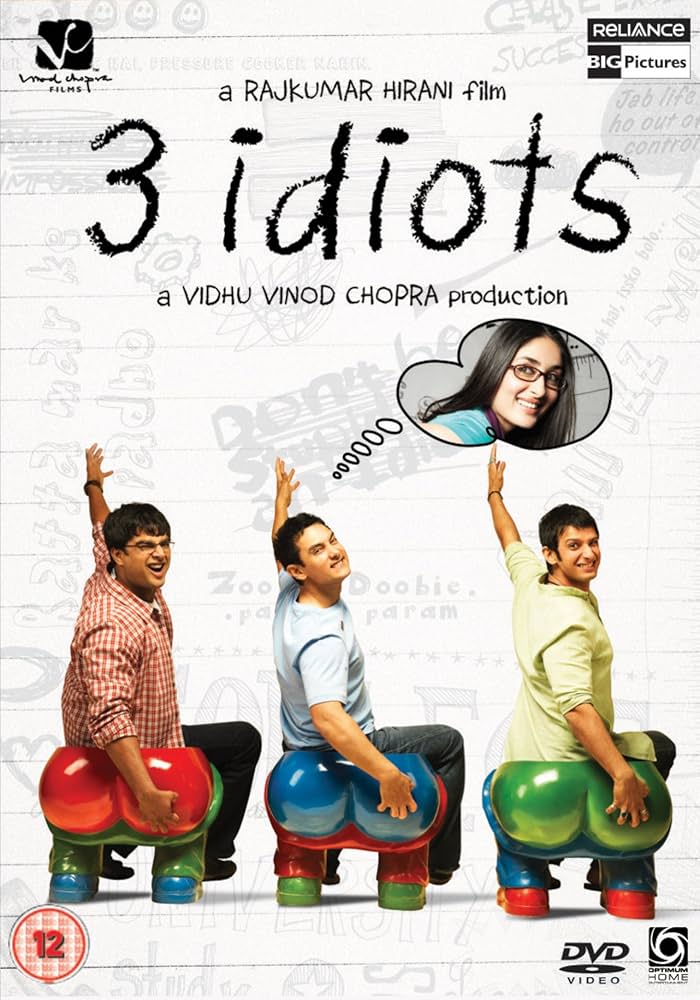
The blockbuster Aamir Khan movie "Three Idiots" is to some degree inspired by Sonam Wangchuk of Ladakh. You heard right, the same person whom the Government has now arrested under the draconian National Security Act and lodged in faraway Jodhpur jail. Ironically, until recently, Wangchuk was an avid fan of Prime Minister Narendra Modi for bifurcating Ladakh from the rest of the Jammu and Kashmir state. When did the love story turn sour?
Here is the real Ladakh story, not from three idiots, but from three wise (wo)men who met Wangchuk in Ladakh on September 12 and 13, just a few days before the unfortunate violence erupted on September 24, resulting in Wangchuk's arrest, even though he is a known Gandhian who eschews violence.
The three wise persons are Dr Sandeep Pandey, Dr Gunjan Singh, and Dr Sajjad Hussain. Dr Pandey is a Magsaysay awardee who quit his job as a professor of mechanical engineering at IIT Kanpur to serve society. Dr Gunjan is a PhD in Anthropology and a Postdoctoral Fellow in Tribal Studies. Sajjad is from Kargil itself, a former Lok Sabha candidate and one of the three official delegates from Kargil who were earlier negotiating with the Central Government. Impeccable credentials.
It was my privilege as Convenor of the Kanpur Nagrik Manch (Citizens' Forum) to host them at a gathering in Kanpur to hear the untold "Ladakh Story." Some of their revelations are startling.
Dr Pandey, quoting Rahul Gandhi, alleged that China had usurped 4,000 sq. km of Ladakh in recent times. Yet we confront China with only unarmed combat. In contrast, we go hammer and tongs at Pakistan with lethal and sophisticated weaponry. Why such double standards?
He said that Amritpal Singh, a duly elected Lok Sabha member from Punjab, is incarcerated in Guwahati because he is perceived as a violent security threat. The same cannot be said of Wangchuk, now incarcerated in Jodhpur.
He further said that the resistance movement was led by two bodies, the Ladakh Apex Body in the Ladakh region and the Kargil Democratic Alliance in the Kargil region. It is important to remember that Ladakh, on the eastern border with China, is entirely Buddhist, whereas Kargil, on the Western front, is Shia Muslim. Despite this diversity, they are together in their struggle for justice and equanimity.
Sajjad said that the region is 500 km from one end to the other, bigger than many Indian States. Yet it has just one seat in Parliament. After the revocation of Article 370 on August 5, 2019, the region has been orphaned. It has been reduced to a Union Territory (UT), that too without a legislature. Earlier, there were two MLAs from each of Ladakh and Kargil in the Jammu and Kashmir Assembly, as well as one MLC from each. Now they have been deprived of their fundamental democratic right to fair representation in the legislature.
He said that UTs are a colonial mindset that has no place in democratic India. They have been told that they cannot achieve full statehood due to being a border area. What then of Gujarat, he asked? Is it not also a border State? Should it also be reduced to a UT? Convoluted logic.
He further demanded the inclusion of the tribal areas of Ladakh in the Sixth Schedule of the Constitution, which grants certain autonomy to tribal areas, as in Assam, Meghalaya, Tripura, and Mizoram. Ironically, this was part of the BJP's election manifesto. But it has reneged on this electoral promise; another election gimmick.
Another grave injustice is the absence of a Public Service Commission (PSC) for government appointments. Earlier, it was part of the Indian state of Jammu and Kashmir. Since there is no PSC now, all appointments are arbitrary. Outsiders appoint outsiders, even bypassing more qualified locals. This is a gross injustice, all the more so considering that at 36%, the region has the second-highest unemployment rate in the country.
He further stated that India is respected for its diversity, democracy, and federalism. All these have been quietly buried in Ladakh today. He also expressed anguish at Wangchuk and the Ladakhis being labelled anti-national. It is worth recalling that the Ladakh Scouts, a paramilitary force, have been at the forefront of protecting the country's borders, giving their lives in the defence of the country. Even in the 1999 Kargil War, it was a nomadic shepherd who drew attention to the Pakistani intrusion, despite our sophisticated satellite spyware.
Anthropologist Dr Gunjan said that tribal (adivasi) areas are invariably rich in natural and mineral resources. However, in the Development versus Displacement debate, the tribals are invariably at the receiving end of injustice, losing out to the corporate moneybags. The same would happen in Ladakh's proposed solar park. It would displace the nomads who earn their livelihood by rearing the world-famous Pashmina goats. Displacing them would result in the loss of their culture, livelihood and even pashmina shawls.
She alleged a draconian clampdown on the freedom of speech. Teachers, doctors, YouTubers and social influencers have been warned to keep their mouths shut, else FIRs would be filed against them, and they could lose their government jobs or be transferred to remote areas. Given this, is it any wonder that the people of Ladakh are frustrated and seeking justice? Should this movement be called anti-national or pro-people?
The writer has a personal connection with Ladakh, as his son, Avinash, cycled through the Kargil-Ladakh region for three months. He had some poignant observations: Firstly, only pro-government TV channels were allowed to broadcast their programmes. Secondly, he experienced the warmest hospitality and the most affordable food in the Kargil region. Third, in the Batalik sector, there is a village that claims pure Aryan descent. The villagers have green eyes and blonde hair, claiming to be descendants of Alexander the Great, the Macedonian king. Fourth, Turtuk is a village that was part of Pakistan before the 1965 war. Now it is part of India. To visit their relatives across the border, the villagers have to travel to the Wagah border crossing in Punjab. Finally, in many border villages, he found the Indian army teaching the locals sports like football and polo.
What is now happening in Ladakh is not an isolated instance. It recently occurred in Manipur and is currently happening in certain parts of Assam. In other parts of the world, the cry for justice needs to be heard, from Ukraine to Gaza. Thanks to the Nobel Peace Prize, we now know that Venezuela is also in the infamous League of Nations, where dictators, oligarchs, despots and even narcissists like Trump do their utmost to stifle the voices of truth and justice.
The voices and cries from Ladakh and Kargil need to resonate across the country, as also the testimonies of our three wise speakers, certainly not idiots!
.jpg)
 A. J. Philip
.jpg)
.png) Jacob Peenikaparambil
Jacob Peenikaparambil
.jpg)
.png) John Dayal
John Dayal
.jpg)
.png) Joseph Maliakan
Joseph Maliakan
.jpg)
 Pachu Menon
.jpg) Jose Vattakuzhy
Jose Vattakuzhy
.jpg)
 P. A. Chacko
.png)
.png)
.png) Robert Clements
Robert Clements
.jpg) A. J. Philip
A. J. Philip