

 A. J. Philip
.png)
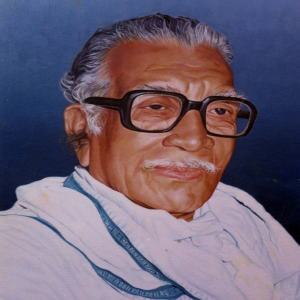
The late Prof MP Manmadhan (1915–1994) belonged to that rare tribe of public intellectuals Kerala once produced in abundance—men who combined scholarship with activism, conviction with compassion. A Gandhian to the core, an uncompromising anti-liquor campaigner, a spellbinding orator and Principal of Mahatma Gandhi College, Thiruvananthapuram, Manmadhan was a contemporary of Mannath Padmanabhan, the visionary founder of the Nair Service Society, which went on to build an empire of educational and medical institutions.
I had the privilege of hearing him once at my alma mater, St Thomas College, Kozhencherry. He was invited to speak on a subject that was electrifying campuses worldwide at the time: students' unrest. American universities were convulsed by protests against the Vietnam War. From Berkeley to Columbia, students were questioning imperialism, racism and militarism. Europe, too, was aflame with agitation—Paris 1968 had already entered history as a revolt of ideas as much as of streets.
Prof Manmadhan began by extolling the courage and moral seriousness of students in the West. Then, with his trademark mix of irony and sting, he turned to Kerala. "There, students earn their living to fund their education. They have skin in the game. Here, parents pay the fees, feed and clothe their children, and even buy their bus passes. What stake do they have in the education system? Nothing," he said. Then came the coup de grâce: "They enjoy strikes because colleges close and they can sit at home." For many students, strikes were less about revolution and more about recreation.
Many years later, that long-ago speech came back to me while watching a video clip of S Gurumurthy, a chartered accountant-turned-ideologue of the Rashtriya Swayamsevak Sangh. Ideologically, Gurumurthy stands at the opposite pole from Prof Manmadhan's Gandhism. Yet, oddly, they converged on the same sociological truth.
Gurumurthy narrated an anecdote from a lecture he delivered at a prestigious American university. Listening to him, I was reminded of my own long-held view that institutions there recognise talent more readily than we do in India, where caste and community considerations often intrude. The much-publicised case of Harvard inviting Lalu Prasad Yadav to speak on how his unconventional ideas rescued Indian Railways from financial free-fall comes to mind in this context.
Then came Gurumurthy's experiment. He asked all the students in the audience to raise their hands if their education was fully funded by their parents. Without exception, every Indian student raised a hand. Then he asked who among them had taken bank loans to finance their education. Every American hand went up—black and white, men and women alike. That, he said, revealed who had real stakes in their education.
Listening to Gurumurthy, I was reminded instantly of Prof Manmadan's cutting question: what real right did Indian students have to speak of "students' unrest" when so many of them had no financial stake in their education or in the system that sustained it?
Recently, The Economist carried an article that asked a troubling question: why are young men and women in India so curiously unmoved by political and social upheavals that would have set generations elsewhere on fire? The magazine contrasted India's political quietism with the turbulence in its immediate neighbourhood.
Take Nepal. For years, the country had suffered under a political class steeped in corruption and cynicism. Public institutions withered while politicians bickered and bargained. When students took to the streets against corruption and misgovernance, it was not mere tokenism. Campuses became nerve centres of resistance. The agitations were sustained, creative and relentless.
The protests snowballed into a wider public movement. The government, cornered by the moral authority of the youth and the pressure of the streets, was finally forced to step down. Young Nepalis discovered something transformative—that protest could actually produce political change. They were not merely shouting into the void.
Sri Lanka offers another powerful example. For decades, an oligarchy ruled the island nation, entrenching itself through corruption, nepotism and economic mismanagement. By 2022, the economy had collapsed, fuel and food were scarce, and ordinary citizens were pushed to the brink.
It was the youth who lit the spark. Students, professionals and ordinary citizens poured into the streets. They occupied public buildings, camped outside official residences and refused to budge. The protests were largely peaceful but unwavering. The Prime Minister was forced to flee the country. Power slipped from the hands of a seemingly invincible ruling elite. Today, Colombo has a new leadership, born out of the anger and aspirations of a mobilised citizenry.
In Bangladesh, too—whether one approves of the outcome or not—the youth uprising changed the course of politics. Students and young citizens protested against what they saw as high-handed governance and shrinking democratic space. The unrest grew in intensity and scale. The Prime Minister was eventually forced to flee the country and seek asylum in India. That this happened at all is testimony to the disruptive power of youth-driven politics in our neighbourhood.
India, meanwhile, has witnessed convulsions far more severe—yet without comparable mass upheaval. Consider demonetisation. In one stroke, Prime Minister Narendra Modi invalidated high-value currency notes. The stated objective was to strike at black money and counterfeit currency. What followed was chaos. The informal economy collapsed overnight. Millions of workers lost their jobs. Small businesses shut shop. Daily-wage earners were reduced to penury.
People stood in serpentine queues outside banks and ATMs to withdraw their own money, only to be told that the cash had run out. Deaths occurred in queues from exhaustion, anxiety and despair. And yet, there was no nationwide uprising. There was anger, yes; private misery, certainly; public rebellion, hardly.
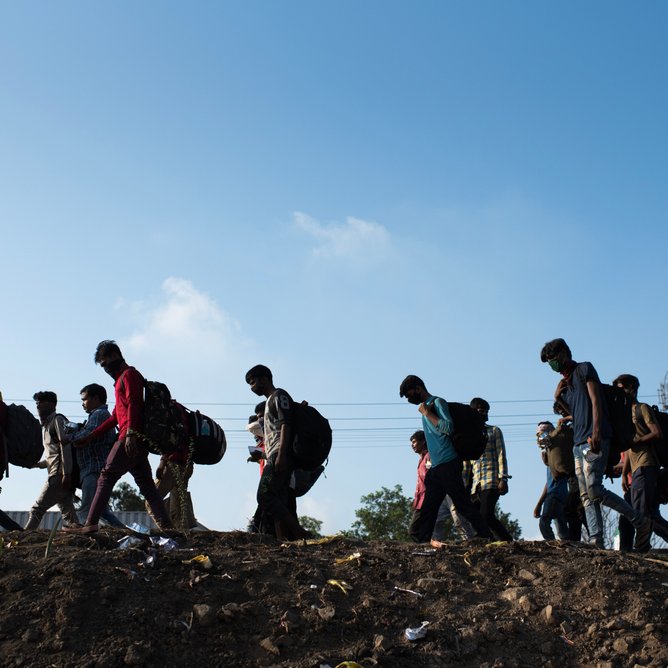
Then came the pandemic. Without warning, Modi announced an all-India lockdown. The decision may have been justified as a public health emergency, but its execution was brutal in its insensitivity. Tens of millions of migrant workers lost their jobs overnight. With no income, no food and no certainty about when the lockdown would end, workers from Madhya Pradesh, Bihar and Uttar Pradesh—dismissed casually as "laggard states"—began walking home from cities like Delhi, Mumbai and Nagpur.
They walked hundreds of kilometres under the scorching sun, with children on their shoulders and belongings on their heads. Many were lathi-charged for violating Covid norms. Some died on the roads. The images were heart-rending. The suffering was biblical in scale. Yet again, there was no nationwide revolt. No sustained student movement. No paralysing civil disobedience.
At that time, someone remarked to me with chilling resignation: "We are like that. We won't rebel. We won't protest." There is a crude joke often made about Indians and sex—that they are obsessed with it in private but prudish in public. Perhaps something similar can be said about protest: we complain endlessly in private but submit meekly in public.
We are, at bottom, a deeply fatalistic people. Fatalism is the belief that everything is preordained, that human will counts for little, and that destiny rules supreme. It is a worldview that teaches acceptance rather than resistance, endurance rather than struggle.
The great poet Ulloor S Parameswara Iyer captured this worldview in his celebrated poem Premasangeetham. In one stanza, he surrenders completely to divine choreography:
"Salutations to You, the Giver of my life, Lord of Dance, Supreme Soul!
In this world-stage of humanity, I am but a small part of Your dance troupe.
What role I am to play is Yours to decide, O Lord;
My duty is to dance as You will, with devotion and grace.
Be it as a servant or a player upon the stage.
To portray joy or sorrow, I am here to fulfil Your purpose.
You, the unseen Director, guide my every step like the wind."
This is fatalism at its most lyrical—and its most paralysing. Man becomes a puppet, God the unseen puppeteer. Responsibility dissolves into resignation.
This worldview is profoundly at odds with the doctrine I believe in. According to the Biblical vision, God created man in His own image. Man is not a puppet but a moral agent. He is sovereign in the limited sphere granted to him. He can choose the right path or the wrong one. Even Adam and Eve had that choice. History is not just enacted upon humanity; it is shaped by human decisions.
Man has the power to transform his life. Let me illustrate with two small stories from my own life. My wife and I were fond of a boy who used to visit our home to play with our grandson. His father ironed clothes for a living. My wife offered to support the boy's education. But the father had other ideas. He wanted his son to fetch clothes, return the ironed garments and collect money. Education was seen as a distraction.
The boy was not encouraged to study. He inherited his father's trade. Today, he earns Rs 5 per piece of clothing he irons. Fate did not destroy his prospects; choices did.
In contrast, when I admitted my elder son to a school in Kayamkulam, one of my neighbours—a barber by profession—admitted his son to the same school. Our children travelled in the same school bus. That boy studied diligently, became an engineer, went to the Gulf, and today is far richer than my son. Education transformed his life, just as its denial froze the other boy's.
Last week, while delivering the Justice P Subramonian Poti Memorial Lecture at the Kerala Club in New Delhi, Prof S Sivakumar narrated another telling story. A rich man was extremely liberal in helping his servants with money for festivals, marriages and childbirths. But he steadfastly refused to support the education of their children. His logic was chilling in its candour: if they got educated, they would no longer work as servants.
Is it any wonder, then, that a small shipload of Portuguese soldiers could capture power in Goa, then ruled by Muslims over a predominantly Hindu population? They were the first Europeans to establish a lasting presence in India. They ruled for over 500 years without facing sustained mass resistance.
How many Mughals initially came to India? A few hundred at most. Yet they ruled India for nearly 700 years. Under Aurangzeb, the Mughal Empire reached its territorial zenith—larger than present-day India. In 1700, India accounted for 25 per cent of the world's GDP. Aurangzeb died peacefully of old age, not at the hands of a revolutionary mob.
Today, Modi's supporters take pride in the fact that he has been in power for 11 years. In contrast, the British ruled India for about 200 years. The British population in India never exceeded one lakh. Yet they governed a subcontinent of hundreds of millions with astonishing ease.
When Mrs Indira Gandhi imposed the Emergency, I was in Delhi. There was not even a whimper of protest initially. Her police rounded up Opposition leaders with ruthless efficiency—Morarji Desai, Jayaprakash Narayan and countless others disappeared into jails. Civil liberties were suspended. The press was muzzled. And the people accepted it, contrary to later claims of universal resistance.
Today, we encourage poor youth to indulge in rituals rather than reflection. They walk hundreds of kilometres to fetch holy water. Along the way, they are fed food, beverages, fruits, and sweets. They also receive intoxicants. Meanwhile, the children of their leaders go abroad for higher studies.
The colonial rulers used opium to keep the Chinese subdued. In India today, there is a new intoxicant: the mobile phone. Nowhere in the world is the Internet so cheap. Tens of millions are addicted to their screens. Yesterday, I saw an autorickshaw driver watching video clips on his mobile phone, neatly mounted at the centre of his steering handle. He seemed almost pleased when the traffic signal turned red—it gave him uninterrupted viewing time.
Algorithms work with perverse efficiency: if you watch nonsense, you are rewarded with an endless torrent of more nonsense. Grandparents, parents, children, grandchildren, servants, drivers, cleaners, workers—each is sealed inside a personalised digital cocoon, scrolling in splendid isolation. How can people hypnotised by viral trivia be bothered about price rise, unemployment or the cynical manipulation of public sentiment? The colonial rulers had opium; we have the smartphone—and it is far more lethal because we swallow it willingly.
.jpg) A. J. Philip
A. J. Philip
.png) Cedric Prakash
Cedric Prakash
.jpg)
 P. A. Chacko
.jpg)
.jpg)
.jpg) Thomas Menamparampil
Thomas Menamparampil
.png)
.png)
.png) Robert Clements
Robert Clements
.jpg)
.png)
.png) Chhotebhai
Chhotebhai