

.png)
The morning of March 4, 2016, began, as it often did, with the Eucharistic celebration at the Missionaries of Charity nursing home in Aden. The Sisters, strengthened by prayer, moved quietly among the nearly eighty elderly and disabled residents, serving breakfast, medicine, and the simple comfort of presence. Their lives were woven into the rhythm of service — small acts of love in a city torn by war.
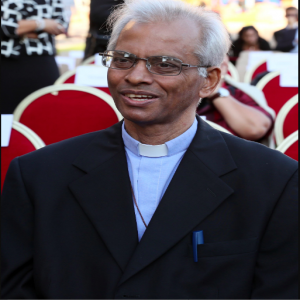
Then, soon after the Mass, that rhythm was shattered. Armed men stormed the compound, killing sixteen people, among them four Missionaries of Charity Sisters: Sr. Judith from Kenya, Sr. Anselma from India, Sr. Reginette from Rwanda, and Sr. Marguerite from Rwanda. Their chaplain, Fr. Tom Uzhunnalil, was abducted, beginning an ordeal that would last eighteen months.
Fr. Tom, a native of Kerala and a Salesian of Don Bosco, had been serving as chaplain at the Aden home since 2010, replacing his uncle, Salesian Fr. Mathew Uzhunnalil, who had ministered there for more than 17 years. By the time of the attack, he had already spent over four years working closely with the Sisters and residents, sharing their daily struggles and joys.
Despite a 2015 travel ban that prevented Indians from travelling to Yemen, Fr. Tom returned after a brief stay in India, determined to continue his mission. He was the only priest working in Yemen on a priesthood visa at the time, directly representing Bishop Paul Hinder, the Apostolic Vicar of Southern Arabia. His pastoral presence extended beyond Aden, with visits to Abu Dhabi and St. Joseph's Cathedral, strengthening ties with the wider Catholic community.
Yemen, where this tragedy unfolded, lies at the southern tip of the Arabian Peninsula, bordered by Saudi Arabia and Oman, with coastlines along the Red Sea and the Gulf of Aden. Once a crossroads of trade and culture, Yemen had by then descended into turmoil. The civil war that erupted in 2015, when Houthi rebels seized the capital Sana'a, plunged the nation into chaos. A Saudi-led coalition intervened militarily, and Aden became a frontline city, plagued by lawlessness, sectarian violence, and extremist infiltration.
The killings were not isolated acts of brutality but emblematic of the vulnerability of humanitarian workers and religious minorities in Yemen's war. The Sisters had chosen to remain despite warnings of danger, their luminous clarity of witness standing in stark contrast to the faceless anonymity of their attackers. Reports suggested Islamic State militants may have been responsible, but no group credibly claimed responsibility. Al-Qaeda-linked factions denied involvement. To this day, the perpetrators remain unnamed, their shadows deepening the moral contrast between violence without identity and service lived in full light.
Fr. Tom's abduction added another dimension of suffering. He had chosen to remain with the Sisters, sharing their vulnerability. His captivity was marked by deprivation, uncertainty, and isolation. Later, he would describe it as a "journey to Calvary in Lent — through darkness to grace." His ordeal became a global rallying point. The Vatican, the Indian government, and Catholic communities worldwide appealed for his release.
After eighteen months, that journey reached its turning point. On September 12, 2017, Fr. Tom was released through the intervention of the Government of Oman, working in coordination with the Catholic Church and Indian authorities. He was flown to Muscat, where he was received by officials and Church representatives, before travelling to Rome. There, Pope Francis personally welcomed him at the Vatican, embracing him as a sign of solidarity and resurrection after suffering. The announcement of his release by India's External Affairs Minister, Sushma Swaraj, confirmed what many had prayed for: the priest was safe at last.
Ten years later, the Sisters are remembered as martyrs of charity. Their sacrifice embodies the Missionaries of Charity's charism of serving "the poorest of the poor." Their memory continues to inspire calls for peace and reconciliation in Yemen and beyond. Bishop Paolo Martinelli of Southern Arabia has urged the faithful to see their witness as a light amid the darkness of war.
Fr. Tom's survival adds another dimension: a testimony of endurance, prayer, and the power of global solidarity. Today, he lives quietly in Tumkur outside Bangalore in Karnataka. His presence is itself part of Aden's legacy — a living witness to resilience, faith, and the grace that emerges from suffering. His captivity, endured in silence and prayer, mirrors the Passion, while his release and ongoing ministry symbolise renewal.
The story of Aden is thus framed in contrasts: clarity versus anonymity, witness versus violence, Calvary versus grace. The Sisters' luminous decision to stay and serve shines all the brighter against the faceless shadows of their attackers. Fr. Tom's ordeal, lived as a Lenten journey through darkness, culminated in release and renewal. Together, their lives and sacrifices remind us that even amid chaos and cruelty, charity and faith endure, leaving behind a legacy that continues to inspire a decade later.
.jpg)
.png) Cedric Prakash
Cedric Prakash
 ICPA
ICPA
 ICPA
ICPA
 ICPA
ICPA
 ICPA
ICPA
 ICPA
ICPA
 ICPA
ICPA
.jpg)
 A. J. Philip
.jpg)
.png) Jacob Peenikaparambil
Jacob Peenikaparambil
.jpg)
.png) John Dayal
John Dayal