

.png) Jacob Peenikaparambil
Jacob Peenikaparambil
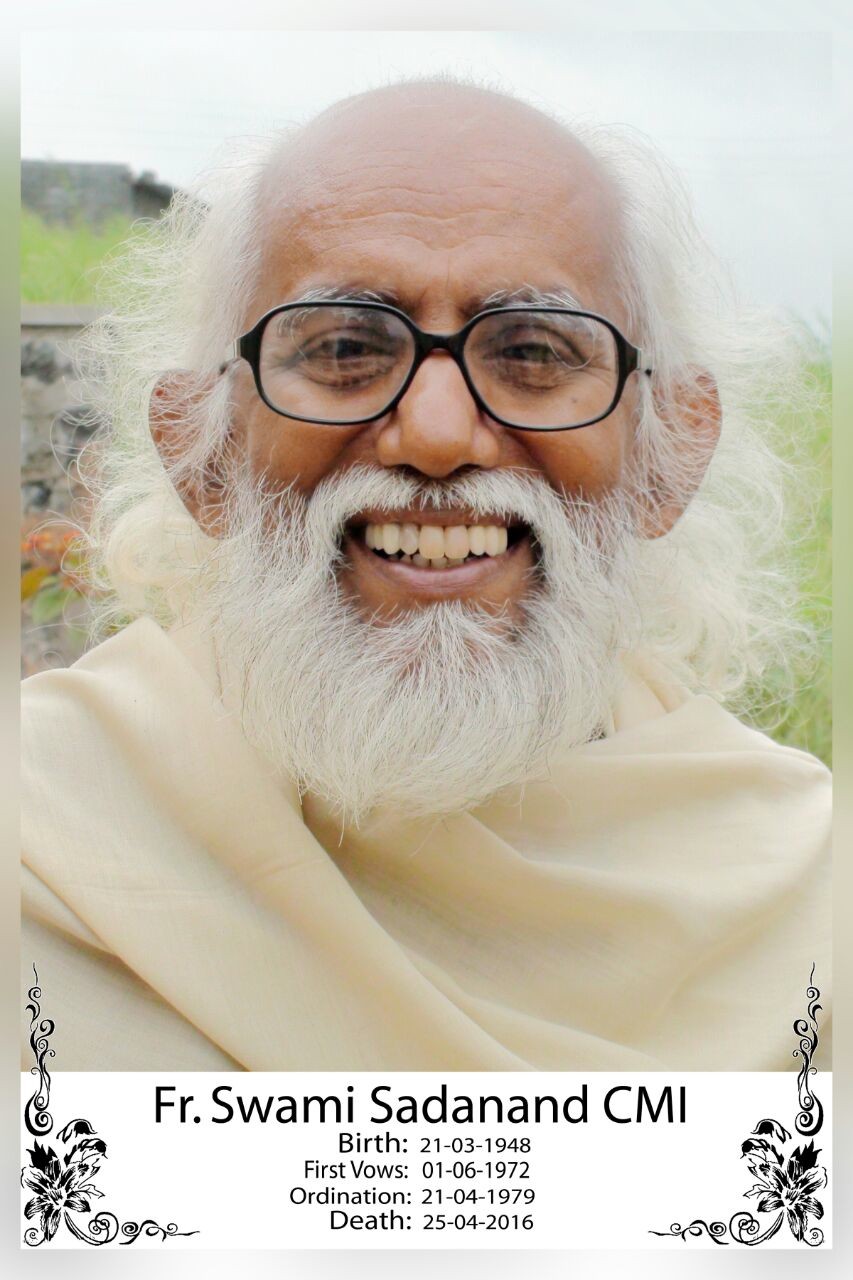
"Carve your name on hearts, not tombstones. A legacy is etched into the minds of others and the stories they share about you." — Shannon Alder.
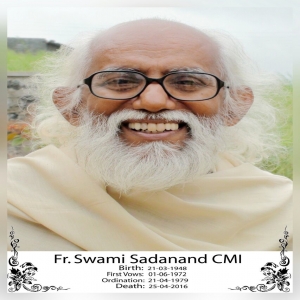
This sentiment resonated deeply at a seminar on "Peace, Harmony and Reconciliation through an Interfaith Approach" held in Bhopal on April 20, 2026, to commemorate the 10th anniversary of the late Swami Sadanand's passing.
Swami Sadanand, CMI, played a pivotal role in reconciling the family of the late Sr. Rani Maria with her murderer, Samandar Singh. Sr. Rani Maria was later declared "Blessed" by the Catholic Church, bringing her one step closer to sainthood. Swami Sadanand was instrumental in facilitating a profound transformation in Samandar Singh, guiding him toward a life rooted in love and compassion.
In keeping with his lifelong commitment to service, Swami Sadanand donated his body to the All-India Institute of Medical Sciences, Bhopal—a final act reflecting a life wholly dedicated to others.
The seminar was organised against the backdrop of a world increasingly marked by conflict, hatred, violence, and war. Across nations and communities, people continue to suffer from division and hostility. Fragile ceasefires and ongoing conflicts offer only temporary relief, leaving humanity in a state of uncertainty. In this context, Christians—especially priests and religious—bear a heightened responsibility to act proactively for peace and reconciliation.
Alongside presentations on various dimensions of peacebuilding, four close associates of Swami Sadanand shared personal testimonies of how he touched their lives.
Mr Ajay Tulsi from Narsinghpur, where Swamiji lived for over two decades at Sacchidananda Ashram, described him as a spiritual guide not only to his family but to the entire community. He recalled how Swamiji transcended religious boundaries, building friendships across faiths and becoming a household name in Narsinghpur. He highlighted Swamiji's remarkable capacity for forgiveness, noting that he once requested the police not to file a case against miscreants who had disturbed the Ashram. By embracing local cultural and religious practices, Swamiji became a friend to all. For him, humanity was the highest religion.
Dr Sudhir Singai, a writer and poet, presented a moving poem that captures how Swami Sadanand won hearts through compassion, inclusive love, humble service to the needy, irrespective of caste or creed, simplicity, and a deep spiritual connection. He also highlighted Swamiji's role in founding Samanwaya Parivar, an interfaith initiative in Narsinghpur where Hindus, Muslims, Christians, and Jains came together to promote harmony by celebrating each other's festivals and fostering dialogue. Dr Singai concluded by describing Swamiji as a "Maha Manav" (superhuman), whose legacy continues through his final act of donating his body for medical education.
Sr. Julia, OSA, recalled how Swamiji offered her comfort and instilled hope during her struggle with a life-threatening illness. She also noted that Swamiji breathed his last in her convent during a visit to meet children with intellectual challenges.
Mrs Sadhana Das from Parasia in Chhindwara district shared how Swamiji encouraged her to contest for the post of Janpad Panchayat member when she lacked confidence. His support strengthened her resolve, leading to her electoral victory. She also spoke emotionally about how he stood by her during a difficult phase in her daughter's life.
These testimonies represent only a small fraction of the countless lives Swami Sadanand touched. Even a decade after his passing, his memory continues to inspire many.
In his keynote address, "Life and Contribution of Swami Sadanand: Insights and Applications for Today," Dr Davis George, former Principal of St. Aloysius College, Jabalpur, highlighted Swamiji's contributions to peace and harmony.
He noted that Swamiji recognised the divine presence in all life, which shaped his inclusive approach. He emphasised that Swamiji first transformed himself before seeking to transform others. His life, he said, was a journey from self to selflessness—enabling him to accompany those in distress and transform conflict into communion. Swamiji firmly believed that unity does not require uniformity, and that silence and contemplation were sources of inner strength. Like Mahatma Gandhi, he could truly say, "My life is my message."
Dr George also recalled Albert Einstein's words about Gandhi: "Generations to come... will scarcely believe that such a man ever walked the Earth." He remarked that these words aptly describe Swami Sadanand as well.
The seminar also featured a panel discussion with grassroots activists addressing key dimensions of peacebuilding. Sr. Sujata Jena, a lawyer, journalist, and activist from Bhubaneswar, spoke on women's empowerment. Drawing from her experience, she pointed out the persistent discrimination faced by women, even within the Church. She emphasised that true empowerment requires justice, liberty, and equal opportunities—not token gestures or symbolic celebrations.
Dr MD Thomas, Founder-Director of the Institute of Harmony and Peace Studies (IHPS), New Delhi, spoke on "Peacebuilding through Interfaith Harmony: The Way Forward in the Context of India Today." He stressed that interfaith harmony is rooted in an inclusive vision of humanity, where all people are recognised as children of the same God. He urged followers of Jesus to learn about other faiths, participate in their celebrations, and collaborate in efforts to alleviate human suffering.
Ms Archana Chakraborty of Vir Ratna Foundation explored how individuals transform personal loss into leadership. Focusing especially on war widows, she described a journey from despair to resilience, where individuals process trauma, overcome challenges, and emerge as agents of change within their families and communities.
Ms Daya Bai, a grassroots activist from Chhindwara in Madhya Pradesh, who has spent many years fighting against the exploitation of tribal communities in the state and, more recently, advocating for the victims of endosulfan exposure in Kerala's Kannur district, emphasised in her speech that there can be no peace without justice. She also briefly recounted the challenges and struggles she faced in her fight against exploitation and injustice.
Swami Sadanand was a strong advocate of pluralism—an essential part of India's heritage and the message of Jesus. For him, pluralism meant not just tolerance but the acceptance, appreciation, and celebration of diversity, particularly in religion and culture. In a time when religious fundamentalism is on the rise, his spirit offers a powerful response to division and intolerance.
As part of the seminar, three individuals and two organisations were honoured for their contributions to peacebuilding: Sr Sujata Jena for women's empowerment; Fr Solomon Kadambattuparambil for the holistic development of persons with disabilities; and Dr BM Singh for his innovative approach to healthcare. The organisations recognised were Samanwaya Parivar, Narsinghpur, for fostering interfaith harmony, and Vir Ratna Foundation for supporting the families of Indian defence and CAPF personnel through empowerment, skill development, and education. Each award included a citation and a cash prize of ?20,000.
The award ceremony was presided over by Rt Rev Thomas Mathew, Bishop of Indore. In his address, he commended the organisers for hosting the seminar at a time when the world is deeply wounded by conflict and division. He also acknowledged that the event deepened his understanding of Swami Sadanand's life and contributions.
Organised by the CMI St. Paul Province, Bhopal, the seminar was a fitting tribute to Swami Sadanand—a true prophet of peace, harmony, and reconciliation. It inspired nearly 200 participants to move beyond passive observation and actively promote justice, peace, and unity in society.
.jpg)
.png) Cedric Prakash
Cedric Prakash
 ICPA
ICPA
 ICPA
ICPA
 ICPA
ICPA
 ICPA
ICPA
 ICPA
ICPA
 ICPA
ICPA
.jpg)
 A. J. Philip
.jpg) Jacob Peenikaparambil
Jacob Peenikaparambil
.jpg)
.png) John Dayal
John Dayal