

.png) John Dayal
John Dayal
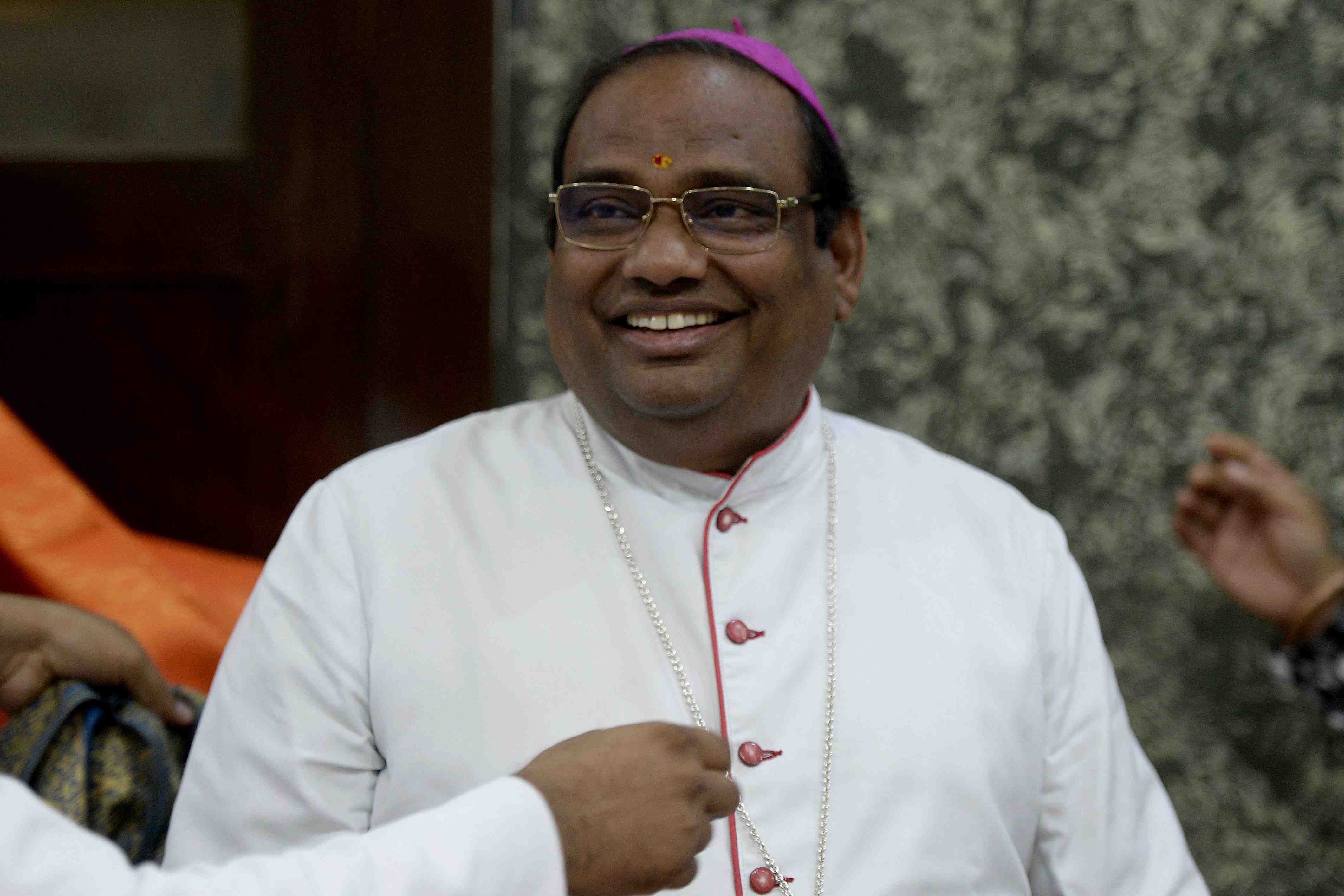
On May 8, 2026, Cardinal Anthony Poola — President of the Catholic Bishops' Conference of India and Archbishop of Hyderabad — will hopefully preside over the Fourth National Ecumenical Bishops' Fellowship (NEBF) at St. John's National Academy of Health Sciences in Bengaluru.
The invitation, signed personally by the Cardinal, carries a note of urgency bordering on anxiety. The National Federation of Churches in India (NFCI) must be "formally launched" at this meeting, after two years of deliberation. Churches unable to send their heads are asked to delegate deputies and are assured that "Board and lodging will be provided." Quite clearly, the CBCI needs more people in the room.
The CBCI's Office for Dialogue and Ecumenism — headed by Rev Fr Dr Anthoniraj Thumma, whose contact details are prominently listed in the invitation — has been managing the invitation list for all four NEBF meetings.
The invitation drafted by someone in the New Delhi secretariat in a rather heavy-handed manner has gone to "select" members, presumably invited by name. But it can be said with easy certainty that the CBCI address list will be grossly incomplete.
No one really knows just how many Christian sects, Rites, denominations, and groups there are, and the ever-expanding universe of independent pastors and self-styled Archbishops, Bishops, Metropolitans, Prophets, and Apostles. Mercifully, there is no self-styled Pope in India, and the only cardinals are in the Latin, Syro-Malabar, and Syro-Malankara Rites of the Catholic Church.
I had worked on this subject in spurts for several years with the late Professor Roger Hedlund, an exceptional missiologist and Editor-in-Chief of Oxford South Asian Christianity. He and I were editing a Micropaedia we completed, but he passed away before it could be published.
"Don't agonise over calculating numbers," a wise Archbishop had told me. "It is the working of the Holy Spirit that there are so many, and in such variety, so that they can reach every corner, every crevice," the savant prelate said.
He was right, of course. Christianity in India is highly diverse, comprising hundreds of denominations. Pew's India survey found that 37% of Indian Christians identify as Catholic, with the Church of North India, the Church of South India, and others. The Oriental or Orthodox community, at 7%, includes ancient traditions such as the St. Thomas Christians. The others include many denominations introduced by Western missionaries, and the rapidly growing indigenous Pentecostal churches.
The Catholics themselves are in three Rites - Latin, Syro-Malankara and Syro-Malabar, each with nationwide jurisdiction and, to an extent, competing in mission and evangelisation. The Oriental Rites, in fact, have several dioceses abroad – in the Americas, Europe, the Middle East, and Australia.
India's non-denominational, Pentecostal, and charismatic Christian world is not a structured ecosystem with clear hierarchies and identifiable leaders. It is a sprawling, constantly shifting universe of networks, fellowships, apostolic councils, and individual ministries — many of which are deliberately structured to resist institutional consolidation.
These groups range from the genuinely large and institutionally sophisticated — bodies like the New Life Fellowship, the Assemblies of God networks, and various apostolic and prophetic networks with hundreds of thousands of members — to small regional ministries with a few thousand or a few hundred followers led by pastors who have self-conferred episcopal titles.
Various attempts were made over the decades to gather Indian Christians under one umbrella, to focus on common issues in Independent India, not so much on dogma and doctrine that divided them as on common issues of dealing with the government, with other faiths, and with entities in the secular world.
The Catholic Bishops formed the Catholic Bishops Conference of India as the supra-ritual body of the Catholic churches affiliated to the Holy See, with the Pope as its head. The Syro-Malabar and Syro-Malankara rites had their own self-governing Synods, which were later granted sui juris status by the Vatican. The three Rites set up their own groups - the Latin Conference of Catholic Bishops in India, and the now independent Synods of the two Oriental Rites.
The major Protestant churches, including the many Orthodox groups of Kerala, came together in the World Council of Churches-affiliated National Council of Churches later, and a few years after that, the Evangelical Fellowship of India, affiliated to the World Evangelical Alliance, sought to gather all the independent churches it could under one umbrella.
In an attempt to bring all of them together to develop a united strategy to address national challenges, the National United Christian Forum was established by the leadership of the CBCI, the NCCI, and the EFI.
In the NFCI, the CBCI now appears to be considering an alternative structure to accommodate those left out of the NUCF triumvirate. Among them would be the Good Shepherd Church, founded by Dr Joseph D'Souza, who heads OM India from Hyderabad, and the founders of similar denominations in Andhra Pradesh, Tamil Nadu, and other states.
That this is the fourth such meeting in under two years, and that the NFCI still requires a "formal launch," tells its own story.
Observers outside CBCI say what began in September 2024 as a confident initiative to position itself as the apex voice of all Indian Christianity has encountered friction at every turn — from the very Protestant and independent bodies it sought to bring under its wing. Questions hang over the NFCI launch in Bangalore, whether it will mean anything at all.
The National United Christian Forum, which has served since 2011 as the joint platform of the CBCI, the NCCI, and the EFI, was designed as a coordination mechanism for India's three major Christian institutional blocs, allowing them to issue joint statements, coordinate advocacy, and present a unified front to governments and media.
The NUCF's tripartite structure, by design, gives the NCCI and EFI co-equal standing with the CBCI, meaning that Catholic institutional weight cannot simply override Protestant hesitation.
Every joint statement required negotiation; every common platform required compromise, and the CBCI, accustomed to hierarchical decision-making within its own structures, found the NUCF's consensual architecture frustrating.
Above all, for the CBCI, which operates within a rigorous hierarchical theology of episcopal succession and whose entire ecclesiology rests on the validity of ordination, inviting self-styled bishops into its new national federation of "bishops and heads of churches" creates a profound theological tension.
To include them is to implicitly validate their episcopal claims — something that Catholic doctrine explicitly resists. To exclude them is to reproduce, at the national level, exactly the mainline bias that the NFCI was designed to overcome.
The NFCI's momentum — such as it is — has been almost entirely driven by the external threat of the FCRA Amendment Bill 2026, introduced in the Lok Sabha on March 25, 2026.
Cardinal Poola's invitation letter explicitly names the FCRA amendments as the proximate cause for urgency: "the immediate launching of the National Federation of Churches in India (NFCI) has become inevitable."
But the FCRA as a catalyst has significant limitations. First, the Bill has been deferred and is not expected to return to Parliament until the June–August session.
The immediate panic has subsided, and with it, some of the urgency that might have pushed hesitant independent leaders into the CBCI's embrace.
In addition, many churches are not dependent on FCRA in any way, while others have developed alternative funding models.
The NCCI and EFI occupy an uncomfortable position in this landscape. They are formally part of the NUCF and therefore cannot simply ignore the NFCI process — to do so would be to cede the field to the CBCI and risk marginalisation.
But to enthusiastically participate in a CBCI-led federation is to accept a structural demotion from co-equal partner (as in the NUCF) to member of a body whose architecture, agenda, and secretariat are all Catholic.
The NCCI's hesitation is rooted in history as much as in present calculation. The mainline Protestant churches — the Church of South India, the Church of North India, the Mar Thoma Church, various Lutheran and Baptist bodies — carry the memory of Catholic-Protestant antagonism through centuries of competing missionary activity, doctrinal polemic, and institutional rivalry.
The EFI is caught in a different bind. Theologically, its evangelical constituency is closer to the independent churches the NFCI is targeting than to the Catholic sacramental tradition. Many EFI member organisations share the Pentecostal and charismatic theology of the independent groups the CBCI is wooing.
If the NFCI successfully draws these bodies into direct affiliation with the CBCI — bypassing the EFI — it will hollow out the evangelical federation's constituency and diminish its representative claim.
The CBCI's ecumenical project, seen whole, is an ecumenism of convenience — driven by external threat, shaped by institutional self-interest, and hampered by the very diversity it seeks to organise. The NUCF proved too constrained by its tripartite architecture to serve as a vehicle for Catholic-led consolidation.
The NFCI is an attempt to build a new architecture — but one that reproduces the same fundamental problem: the body with the most institutional power is also the body doing the designing, the convening, the secretariat work, and the selecting of participants.
Independent church leaders in India are, by and large, not naive about this dynamic. Many have survived decades of government scrutiny, denominational politics, and community suspicion by developing acute institutional instincts.
.jpg)
.png) Cedric Prakash
Cedric Prakash
 ICPA
ICPA
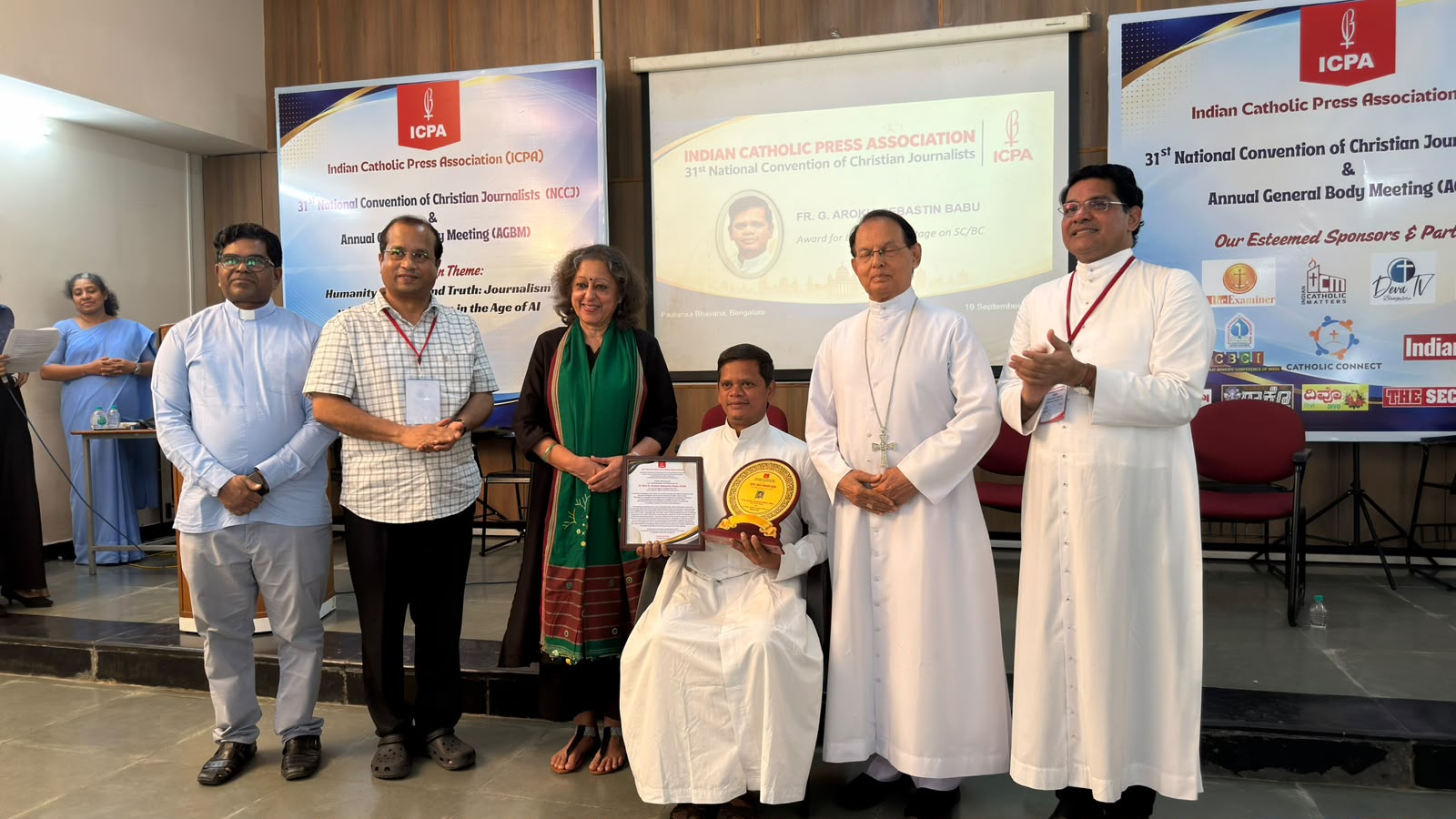 ICPA
ICPA
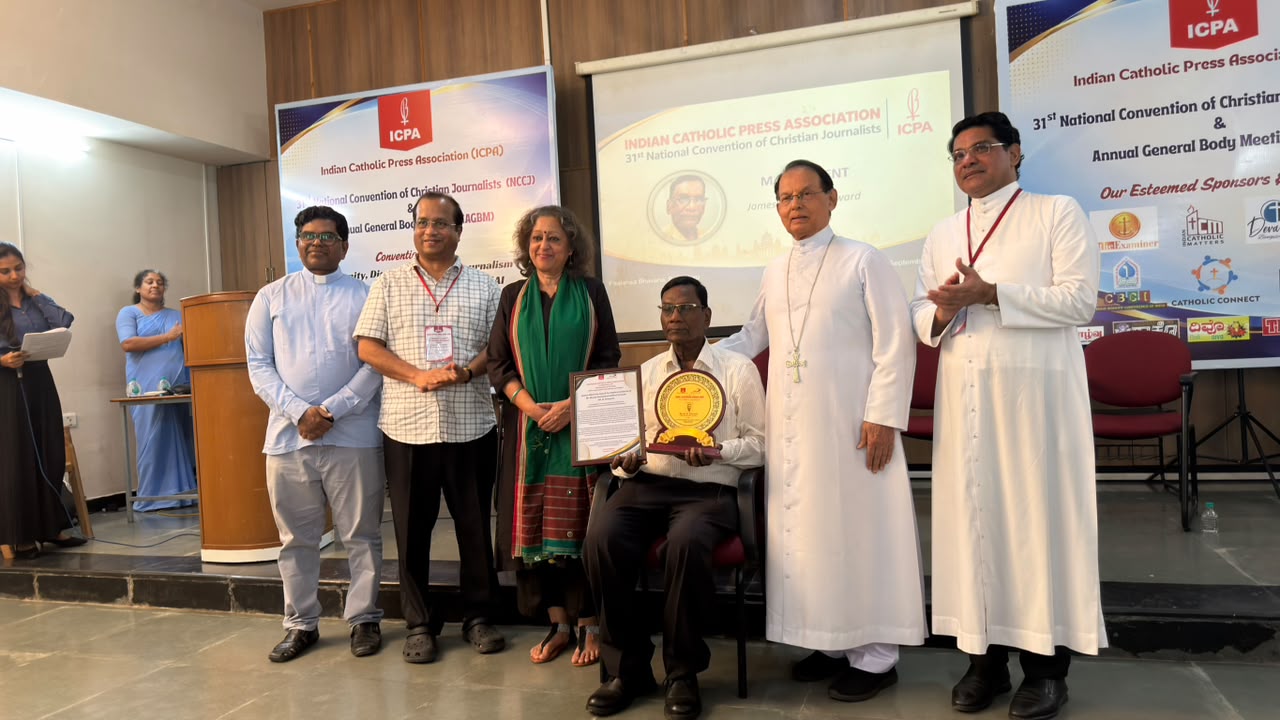 ICPA
ICPA
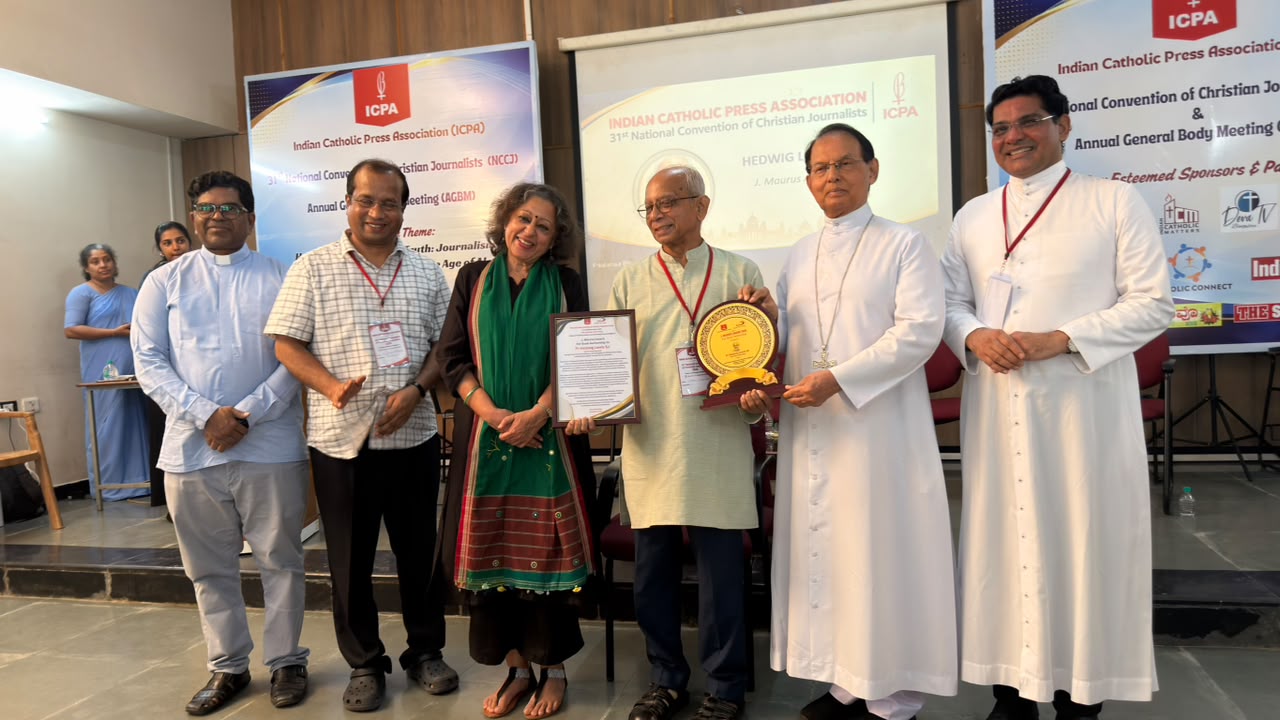 ICPA
ICPA
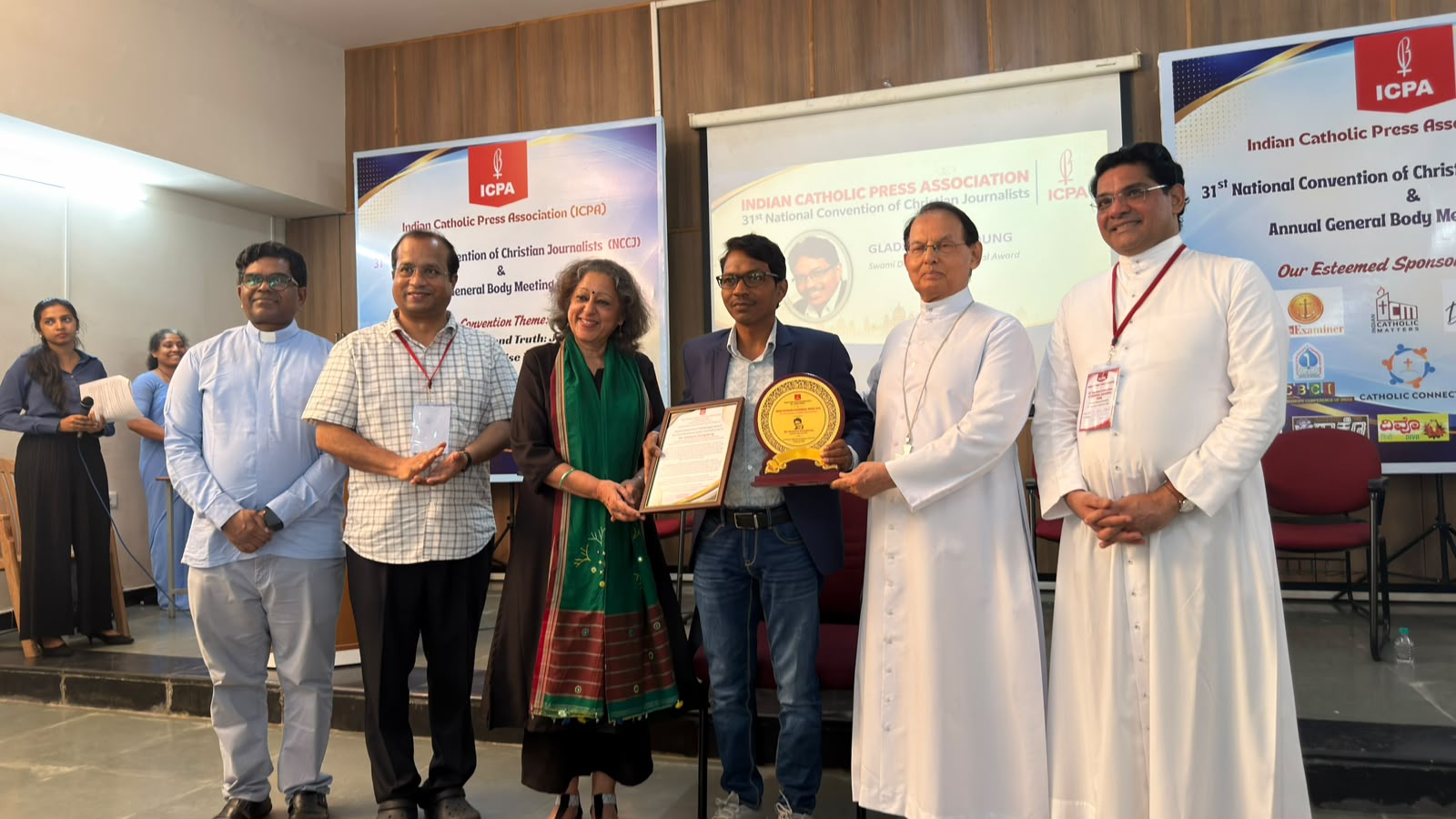 ICPA
ICPA
 ICPA
ICPA
.jpg)
 A. J. Philip
.jpg)
.png) Jacob Peenikaparambil
Jacob Peenikaparambil
.jpg) John Dayal
John Dayal