

.jpg) Dr. John Singarayar
Dr. John Singarayar
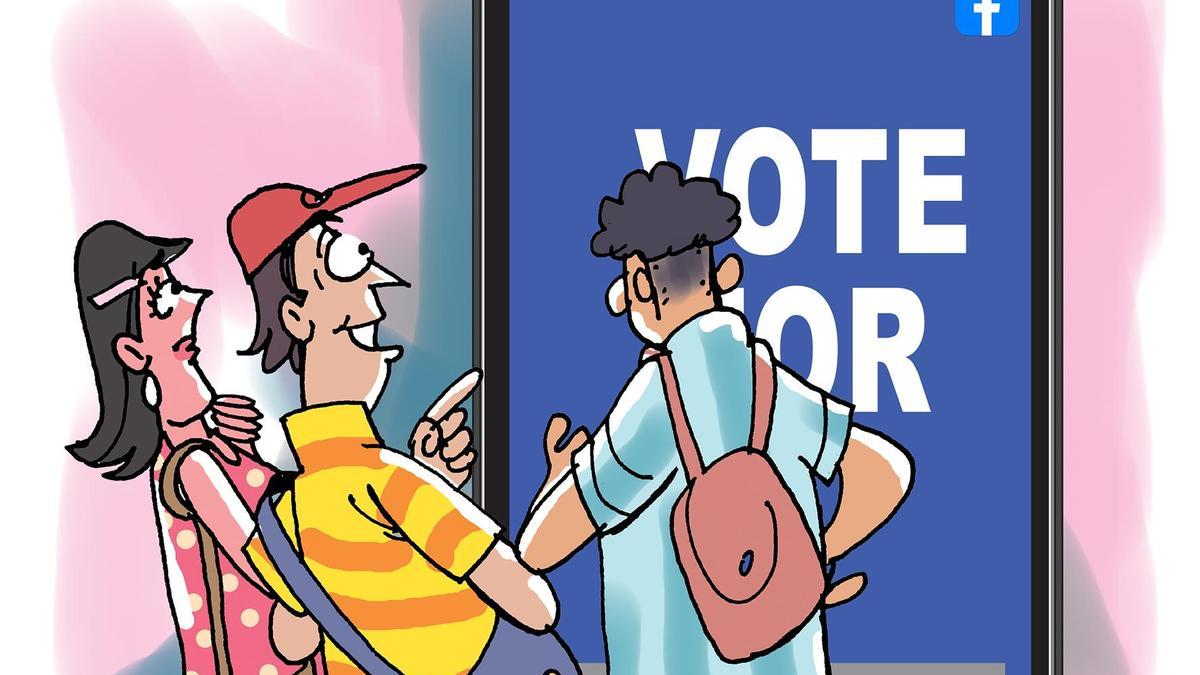
There was a time when a politician earned trust the hard way — door to door, speech by speech, year by year. That world is gone. And the people who benefited most from its disappearance are not talking about it.
What we are watching in the 2026 Tamil Nadu election is not a campaign. It is a production. A carefully managed, expensively funded content operation built to shape how people feel about a candidate before they have had any real reason to feel anything at all. The goal was never to inform. It is to overwhelm — flood the feed, control the narrative, move fast enough that questions never quite catch up to the answers being supplied.
The mechanics are almost mundane once you see them. A scandal breaks. Within hours, something else is trending. A new clip surfaces, a hashtag ignites, and attention pivots on cue. The original story does not get refuted — it gets buried under the sheer volume of what comes next. By the time people think to reevaluate, the moment has passed, and the conversation has moved on without them. This is not damage control. It is damage prevention through distraction, and it works with a consistency that should unsettle everyone paying attention.
Money is the engine. With enough of it, visibility can be purchased at a scale that feels organic but is anything but. Reels are commissioned, influencers are briefed, and amplification is coordinated across platforms with the precision of a product launch. What looks like a spontaneous groundswell is often a purchase order. And repetition, deployed strategically across enough channels, stops feeling like repetition. It starts feeling like the truth. Once something feels like a consensus, most people stop questioning it. They simply absorb it, carry it forward, and pass it on.
One image captures this better than any breakdown can. A short video praises a meal — biryani on a banana leaf — and the next day, hundreds of people show up at that restaurant. That is not enthusiasm for food. That is proof of how completely attention can be directed when the right infrastructure is in place. The same machinery that steered those crowds toward a restaurant is the machinery steering voters toward a candidate—the product changes. The method does not. The lesson, for anyone watching, is that if you can move people over biryani, you can move them over anything.
What is most striking is how forgiving this system is to those fluent in it. A candidate can dodge accountability, avoid difficult questions, appear at 10 polished events and disappear elsewhere, and still project an image of vigour and relevance. Controversies that would have finished careers a decade ago now dissolve within a news cycle — reframed as misunderstandings, outlasted by fresher content, drowned under the next trending moment. The digital ecosystem does not reward the most honest or the most capable. It rewards whoever stays loudest the longest. That is a different kind of qualification entirely, and we have not yet reckoned seriously with what it means.
But it would be too easy — and too dishonest — to frame this purely as manipulation as though voters are passive targets of an elaborate con, innocent and deceived. They are not. They engage, share, defend, and amplify. They participate, often enthusiastically, in constructing the very narratives that shape the election around them. Social media did not invent the human tendency to believe what we already want to believe. It simply built the most efficient machine in history for feeding it.
That is what makes this genuinely hard to sit with. The problem is not one villain running a propaganda operation from a back room. It is a system that everyone feeds and almost no one fully controls — where content creators, platforms, paid operatives, and ordinary users all play their part, and the cumulative effect is an information environment where accountability becomes something you have to fight for rather than something that happens naturally.
Tamil Nadu has a democratic culture with real depth. Its voters have confounded confident predictions before, cutting through noise to make choices that reflected something more considered than what the loudest voices wanted. There is no reason to assume that instinct has been switched off. People still walk into polling booths carrying their actual lives — their jobs, their children's futures, their water supply, their unanswered grievances. Those things do not bend to a well-edited reel. They accumulate quietly, and they have a habit of surfacing at exactly the wrong moment for those who assumed the narrative was locked.
That is where this model of politics is most exposed. Digital narratives are powerful, but they are also brittle in ways their architects prefer not to advertise. They demand relentless reinforcement. They can dominate a moment, even a season, but holding them together over time requires at least some correspondence with the world people actually wake up in. When that correspondence breaks — when the distance between the managed image and the lived reality becomes too wide to paper over — no algorithm fully contains what follows. The loudest campaigns are not always the most durable ones.
So the 2026 election is running two tests at once. The first is whether a well-funded digital operation can carry a candidate across the line on image alone, without the traditional requirements of presence, accountability, or trust earned over time. The second is whether voters, pulled in every direction by everything competing for their attention, can still find their way back to the questions that actually matter. What has this person done? What do they stand for when no camera is rolling? What is left when the reel ends and the day begins?
Those questions do not trend. But they have a stubborn, persistent way of mattering when it counts most.
.jpg)
.png) Cedric Prakash
Cedric Prakash
 ICPA
ICPA
 ICPA
ICPA
 ICPA
ICPA
 ICPA
ICPA
 ICPA
ICPA
 ICPA
ICPA
.jpg)
 A. J. Philip
.jpg)
.png) Jacob Peenikaparambil
Jacob Peenikaparambil
.jpg)
.png) John Dayal
John Dayal