

 P. A. Chacko
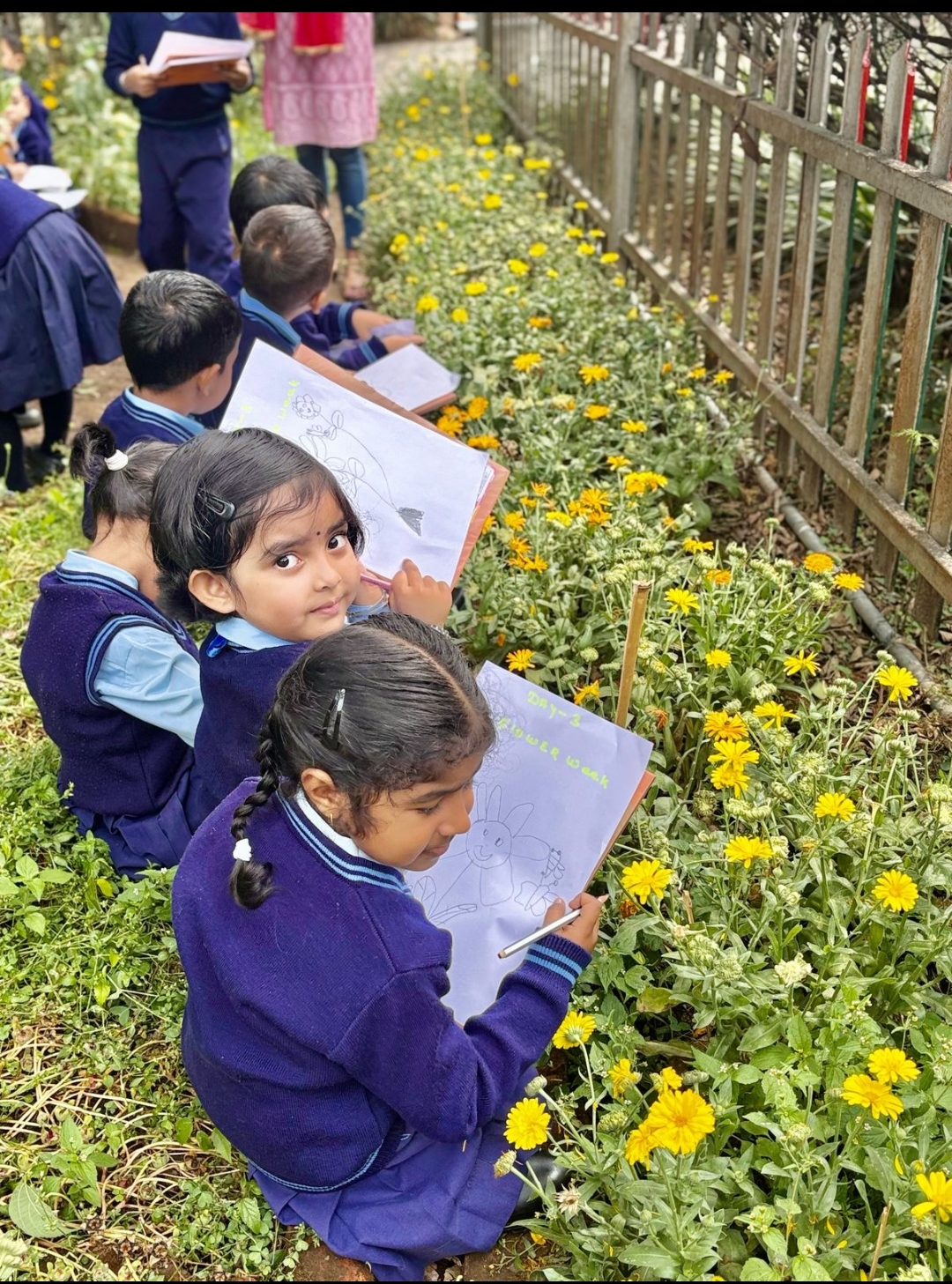
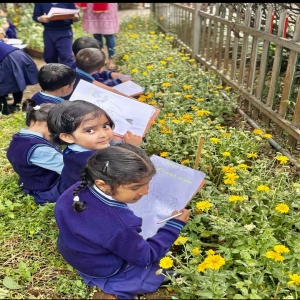
A group of Claretian School children were taken to a botanical garden owned and operated by the city's businessman. Excited, they ran through the garden paths and looked at the colours. The garden looked like a painted canvas with a riot of colours. But the flowers were only hybrid. After a while, the children showed their disappointment. They asked the gardener, "Where are the butterflies and honey bees?" He had a blank look. Then he said, "Ask the maalik (owner)." The children left the garden in protest.
This incident sounds like a modern-day fable—a poignant commentary on the disconnect between commercial "perfection" and ecological reality.
The children's disappointment highlights a profound truth: Nature is a system, not just a display. Here, the Core Conflict is: Aesthetics vs Ecology.
The "Maalik's" Vision: The businessman likely prioritised visual impact and "perfection." Hybrid flowers are often bred for size, vibrant colours, and shelf-life. However, this often comes at the cost of nectar and pollen production, disrupting the ecological balance. By filling the garden with only hybrids, the owner created a "biological desert of sterile beauty." To a butterfly or a bee, these flowers are essentially plastic—brightly coloured billboards that lead to an empty pantry.
The Gardener's Silence: It was pregnant. His "blank look" and redirection to the owner suggest a loss of agency. He is no longer a steward of the earth but a technician maintaining a product mechanically.
Why did the children protest?: It sent a message. Children displayed an understanding of what a garden should be. Their protest wasn't about the lack of colour; it was about the lack of life.
These children were accompanied for two years on an experimental Eco-program in schools by the Socio-Cultural Apostolate team of the Dumka-Raiganj Jesuit Province in Dumka, Jharkhand, in Eastern India. They had become sensitive to nature, appreciating its beauty and the need for our human care and concern. They learned to talk to plants and birds, listen to the stories of butterflies and earthworms. They learnt to write soliloquies of drying streams and caged birds. For them, nature was their wonder world companion. No wonder they quizzed the gardener!
This incident is an eye-opener into modern-day "Green washing." It serves as a warning against a world where nature is treated as a commodity. When we optimise for "looks" alone, we strip the environment of its soul. The butterflies and bees didn't just forget to show up; they weren't invited to the table.
"A garden without insects is just a museum of dying plants." It's a powerful image: a group of children—the future—walking away from a man-made "paradise" because they realised it was a hollow imitation. Reflecting on the incident, I have wondered whether there isn't a deviation from the Creator God's purpose. Biodiversity is a sacred design, and disrupting it for human vanity is a form of disharmony.
In many spiritual and ecological frameworks, the world is viewed as an interconnected web where every creature has a role. When we prioritise "hybrid cultures" - whether in plants or in our approach to the environment - we often prioritise the human ego over the divine ecosystem.
Isn't there a theological conflict in "Sterile Beauty?" From this perspective, the businessman's garden fails because it ignores several fundamental principles of a created world:
Interdependence: The Creator designed the flower for the bee and the bee for the flower. A hybrid that looks beautiful but offers no nectar breaks that "covenant." It is a gift with the contents removed.
Fruitfulness: Most "Creation" narratives emphasise the command to "be fruitful and multiply." Many modern hybrids are sterile; they cannot go to seed or reproduce naturally. This turns a living cycle into a dead-end product.
Integrity of Kind: While humans have always bred plants, there is a point where "innovation" becomes "distortion." If a plant no longer serves its ecological purpose, it has lost its "telos" - its ultimate reason for being. Someone has pointedly remarked: "The destiny of a tree is to become a tree, and not sterile furniture."
In nature, there is a 'Logic Symbiosis' (Everything feeds something else). The 'End Goal' is sustainability and the promotion of life. From a commercial perspective, it is 'Aesthetics' (Everything serves the eye). The 'End Goal' is profit and presentation. The children's protest acts as a moment of "discernment." They weren't fooled by the bright colours because they felt the absence of the Spirit of Life.
If the "maalik" represents man trying to play God, the blank look of the gardener suggests the soul-crushing nature of working in a system that lacks life. The children walked out because they recognised that a garden without bees is not a sanctuary - it's a counterfeit.
We are confronted with a world where modern technology and "hybrids" are inherently moving us further away from a spiritual connection with the earth. By shifting the focus to "materialist worship," the businessman hasn't just built a garden; he has built a temple to himself and his own wealth. In this context, the hybrid flowers are no longer plants - they are idols. They are crafted to look perfect, be admired, and serve as status symbols, but they are hollow. They possess the "form" of life without the "essence" of it.
The Anatomy of Materialist Worship:
When a society or an individual prioritises the material over the spiritual/ecological, several things happen to the "garden" of our world:
The Loss of the "Other": In a natural garden, the owner must share the space with the "other" - the bees, the worms, and the birds. In materialist worship, the "maalik" (the owner/king) wants total control. The absence of bees is a sign that there is no room for any life that doesn't directly serve the owner's ego or fit the bill.
The Illusion of Permanence: Hybrids are often bred to stay "perfect" longer on the stalk. This denies the natural spiritual cycle of growth, decay, and regeneration. It is an attempt to freeze time, which is a hallmark of materialist desire.
The Silence of the Gardener: The gardener's "blank look" is the look of someone who has become a cog in a machine. He doesn't see the spirit of the plants anymore; he only sees the "inventory" of the businessman.
The Children as Prophets
In many traditions, children are seen as being closer to the Divine because they haven't yet been indoctrinated into materialist values.
They saw through the "Advertisement": The businessman advertised beauty, but the children felt the sterility.
They demanded the "Sacred Connection": Their question, "Where are the butterflies?" was actually a query about the presence of God's breath in the garden.
The Protest: By walking out, they rejected the "false idol." They refused to accept a counterfeit version of nature, even if it was free to enter or visually stunning.
The "Maalik" vs The Creator
There is a stark contrast between a steward and a maalik (in the sense of a worldly, possessive owner). The steward views the land as a trust from the Creator. They welcome the bee and the butterfly as partners in God's creative process. They value the process of life/death/pollination/regeneration.
The materialist "maalik" views the land as a resource for profit. He sees insects as "pests" or "untidy" interruptions. He views the product value.
The children's disappointment proves that you cannot satisfy the human soul with a "hybrid" reality. We are wired to seek the vibration of true life, which materialist worship can never replicate.
In other words, we see how far the 'precision' of the materialist mindset has spread. It has traded the organic and the eternal for the synthetic and the immediate.
Modernity's Sterility
If we look closely, the "Businessman's Garden" is now everywhere - the Sterile Hybrids of Modern Life:
Architecture and Urban Spaces: We see glass-and-steel "smart cities" that look stunning in advertisements but lack the soul of a community. They are designed for "users" and "consumers," not for neighbours or spirits.
Social Connection: Our digital interactions are often "hybrid" relationships - carefully curated, filtered, and aesthetic, but lacking the "pollination" of true, messy, human vulnerability. We have thousands of "friends" (the flowers) but no intimacy (the bees).
The Food We Eat: We produce fruit that is uniform, shiny, and travel-ready, yet it often lacks the nutrients and flavour - the "essence"- of the wild varieties. We eat the image of food rather than the life within it.
Education and Career: We often treat children like the gardener treats those hybrids: trimming them to fit a specific "marketable" mould, focusing on grades and metrics (the visual) while ignoring their spiritual purpose and curiosity (the nectar).
The Silence of the "Maalik": The most telling part of the children's encounter is that the businessman - the maalik - is never actually seen. He is an abstract force of ownership and advertisement. He doesn't care about the soil; he cares about the brand.
When the children ask for the bees, they are asking for a miracle. The businessman cannot work miracles; he can only provide a commodity.
The Hope in the Protest
The fact that the children walked out is the most optimistic part of this epic drama. It suggests that:
The Truth is Recognisable: You cannot lie to the spirit indefinitely. Even with the best advertising, the "blankness" eventually shows. (You can fool some people some time, but not all the people all the time).
Disappointment is a Catalyst: Their disappointment led to a rejection of the false. They didn't stay and try to "fix" the sterile garden; they left it to find something real.
By walking away, they leave the maalik/owner with his perfect, empty flowers. A garden with no bees is eventually a garden that dies, for it has no way to continue its lineage. Materialist worship always ends in exhaustion and silence, because it lacks the self-sustaining spark of the Divine.
(Note: This striking incident is a lesson for us in God's Creation Spirituality/Eco Spirituality)
.jpg)
.png) Cedric Prakash
Cedric Prakash
 ICPA
ICPA
 ICPA
ICPA
 ICPA
ICPA
 ICPA
ICPA
 ICPA
ICPA
 ICPA
ICPA
.jpg)
 A. J. Philip
.jpg)
.png) Jacob Peenikaparambil
Jacob Peenikaparambil
.jpg)
.png) John Dayal
John Dayal