

.png) Robert Clements
Robert Clements
.png)
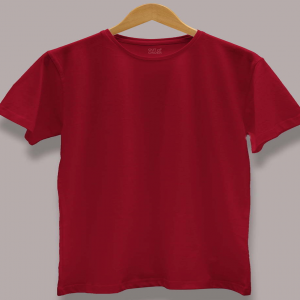
The Mumbai police have decided to issue maroon T-shirts and shorts to male suspects lodged in central lockups. "It's an ingenious idea," said a police commissioner from another state in northern India, known for its instant justice.
"Ingenious?" I asked. "How?"
He looked at me the way a surgeon looks at a man recommending turmeric for a heart operation. "My dear fellow," he said, "you are seeing cloth. We are seeing strategy."
I leaned forward.
"Suppose," he said softly, "a suspect receives persuasive treatment."
"You mean a bashing up?"
He winced. "No, no, use proper terminology. Vigorous interviewing." Then he leaned in and whispered, "And maroon helps."
"How?" I asked.
He smiled. "Blood doesn't show."
I nearly choked on my tea. Suddenly, the brilliance of Indian innovation struck me. For years, we have debated prison reforms, police brutality, delayed justice and clogged courts, when the answer, apparently, was hanging in a colour chart. Maroon. Not white, too revealing. Not khaki, too official. Maroon. The colour of silent efficiency.
The commissioner warmed to his subject. "Think of the advantages," he said. "A little bashing up here and there, fewer complaints. Fewer inquiries. Less media drama."
"And encounters?" I asked cautiously.
His face lit up. "Nobody will know if he was hit in the front or back!"
I could see we had moved from tailoring into philosophy. "You see," he said sadly, "we work so hard catching criminals, and then judges let them off after all our hard work." There was heartbreak in his voice. "But now," he said, patting the imaginary maroon shirt, "people will know who gives the final verdict."
"The courts?" I asked.
He looked almost offended. "The police."
I stared at him. This was not policing. This was constitutional tailoring. And suddenly I realised maroon was not a colour. It was policy. If blood can disappear into fabric, perhaps problems can disappear into administration. Why reform justice when you can redesign shorts? Why fight crime when you can coordinate colours?
Somewhere, I could imagine a high-powered committee discussing shades. "Red is too dramatic," says one officer. "Brown lacks authority," says another. Then one genius rises at the end of the table and says in a solemn voice, "Maroon." Silence. Then thunderous applause.
"Why maroon?" asks the chairman.
The genius adjusts his spectacles. "Because it absorbs evidence!"
Promoted on the spot!
I could already hear the new police motto. Justice delayed is justice denied. Justice marooned is justice applied. As the commissioner whispered proudly, "Courts take years. Maroon takes minutes."
Still, one must admire the creativity. Only in our country could a T-shirt become a law-and-order strategy. Only here could colour be viewed as crime control. And only here could someone look at a bloodstain and say, "Let us solve this through wardrobe management..."
.jpg)
.png) Cedric Prakash
Cedric Prakash
 ICPA
ICPA
 ICPA
ICPA
 ICPA
ICPA
 ICPA
ICPA
 ICPA
ICPA
 ICPA
ICPA
.jpg)
 A. J. Philip
.jpg)
.png) Jacob Peenikaparambil
Jacob Peenikaparambil
.jpg)
.png) John Dayal
John Dayal