

.jpg) Thomas Menamparampil
Thomas Menamparampil
Be Selective
Alberuni (973-1050), an Islamic scholar, greatly admired Indian wisdom, but was frank enough to admit that much of it was buried under a whole lot of rubbish; one had to be extremely selective. With revived interest in India's past and a keenness to rewrite its history, this caution becomes especially relevant, especially for those tempted to make mythologies and epics their main sources for re-scripting the nation's early history.
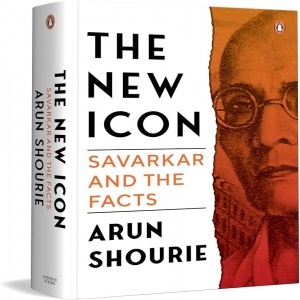
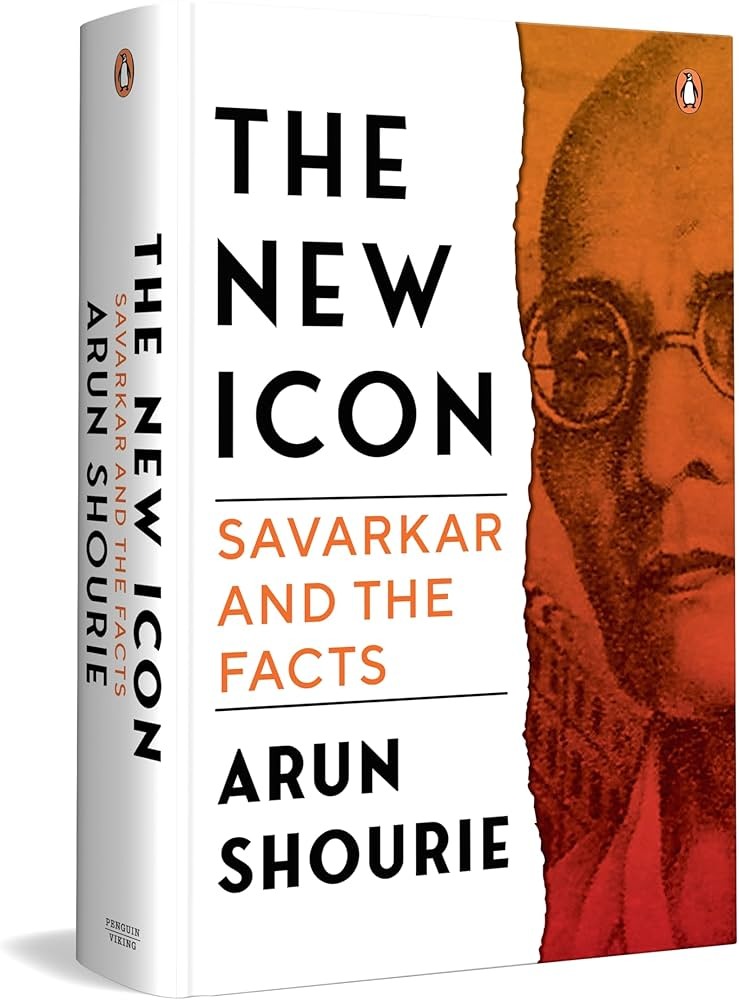
Arun Shourie quotes Vinayak Damodar Savarkar's stunning statement, "The Puranas are a bundle of lies" (The New Icon, Gurugram, 2005: Penguin-Viking, Random House, 289). Though merciless in his approach, Shourie's study of Savarkar can be an eye-opener for those who wish to know the real truths about the great 'veer' (hero). It is for you to evaluate the Founding Father of Hindutva.
I know we are dealing with certain sensitive issues. Those who question Hindutva thinkers and writers are called: 'anti-Hindu,' 'anti-national,' 'perverse,' 'prejudiced,' 'brain-washed by the West,' 'colonial slave mentality' (Shourie, 86).
Extermination of Hindutva critics is being rewarded. Shrikant Pangarkar, suspected of killing Gauri Lankesh, has just won the municipal election at Jalna, Maharashtra. Earlier, Sadhvi Pragya Singh Thakur was elected as an MP from Bhopal, though she had been accused of being associated with the 2008 Malegaon blast that killed 45.
Earn Credibility
On the contrary, death awaits truth tellers like Narendra Dabholkar, Govind Pansare and MM Kalburgi. They thought they were doing a great service to Hindu society by "questioning blind ritual and promoting sound reasoning." That is what we wish to do today. The same gun was used in more than one case; it awaits many more! The same attitude motivates many Hindutva activists.
But in any case, truth deserves attention. It needs to be told. 'Sincere sharing' has a healing power that benefits the entire society, even if individuals suffer.
Arun Shourie, who was the Minister for Information under Vajpayee, was very sympathetic towards the RSS and was much admired for his journalistic skills. Further, Savarkar himself believed in being straightforward: not mincing words when communicating his deep convictions.
"Morality Only in Textbooks" Savarkar
Speaking in Calcutta in 1939, Savarkar contended that there was no such thing as morality in international relations. "Make India Great Again" would have summarised what he wished to say. For him, slogans like "truth" and "non-violence" were purposeless.
His model was Hitler, who showed himself strong, even if unprincipled, unlike the "weakling Gandhi" calling for amicable relationships between Hindus and Muslims. Mussolini conquered Abyssinia because he was determined. Self-preservation is the law of nature, believed Savarkar; "morality is found only in textbooks." Phrases like "moral force" and "moral persuasion" are fatuous ex
His formula for his followers was, "to a brute we have to be a super-brute, to a cheat we have to be a super-cheat." The so-called 'Hindu values' must be rejected: perverse, imbecile, suicidal, foolish, silly, anti-national. They have made India weak. Hindutva is all about meeting "cruelty with super-cruelty, craft with super-craft, violence with extreme violence" (Shourie, 361-63).
"One has to be a crook in politics." Savarkar wanted Hindu youth to join the Army, Navy, and Air Force, so that there would be trained military men to take on the British in due time (Shourie, 235).
For Hitler, Indian Freedom Fighters Were "Pompous Windbags"
It was natural that those Indians who were eager to throw out the British by force sought to see what assistance they could get from Hitler and Mussolini. Gandhiji, Nehru and others, knowing well the totalitarian ideology of the Fascists and Nazis, were totally against any such effort.
Much Indian energy was wasted in trying to woo Hitler, who looked down on the Indians. He considered the outspoken Indian freedom fighters mere "pompous windbags" with little world experience (Shourie 69). He dubbed them "Asian impostors," "Indian mountebanks," for expecting an early collapse of the British Empire.
His casual remark was, "I, as a member of the Germanic race, would prefer to see India under English rule than under the control of any other nation." If 50,000 Englishmen could hold down 400 million "ignorant, backward Indians," they were made up of such poor material! He thought it was a mistake for England to have opened universities for them. Subhash Chandra Bose had to wait one year to meet Hitler, and was merely told to go to Japan (Shourie, 70-72).
Hitler was upset by Japanese successes in Asia and deeply concerned about the losses the white race suffered in consequence (Shourie 73). For him, the 'India Legion' was a big joke. Even the Japanese did not give combat roles to Bose's INA; they did not have faith in the fighting ability of Indians (Shourie, 77-78).
A Cowardly Race?
For Hitler and the Japanese of those days, Indians looked like a cowardly race, yielding to every invader, heartily collaborating with every exploiter (e. g., Rajputs with Mughals, Sikhs and Gurkhas with the British), offering mere 'passive resistance' even while fighting for Independence. Savarkar's view was something similar. He held three villains responsible: Buddha, Ashoka, and Gandhi (Shourie, 412). In his view, the Buddhist message of peace that Ashoka popularised weakened India (Shourie, 414-15). Gandhi's Ahimsa accentuated it in modern times. India's martial spirit was killed (Shourie, 206).
Thus, Gandhi remained an ongoing villain for Savarkar. He says, "We do not believe in absolute non-violence, nor in filling the jails" (Shourie, 232). Others went a step further, suggesting fanciful approaches to current problems. The formula for peace given by the Shankaracharya of Kamkoti was: drink cow's milk and eat fruits. Is this not going too far? After all, even cows kick back. Chaubey Baba's formula was: chant "Shri Ram Jai Jai Ram" (Shourie, 20-21). Today's Hindutva heroes have gone further still: cow devotion, the use of cow urine and dung, etc. The less we speak about such things, the better!
What Weakened India?
Ahimsa or Caste Fragmentation: No Co-belongingness?
The real reason for our collective weakness is not low levels of aggressive spirit, but a strong "sense of non-belonging" among us due to caste fragmentation. Even in the Ramayana, we read of Kshatriya Rama fighting Brahmin Ravana. Muhammad bin Qasim was initially assisted by the people of Sindh, who had been exploited. Mahmud of Ghazni was led forward by Hindus (Shourie, 312-13). Rishi Vishwamitra showed the Rakshasas (tribal people) to Rama, and asked him to finish them off: "barbarity with hyper-barabrity" (Shourie, 374).
Later, the Rajputs did not support the Marathas when they fought the Mughals. They belonged to a different caste. Manusmriti made caste a nightmare. Crossing the Himalayas or Vindhyas, or even the Indus, one would lose one's caste. The fear was about Hindus becoming influenced by Islam and being converted. It cribbed India's trading instincts and the spirit of venture (Shourie, 47-48). Even today, the 5.4 million Indians in the US and 10 million in the Middle East carry caste prejudices with them, claiming that the system is Sanatan.
Is our much-acclaimed 'spiritual detachment' itself based on our slavish defeatism, as some people argue? They say others crossed the mountains and oceans this way and conquered us, surrounding themselves with cows to prevent Hindu attack on them! Having conquered, they destroyed temples and killed the same cows (Shourie, 15). Our caste and food fads then are our weakness, not our love for peace!
Gandhiji's Irreplaceable Role in the Independence Struggle
RC Majumdar, historian, while praising Savarkar, admitted that he was often guilty of reviling others and over-claiming recognition for his erudition and eloquence (Shourie, 110-11). He was afraid that Gandhiji would win greater recognition with his 'sanctimonious ahimsa.' For Savarkar, this proponent of passive resistance was a 'walking plague.'
Savarkar lovers reject Gandhiji even today, because his memory makes those who cooperated with the British feel guilty; secondly, because his ethical conduct is like a constant accusation against those who reject such values (Shourie, 81). Gandhiji remains the Father of the Nation nonetheless.
The Punyabhoomi Issue
Savarkar considered the Buddhists "traitorous." But Brahmin leadership thought it best to absorb Buddha into the Hindu pantheon by recognising him as the 10th incarnation of Vishnu (Shourie, 284-85). The Buddhist shrine in Puri was converted into a Hindu temple. DD Kosambi says that Shakaracharya mercilessly introduced the caste system in areas where Buddhism prevailed (Shourie, 435).
The upper castes persecuted the Buddhists, e.g. in Sindh, so severely that they turned to Islam (Shourie, 41-42). East Bengal Buddhists too became Muslims for similar reasons (Shourie, 428), so with Kashmir.
One question may be asked of Savarkar. If people belonged to where their Punyabhoomi (Holy Land) is, as he argued, Muslims to Arabia and Christians to Israel, where do the Chinese, Japanese, Vietnamese, Thais, Myanmarese, who are Buddhists, belong? To India, which is their Punyabhoomi? (Shourie, 307). Would he and his followers make a place in India for all of East Asia?
Savarkar's Harshest Words for Muslims
Savarkar had the hardest words for the Muslims: "devilish, diabolic, highly fanatical, ruthlessly destructive, wicked" (Shourie, 449). Referring to the position of Muslims in independent India, he used to say, "there may be lizards, rats, spiders staying in the house. But the house is not theirs." The conclusion was that India does not belong to the Muslims. At most, they may be tolerated. An "unbridgeable separateness" divides them (Shourie, 453).
Jinnah had the same view. Savarkar helped the British in many ways: his two-nation theory, denunciation of the Congress, opposition to the Quit India movement, and scorn for Gandhiji (Shourie, 142). His 'begging tone' in several letters to Viceroy Linlithgow has remained embarrassing even for his admirers. However, his message to his followers remained unchanged: "Hinduise politics, militarise the Hindu race" (Shourie, 387).
Venerating the Cow is Killing the Intelligence of the Nation: Savarkar
For all his enthusiasm for Hindu civilisation, Savarkar remained "secular" in thought. When some people accused him of offending their "religious sentiments," he called for arguments grounded in evidence, logic, and historical experience (Shourie, 51). He was deeply disappointed with the Sanskrit scholars of his day. These "pandits have no notion at all about the world," he swore (Shourie, 97). Can something similar be said about Amit Shah or Adityanath Yogi?
Cow worship is ridiculous, Savarkar contended. A cow is a useful animal, not our mother; we should look after it, not worship it. When they are no longer useful, their protection is purposeless. Making people believe in the sanctity of the cow is: "vulgarity, stupidity, foolishness, unadulterated foolishness…making donkey of a man." Venerating the cow is 'killing the intelligence of the rashtra' (Shourie 3). Eating beef or pork depends on your body's needs and your doctor's advice (Shourie, 11).
What Savarkar encouraged most was doing something socially beneficial (Shourie, 24). He would urge Brahmin ladies to visit Chamar and Mahar villages and associate with people there. Schools could be opened there (Shourie, 25). He would always speak about 'rational conduct.' He always opposed the caste system (Shourie, 28). He opened a restaurant where inter-caste mixing would be encouraged, and he encouraged those in charge of temples to welcome the lower castes. He urged a 'seth' of the Bhandari caste to open a temple where all could pray (Shourie, 32-23).
A Secular Dimension Relevant Today
Savarkar's secular message becomes meaningful in the context of our daily lives, for example, in India's recent trade agreements with the EU and the US. The antiquated, inward-looking, populist politics of our RSS-led nation must make way for adroit international interactions and responsible distribution of profits. The needed skills must be developed. Assam tea is set to benefit greatly from the India-EU trade deal.
Trade with the EU today amounts to $212 billion with a surplus of $15 billion; it can be increased manifold. The agreement refers to India's skills and population. The EU finds 70% growth in job vacancies since 2020. There is an indefinite scope for India. As we have nearly wasted our demographic dividend, we may miss new opportunities in an emerging world with our Hindutva craze for mythologies and ancient tales, overzealous for imposing Hindi and Sanskrit, fanaticism in bulldozing mosques, and disturbing Christian prayer gatherings.
Save Hinduism from Hindutva
I end this article with these words of Arun Shourie:
"The essence of Hinduism is the inner-directed search. Hindutva, by contrast, is a project to capture, dominate, retain, twist and turn the State.
For the inner-directed search, adherence to truth, humility, service, ethical conduct in general are the sine qua non.
Hindutva, by contrast, shouts that we capture and dominate the State, that we subjugate society by all means—falsehood and force, intimidation and cruelty, deceit and bribery…
And so, my plea:
SAVE HINDUISM FROM HINDUTVA"
.jpg)
.png) Cedric Prakash
Cedric Prakash
 ICPA
ICPA
 ICPA
ICPA
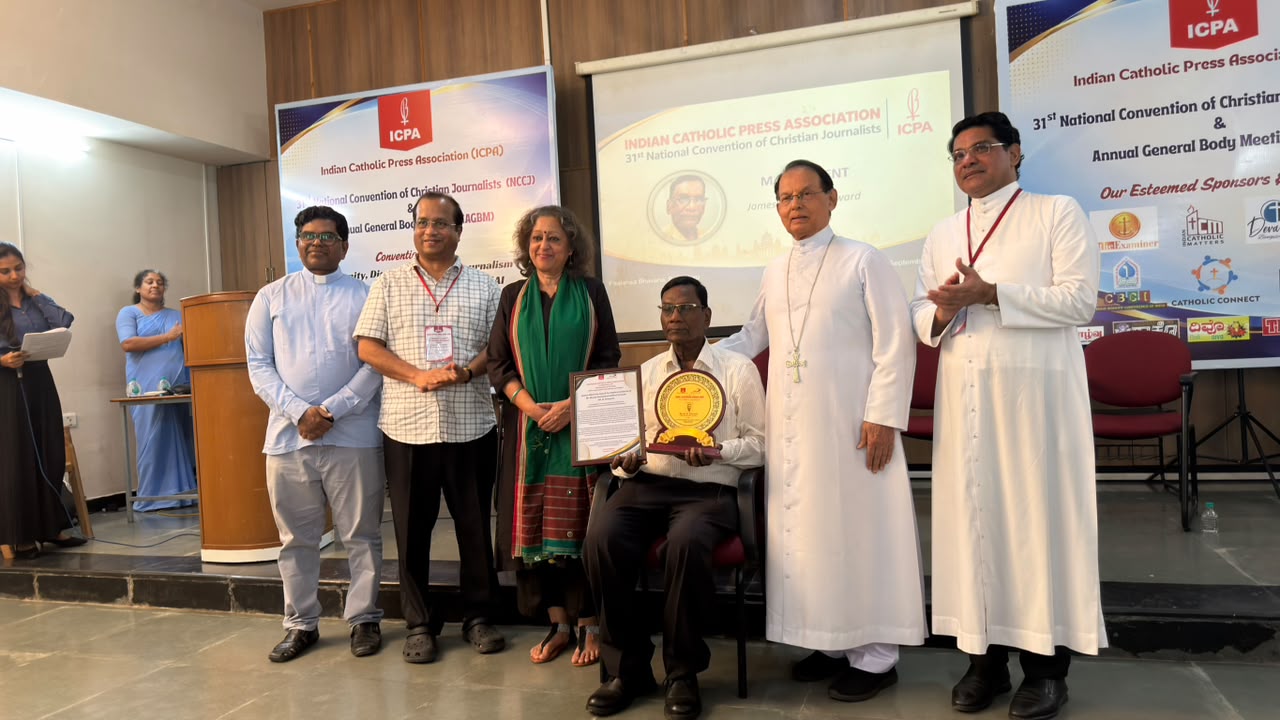 ICPA
ICPA
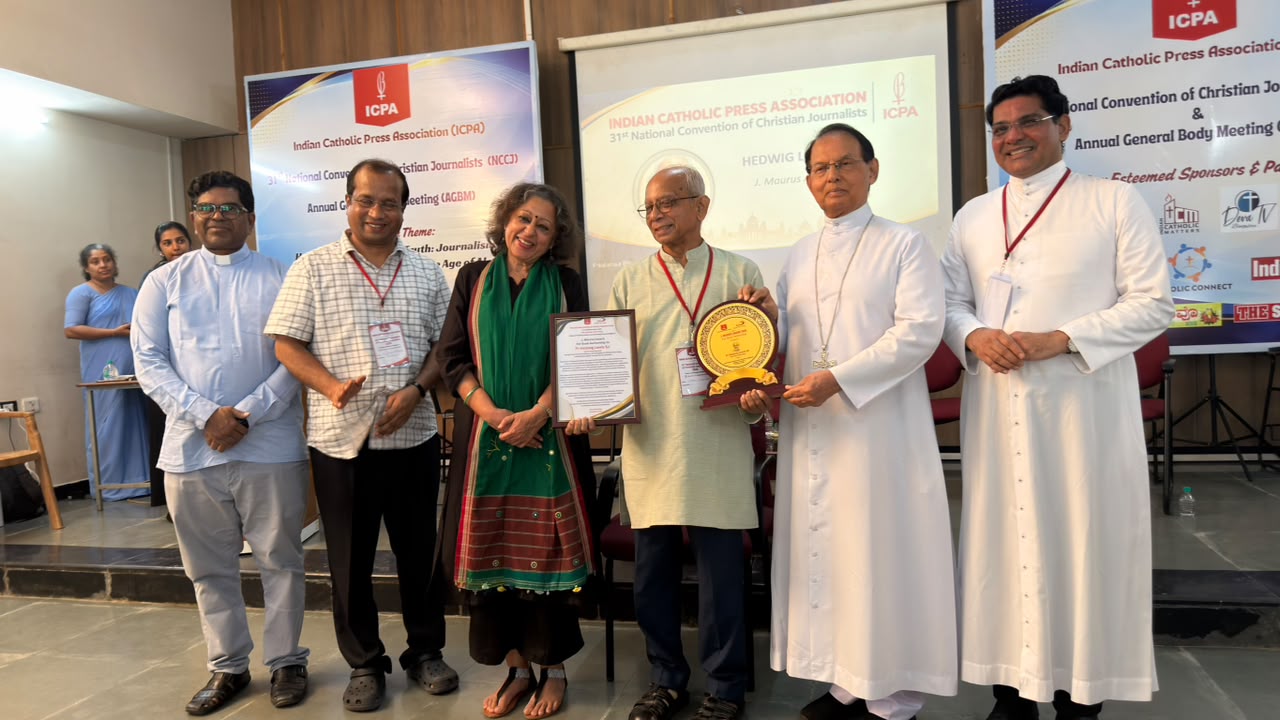 ICPA
ICPA
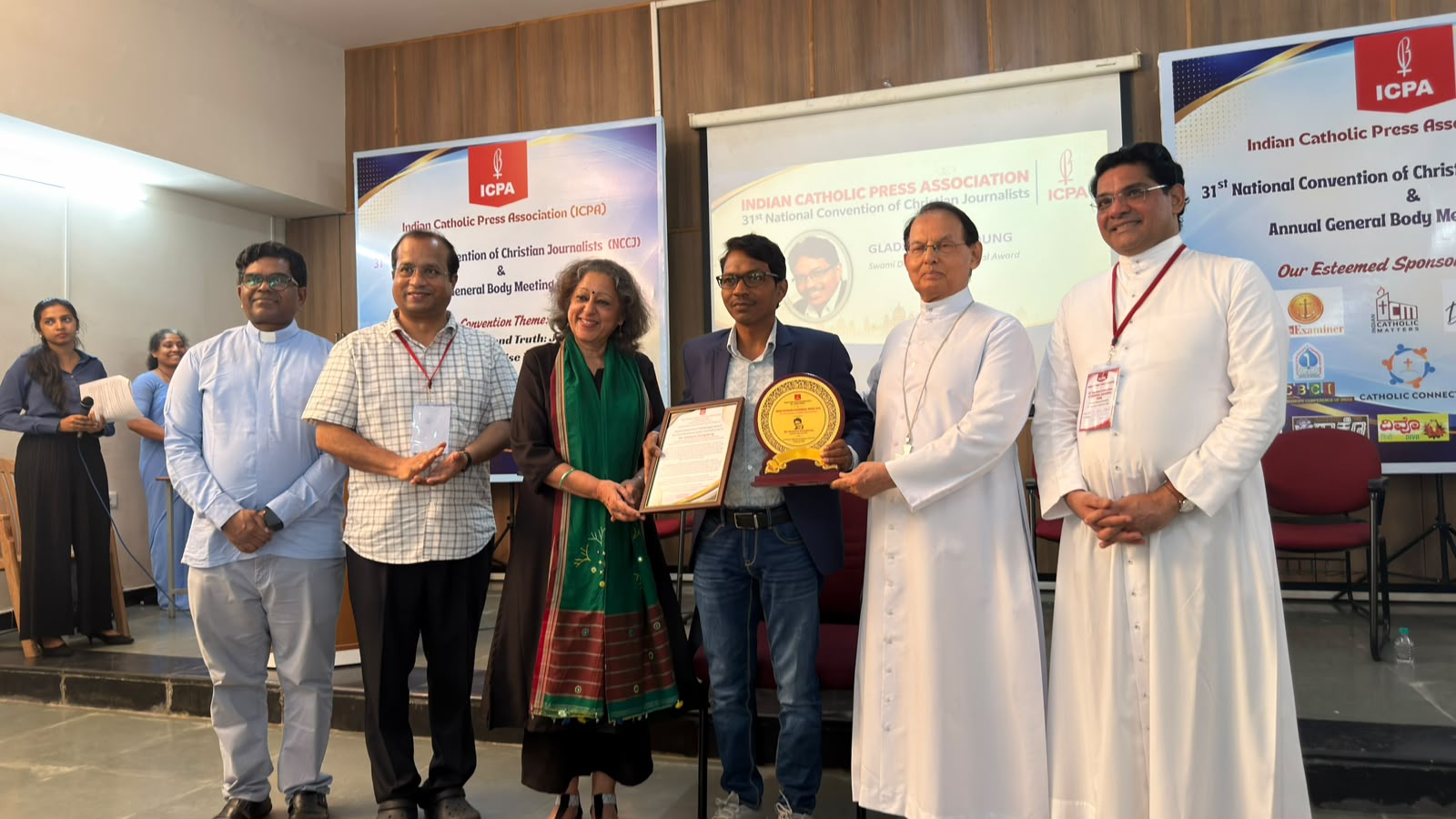 ICPA
ICPA
 ICPA
ICPA
.jpg)
 A. J. Philip
.jpg)
.png) Jacob Peenikaparambil
Jacob Peenikaparambil
.jpg)
.png) John Dayal
John Dayal