

.png) Jacob Peenikaparambil
Jacob Peenikaparambil
.jpg)
India is rapidly moving from a mixed economy towards a free-market model. It is worth asking whether a developing country like India should allow all sectors—including education and health—to be governed entirely by market forces. The current shift requires healthy competition among multiple players, which generally results in innovation, efficiency, consumer choice and lower prices.
In contrast, monopoly—where a single entity controls a market—results in higher prices, reduced innovation, lower quality and barriers to entry for new businesses. That is why many modern economies employ regulatory bodies to prevent monopolies and ensure fair competition, while retaining the advantages of a free-market system.
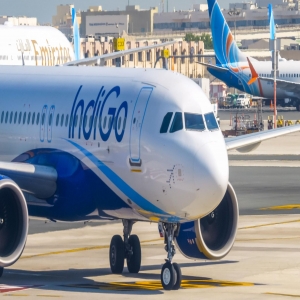
The unprecedented crisis that gripped IndiGo Airlines in the first week of December exposed both the dangers of monopoly and the failure of regulatory authorities—the Directorate General of Civil Aviation (DGCA) and the Ministry of Civil Aviation—to intervene at the right time.
On December 4th, 5th and 6th, the media was flooded with images and reports of thousands of IndiGo flight cancellations, the suffering, trauma and anger of passengers, and expert analyses of the causes. More than 1,000 flights were cancelled on Friday, December 5 alone, leaving nearly two lakh passengers stressed and stranded. There were widespread complaints about missing baggage and shortages of food, water, and other basic necessities for stranded passengers.
At the heart of the disruption was the DGCA's introduction of new safety regulations. These rules increased mandatory rest hours for pilots, limited the number of weekly night landings and imposed stricter caps on overnight flying hours to prevent pilot fatigue. Collectively, they were known as the Flight Duty Time Limitation (FDTL) rules.
According to a report in The Economic Times, IndiGo struggled to redesign crew rosters and manage pilot and cabin-crew manpower. As a result, during a peak travel season—winter holidays and weddings—flights were cancelled one after another, triggering chaos across airports.
Taking advantage of IndiGo's crisis, other airlines dramatically inflated ticket prices. Some one-way domestic economy fares rose to more than ?1 lakh on a single route. For example, Delhi–Chennai fares reached ?1.6 lakh (compared with the usual ?5,900), and Kolkata–Mumbai tickets on a one-stop SpiceJet flight reached ?90,000. After public outrage, the government intervened and imposed temporary fare caps to prevent opportunistic pricing.
Alarmed by the nationwide airport chaos, on Friday, December 6, the Civil Aviation Ministry placed the FDTL rules "in abeyance with immediate effect." Unhappy with the relaxation of regulations, the Airline Pilots' Association of India stated that the events raised "serious concerns that an artificial crisis was engineered to exert pressure on the government for commercial gain under the pretext of public convenience."
In an interview with Karan Thapar for The Wire, Captain Gopinath, Founder of Air Deccan and a pioneer of Indian aviation, placed full responsibility on IndiGo's management. He described IndiGo's behaviour as marked by "arrogance, irresponsibility and hubris." According to him, IndiGo had more than enough time to prepare for the FDTL rules, which were notified in May 2024, but deliberately ignored them, believing it was too prominent and influential to be held accountable. He also stated that the DGCA and the Ministry of Civil Aviation should have monitored IndiGo's preparedness for compliance, but they failed to do so.
The Telegraph, in its editorial on December 9, castigated IndiGo, saying that it "sacrificed its commitment to service at the altar of lucre." It also wrote, "IndiGo has shown that it is not immune to the perverse corporate attraction of stretching its resources, including manpower, thin in a bid to maximise gain."
The DGCA's show-cause notice issued to IndiGo's CEO and COO on December 6 clearly stated that flight disruptions were caused by failure to provision for the "approved FDTL scheme" and that "such a large-scale operational failure indicates significant lapses in planning, oversight and resource management." This statement itself reflects the DGCA's failure to monitor the country's largest airline's compliance with the rules. Issuing a show-cause notice only after a calamity appears to be an attempt to escape responsibility.
Aviation experts have pointed out several reasons for the crisis:
1. Despite knowing that new rules would come into effect, IndiGo reportedly failed to hire or adjust staffing in advance.
2. As a low-cost carrier, IndiGo's business model depends on very high aircraft and crew utilisation, leaving little buffer capacity to absorb shocks from regulatory changes or seasonal demand spikes.
3. IndiGo has long held a dominant share of India's domestic aviation market. On many routes, it is the sole operator—so-called "monopoly routes." Of the approximately 1,131 domestic sectors, nearly 737 are monopoly routes.
4. Because so many routes are operated exclusively by IndiGo—or by only one or two large airlines—there were few substitutes when IndiGo stumbled, amplifying the impact.
IndiGo is the largest airline in India, accounting for more than three-fifths of domestic air travel. As of September 2025, its market share was nearly 63%. Tata Group airlines, such as Air India (around 13.6%) and Air India Express (6.3%), are far behind. Effectively, IndiGo enjoys a near-monopoly in the aviation sector. Therefore, a crisis within IndiGo quickly spread to the entire aviation sector. This episode has exposed the grave dangers of monopoly in any industry.
Opposition leader Rahul Gandhi highlighted the issue of monopoly in his reaction to the crisis:
"IndiGo fiasco is the cost of this Govt's monopoly model. Once again, it's ordinary Indians who pay the price — in delays, cancellations and helplessness. India deserves fair competition in every sector, not match-fixing monopolies."
Congress leader Sasikanth Senthil, speaking at a press conference on December 6, 2025, also criticised the government for allowing the aviation sector to "sink into a monopoly and duopoly instead of building a competitive, diverse sector."
A careful analysis of the IndiGo crisis makes it evident that monopoly in any sector can cause systemic risk to the service community, lead to complacency and lack of accountability, harm consumers, and allow monopolistic entities to exert disproportionate influence over regulators and policymakers—amounting to regulatory blackmail.
To avert the dangers of monopoly or duopoly, India should consider the following measures:
1. Promote genuine competition, not merely symbolic plurality. There must be several viable players so that no single company wields disproportionate control.
2. Ensure capacity buffers and contingency planning, including mandatory minimum-reserve staffing, as operations scale.
3. Strengthen regulatory oversight and independence, ensuring timely implementation of regulations and resisting corporate pressure to delay compliance.
4. Protect consumers by ensuring alternatives—promote competition on monopoly routes, support regional carriers, enable price ceilings during crises and develop contingency travel options such as rail services.
5. Prevent over-concentration in essential services—a balanced market structure reduces systemic risk and improves resilience.
Speaking on the third day of the CPI-ML Congress in Patna on February 17 2023, Arundhati Roy remarked, "Fascism has led to a situation where people are of the opinion that only four people are running the country — two are buying, two are selling. The four people are the Prime Minister, the Union Home Minister, Ambani and Adani." The comment referred to the rise of alleged crony capitalism and the concentration of economic and political power in India in the hands of a few corporate houses.
Ambani and Adani are not just big businesses; they dominate India's infrastructure, digital transformation and energy security, playing a disproportionately large role in the nation's economic landscape. Not only the people of India but also the whole world could see, on December 5 and 6, a glimpse of the Viksit Bharat envisioned by PM Narendra Modi and the BJP at India's airports. The IndiGo imbroglio is a wake-up call not only for policymakers but also for the people of India regarding the growing monopolies in the Indian economy and their consequences for ordinary citizens.
.jpg)
.png) Cedric Prakash
Cedric Prakash
.jpg) Elsa Lycias Joel
Elsa Lycias Joel
.jpg)
 A. J. Philip
 Jacob Peenikaparambil
.jpg)
.png) John Dayal
John Dayal
.jpg)
.jpg)
.png) Joseph Maliakan
Joseph Maliakan
.png)
.png) Robert Clements
Robert Clements
.jpg) Cedric Prakash
Cedric Prakash
 ICPA
ICPA