

.png) Jaswant Kaur
Jaswant Kaur
.jpg)
When a woman leads, we expect her to do wonders and that her presence alone will solve the problems she inherits. At the very least, we expect her to understand women's anxieties, respond with empathy, and deliver what the system has failed to do for decades.
But step into Delhi today, speak to the women who have tried to call the 181 helpline, or talk to the survivors who reached out to the Delhi Commission for Women (DCW) in the hope of a solution, and you will find a different reality. The support system that women once looked up to is no longer there.
The ITO office in Delhi, from which the commission operated, stands witness to empty chairs and a dilapidated elevator, with no signs of revival. A national daily reports that a sign greets all visitors: "Delhi Commission for Women's Office is Closed." The only place where this office now exists is on a website.
Headless and without manpower, the DCW has been reduced to a mere label — a remnant of a structure that once supported women in addressing their safety concerns and grievances. The helpline, too, is dysfunctional, as many women have reported.
This decline began when Swati Maliwal resigned as DCW chairperson in January 2024. Within five months, the commission lost 223 contractual employees. The matter reached the courts, yet little has changed.
Every year, the annual crime report reinforces what we already know: the national capital continues to record some of the highest levels of crimes against women. The latest NCRB data showed that Delhi had 3,952 cases of kidnapping of women (the second highest in the country), the highest number of acid attacks, 4,219 cases of cruelty by husbands, and 1,791 cases of assault with intent to outrage modesty.
Most disturbing was the data under the Protection of Children from Sexual Offences (POCSO) Act: 1,048 rape cases involving minors, the highest in India. This underscores that the national capital remains as unsafe for girls as it is for women, with no sign of decline.
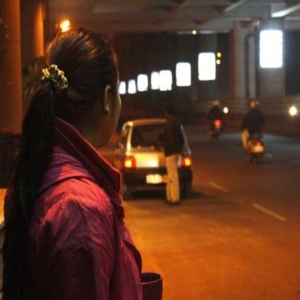
While some dismiss this as a matter of perception or media propaganda, it is a lived reality for every woman who hesitates to take public transport after sunset, who clutches her phone as she walks past a dark stretch, who scans the street before stepping out, or who quickens her pace at the sound of footsteps behind her. This is not the story of just one woman, but of a large majority. That fear has only compounded with the disappearance of the very systems designed to offer protection.
The slow dismantling of the Delhi Commission for Women is not a bureaucratic hiccup; it is a structural failure. A statutory body that once heard thousands of complaints, deployed field workers, and intervened in real time has been reduced to a locked office — with no chairperson, no members, and barely any staff.
The 181 Women's Helpline, once a crucial lifeline, has withered into something that barely resembles a functioning support system since its administrative control changed hands. Distress calls go unanswered, as several women report.
Survivors wait for social workers who never arrive. Counsellors who once accompanied women to police stations or medical examinations have largely vanished. The machinery still exists on paper, but on the ground, it has become a ghost structure.
In a city where crimes against women remain frighteningly high, the collapse of this first-response ecosystem creates a vacuum that is not merely inconvenient but dangerous. A helpline that does not answer is not a technical glitch—it is a message that you are on your own.
It is easy for those in power to frame these failures as administrative transitions or temporary disruptions. But these explanations collapse under scrutiny. Staff were removed without contingency planning. Leadership positions remained vacant for months. Offices were locked without public notice. Helplines were restructured without ensuring continuity. The institutional erosion is too sustained, too consistent, and too convenient to be accidental.
What makes this erosion even more troubling is its timing—it comes at a time when conversations about women's empowerment have never been louder. We celebrate women in politics, bureaucracy, business, and law enforcement. The UN has even dedicated a whole year to women in agriculture. But symbolic representation is meaningless when the basic infrastructure of safety is collapsing beneath our feet.
Behind every unanswered call is a survivor who gave up, a woman who walked home in fear, a life that could have been stabilised, a crisis that could have been diffused. These failures are not abstract; they accumulate quietly, invisibly, and devastatingly in the lives of ordinary women.
And yet, public outrage remains curiously muted. Perhaps women have internalised the idea that they must fend for themselves, or perhaps institutional failure is no longer news, but an extension of daily reality. It reiterates the age-old belief that complaining will not change anything.
Delhi is at a tipping point. If the collapse of women's safety structures is allowed to continue, rebuilding will become exponentially harder. Trust, once broken at this scale, is not easily restored. A woman who has once dialled a helpline in vain will hesitate to dial again.
Governance must therefore begin with honesty. The first step is publicly acknowledging that the system has not just failed—it has been allowed to fail. Only then can it be meaningfully repaired.
Delhi cannot continue to claim the mantle of a modern metropolis while women navigate danger without institutional support. No capital can justify a silent state or a collapsed helpline. No government can justify locked doors for those seeking protection.
When the state goes silent, women pay the price. And today, in Delhi, women are paying that price every day—in fear, exhaustion, quiet resignation, and the terrifying knowledge that when they reach out for help, the system may not reach back.
The promise of democracy is not merely the right to vote; it is the assurance that the state will protect its citizens when they are most vulnerable. Delhi is failing spectacularly on that count.
Women do not need symbolic leadership. They need institutions that function, helplines that answer, and a Commission that is alive—not merely listed in government records or on a website. They need a state that recognises that vulnerability is not an opportunity for negligence. If Delhi wishes to reclaim even a semblance of credibility, it must rebuild the structures it allowed to collapse.
Because when a woman in distress dials a number, she is not asking for charity. She is invoking her right. And the state's silence is not just a failure; it is a betrayal.
.jpg)
 A. J. Philip
.png) Cedric Prakash
Cedric Prakash
.jpg)
 P. A. Chacko
.jpg)
.jpg)
.jpg) Thomas Menamparampil
Thomas Menamparampil
.png)
.png)
.png) Robert Clements
Robert Clements
.jpg)
.png)
.png) Chhotebhai
Chhotebhai