

.png) Cedric Prakash
Cedric Prakash
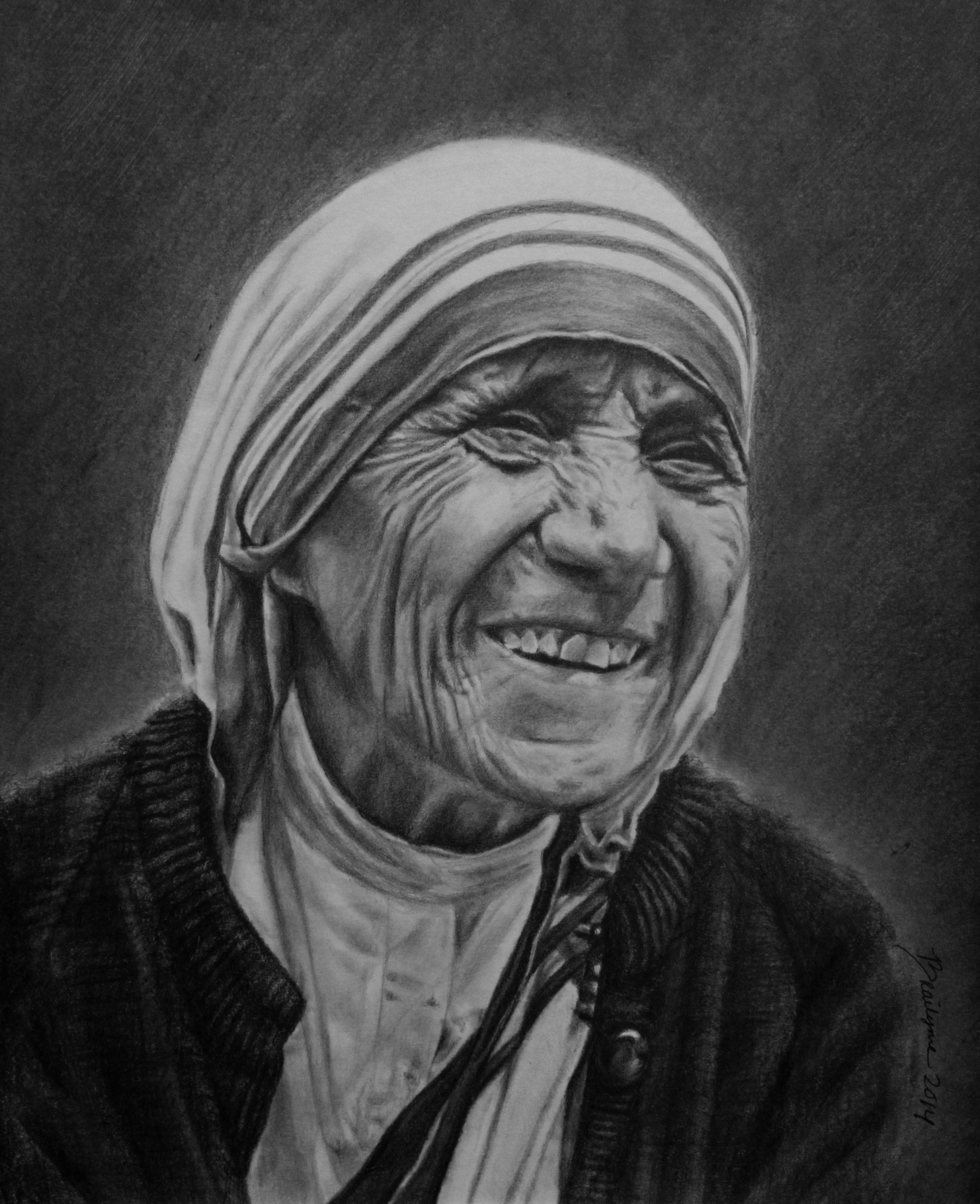
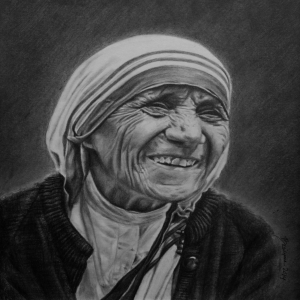
It is 'Teachers Day' once again! Significantly, the day is also the Feast of St. Teresa of Calcutta, still lovingly referred to as 'Mother.' In 2012, the United Nations, as a fitting tribute to Mother Teresa, declared this day the 'International Day of Charity.' A day pregnant with meaning, which we all need to celebrate in as meaningful a day as possible.
'Teachers Day' is special! It is the birth anniversary of our late President, Dr. Sarvepalli Radhakrishnan (1888-1975). Dr. Radhakrishnan was a renowned academic, philosopher, and statesman who firmly believed that an inclusive, pluralistic, and holistic education was the key to India's meaningful development. He was truly a visionary who transcended the pettiness, exclusivism, and hate that our country is steeped in today. An erudite scholar, his profound writings bear testimony to his vision for India! Dr. Radhakrishnan would easily put most of the politicians of today to shame. Many of the politicians of today have just hate and violence in their DNA!
Teachers, sadly, are in the news today for all the wrong reasons. Recently, in Ahmedabad, a schoolboy stabbed another schoolboy, fatally, outside the school premises, just after school hours. Evidence shows that the school management did all they could to save the life of the wounded boy. Unfortunately, the child did not survive.
What transpired after that was pathetic – downright disgraceful. A fundamentalist and fanatic mob began venting their ire on the school management and the teachers for what had taken place. They ransacked the school and beat up the teachers. Not realising that it is the primary duty of parents to nurture their children. This is not a one-off case, but a pattern that demonstrates how teachers today are no longer held in the same respect as they were in the past.
Education in India is in the doldrums. We no longer educate children to become men and women for others, to develop social responsibility, and above all, to become enlightened citizens of the country. A clear indicator of the rot in education is the tremendous rush of those wanting to go abroad for higher education, even to countries where education is at a miserable level.
In most parts of India, 'Government' education leaves much to be desired; the so-called 'National Education Policy' (NEP) is manipulatively designed to cater to a particular section of society, leaving the poor and the marginalised at the mercy of a system which would prefer to have them half-educated and condemned to a life of servitude!
As education becomes increasingly commercialised, with a value system based essentially on numerical criteria, such as '90% plus,' the basics and ethos of education, and what it should mean to a child who needs to be nurtured, are torn asunder. Besides, the role of a teacher as a guide, accompanier, mentor, motivator, and inspirer stands greatly diminished.
Today, the teacher is no longer an 'educator' in the complete sense of the word. They are tasked with innumerable administrative responsibilities; besides being a teacher in the class, teachers are called to do 'official Government duty' as surveyors, data-collectors, get involved in the electoral process and a whole range of other 'duties' which have nothing to do with their primary role and responsibility of being an educator.
This is certainly unacceptable. Increasingly, teachers today are abandoning their primary mission for more lucrative opportunities. It is not a state secret that day scores of students (particularly those who can afford it) flock to expensive 'tuition classes' after their official school hours! An official racket of profiteers!
Mother Teresa was a teacher par excellence! Her first major responsibility in 1931, after her profession as a nun of the Loreto Congregation, was to teach in St. Mary's Bengali Medium School for girls in Kolkata. This was an assignment she undertook with great love and dedication, till she left the Loreto Sisters in 1948 to found the Missionaries of Charity.
From then on, there was no looking back for Mother Teresa. In word and witness, she proved to be a teacher par excellence. She was convinced that the poor children of the slums had to be taught the 3Rs (reading, 'riting, and 'rithmetic), but more than that, she realised that she had to communicate to the world the values of Jesus, who, for her, was the Master Teacher.
As a human being and particularly as a teacher, Mother Teresa embodied many values, but high among them was that of compassion. She lived compassion to the fullest – it is the one lesson she gave the world.
Mother Teresa was truly the embodiment of compassion. If one were to attribute a core competency to her, it would be this single characteristic: being a compassionate person. She radiated this quality when on earth, in a way, few humans could ever do. Her love for the marginalised and the vulnerable, the excluded and the exploited, the orphan and the widow, the sick and the aged, and particularly for the poorest of the poor and the dying destitute, for the last, the least, the lonely and the lost, was boundless.
She was able to give without counting the cost. Her ability to be compassionate towards others motivated her to found the Missionaries of Charity. She was effusive in her compassion for the "least of our sisters and brothers" and did not try to hide this fact, for whatever reason.
Mother Teresa defined love as a willingness to "give until it hurts" and an act of compassion and service, even in small, everyday actions, such as a smile. She emphasised that true love involves empathy and connection, starting with family and extending to everyone, and that the greatest poverty is the feeling of being unloved.
She also taught that love is a fruit that is always in season, accessible to everyone, and that it begins with small kindnesses, creating ripples of positive change. Compassion was her hallmark, her 'forte.' She would say, "In this life, we cannot do great things; we can only do small things with great love!"
We witness today hate and violence, wars and conflicts, the consistent denigration, demonisation and discrimination of minorities and other vulnerable groups. Lynchings, rapes and murders have become the 'new normal!'
Our world desperately needs compassion today. A compassion, which reaches out to the unloved, the ostracised, the marginalised and the vulnerable. A compassion that takes a stand for the poor, the victims of injustice, the refugees and the displaced. A compassion that is able to negate and overcome the hate and divisiveness, the racism and communalism, the xenophobia and the exclusiveness that have gripped our world. Today, in India, we need, as never before, the compassion that Mother Teresa has taught us all!
On December 10, 1979, in her acceptance speech of the Nobel Peace Prize, Mother Teresa said, "I am sure this award is going to bring an understanding love between the rich and the poor. And this is what Jesus has insisted on so much: that is why Jesus came to earth —to proclaim the good news to the poor. And through this award and through all of us gathered here together, we are wanting to proclaim the good news to the poor that God loves them, that we love them, that they are somebody to us, that they too have been created by the same loving hand of God, to love and to be loved. Our poor people are great people, are very lovable people; they don't need our pity and sympathy, they need our understanding love. They need our respect; they need that we treat them with dignity."
On September 4, 2016, in a special ceremony at St. Peter's Square in the Vatican, Pope Francis canonised Mother Teresa as a saint of the Catholic Church. In his homily he reminded the world of the need and importance to live the values, like compassion, which St Teresa of Kolkata embodied, "May this tireless worker of mercy help us to increasingly understand that our only criterion for action is gratuitous love, free from every ideology and all obligations, offered freely to everyone without distinction of language, culture, race or religion. Mother Teresa loved to say, "Perhaps I don't speak their language, but I can smile."
Let us carry her smile in our hearts and give it to those whom we meet along our journey, especially those who suffer. In this way, we will open up opportunities for joy and hope for our many brothers and sisters who are discouraged and who need understanding and tenderness.
Let us remember then today, the words of Mother Teresa, "Spread love everywhere you go: first of all, in your own home. Give love to your children, to your wife or husband, to a next-door neighbour... Let no one ever come to you without leaving better and happier. Be the living ex
Today, as we celebrate Saint Teresa of Calcutta, we should pray especially for all teachers, educators, and indeed, for all citizens of our country. Mother Teresa was truly a teacher who lived and taught us the value of compassion. Do we have the courage to emulate her? From this moment, we must do all we can to overwhelm our country and our world with compassion!
.jpg)
 A. J. Philip
.jpg)
.png) Jacob Peenikaparambil
Jacob Peenikaparambil
.jpg)
.png) John Dayal
John Dayal
.jpg)
.png) Joseph Maliakan
Joseph Maliakan
.jpg)
 Pachu Menon
.jpg) Jose Vattakuzhy
Jose Vattakuzhy
.jpg)
 P. A. Chacko
.png)
.png)
.png) Robert Clements
Robert Clements
.jpg) A. J. Philip
A. J. Philip